Summary
- It highlighted the collective efforts of civil society organizations, political leaders, faith communities, and human rights advocates who campaigned for equal citizenship and inclusive democratic participation for religious minorities.
- In the open discussion, participants emphasized that this documentary film highlighting constitutional rights, democratic inclusion, and the experiences of religious minorities should be screened more widely through universities, arts councils, mainstream media, and other public platforms to encourage informed dialogue and greater public awareness.
- The event concluded with a shared commitment among participants to continue promoting constitutional rights, equal citizenship, democratic participation, and peaceful coexistence through sustained advocacy, public dialogue, and collaborative action.
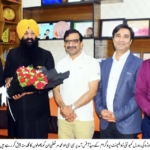
Karachi: A documentary titled A Separation Refused based on the Movement for Restoration of the Joint Electorate in Pakistan that was screened at Media Centre of SZABIST University Karachi.
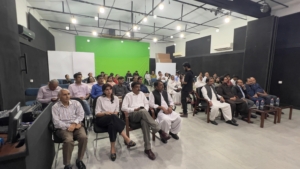
The 20-minute documentary, produced by the Centre for Social Justice and co-directed by Dawood Akhtyar Murad, traced the history of the Separate Electorate system and the movement for the restoration of the Joint Electorate in Pakistan. It highlighted the collective efforts of civil society organizations, political leaders, faith communities, and human rights advocates who campaigned for equal citizenship and inclusive democratic participation for religious minorities. Through historical narratives and personal testimonies, the documentary demonstrated how sustained advocacy contributed to democratic reforms and continues to inspire efforts towards equality, pluralism, social cohesion, and the protection of constitutional rights. The event also featured the screening of “Hum Juda Nahi,” a song reinforcing the themes of unity, equal citizenship, and peaceful coexistence.
The event brought together university students, academics, lawyers, civil society representatives, human rights defenders, media professionals, political representatives, and religious leaders to reflect on an important chapter in Pakistan’s democratic history.
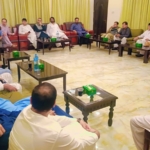
Following the screenings, an interactive panel discussion explored the progress made towards equal citizenship and the challenges towards a democratic participation of religious minorities in Pakistan
Speaking on the occasion, Anthony Naveed, Deputy Speaker of the Sindh Assembly, emphasized that a lack of public awareness remained one of the key challenges to advancing equal citizenship. He stressed the importance of strengthening community-based networks to build collective efforts capable of bringing meaningful and lasting change.
Senior Advocate of the Supreme Court of Pakistan, Akhtar Hussain, who led a legal struggle against the separate elections, appreciated the documention of an important democratic struggle. He urged participants to carry forward the movement until equal political participation and equal citizenship were fully realized, emphasizing that equal participation is the right of every citizen.
Dr. Riaz Ahmed Sheikh, Dean of the Faculty of Social Sciences and Education at SZABIST, highlighted the importance of upholding Article 22(1) of the Constitution. He called on the decision makers to discuss issues of equal citizenship and minority rights to mainstream that should play a more active role in promoting dialogue, constitutional values, and equal participation.
Advocate Kalpana Devi called for legal and policy reforms to address discriminatory constitutional provisions and public policies that continue to limit equal rights and opportunities for religious minorities.
Speaking at the event, Peter Jacob, Executive Director of the Centre for Social Justice, emphasized the need for constitutional reforms to strengthen equal citizenship. He called for a review of Articles 41 and 91 of the Constitution, which attach a precondition of being a to Muslim for the offices of the President and Prime Minister. Moreover, implementation of Article 22(1) of the constitution of Pakistan that guarantees unbiased education.
In the open discussion, participants emphasized that this documentary film highlighting constitutional rights, democratic inclusion, and the experiences of religious minorities should be screened more widely through universities, arts councils, mainstream media, and other public platforms to encourage informed dialogue and greater public awareness.
The event concluded with a shared commitment among participants to continue promoting constitutional rights, equal citizenship, democratic participation, and peaceful coexistence through sustained advocacy, public dialogue, and collaborative action. (END)
William Sadiq: 0300 2062332
Aiman Zameer: 0316 4762471
We welcome your contributions! Submit your blogs, opinion pieces, press releases, news story pitches, and news features to opinion@minutemirror.com.pk and minutemirrormail@gmail.com