Summary
- A proposal now threatens the land and shoreline of Rawal Dam, the reservoir that keeps the water running for Rawalpindi and Islamabad.
- The dam that now holds the Korang was inaugurated by President Field Marshal Ayub Khan to supply drinking water to Islamabad and Rawalpindi.
- Rawalpindi’s water agency, WASA, says Rawal Dam is its oldest and main surface water source, supplying more than 23 million gallons a day against an installed capacity of 28.
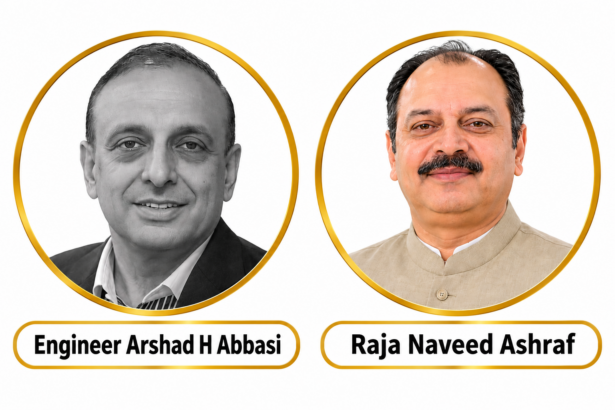
By Raja Naveed Ashraf is Islamabad based is a senior banker by profession; however, he carries a profound passion and deep obsession for environmental preservation—specifically the conservation of forests, native pine and blue pine trees, and the protection of natural clean water originating from forest ecosystems.
- A source older than the republic
- What the water is worth
- A catchment already under siege
- The alternative is not affordable
- A league of one
- The silence of the paid voices
- What should be done
- The insult we must refuse to earn
&
Engineer Arshad H Abbasi served in key advisory capacities across South Asia, Central Asia, Afghanistan, and Bangladesh. His experience includes working as a Director at the Planning Commission of Pakistan (until 2008) and as an Advisor on the Energy and Power Sector at the National Accountability Bureau (NAB) from 2019 to 2021. Worked for USAID, UNDP, and IUCN. He currently acts as a Technical Advisor at Green Tree Limited that work for sustainable infrastructure and green real estate developments in Islamabad.
In 1997, a Virginia prosecutor, Robert F. Horan Jr., said that poor Pakistanis would “sell their mothers.” For decades, we called it a slur and carried the shame.
Today, we are close to proving him right ourselves. A proposal now threatens the land and shoreline of Rawal Dam, the reservoir that keeps the water running for Rawalpindi and Islamabad. Plots, housing schemes and “lifestyle” projects would be cut from the very ground that protects it. Millions of people drink from this water. Their children will inherit whatever we leave behind. If we do this, no foreigner will have insulted us. We will have sold the source of our own water, and the insult will finally be true
A source older than the republic
Rawalpindi’s thirst for the Korang River is not new. The British government intended to dam the Korang to meet the water demand of Rawalpindi, then one of the largest cities in the region. The Raj understood what many of our planners have forgotten. A garrison town, and the Northern Command headquartered there, cannot function without a secure and clean water supply. The cantonment’s engineers drew on the Korang for generations before independence, because they knew that a city that loses its water loses everything else.
The dam that now holds the Korang was inaugurated by President Field Marshal Ayub Khan to supply drinking water to Islamabad and Rawalpindi. It is not a park with a pond. It is a piece of civic infrastructure that has served several generations.
What the water is worth
Consider the numbers. Rawalpindi’s water agency, WASA, says Rawal Dam is its oldest and main surface water source, supplying more than 23 million gallons a day against an installed capacity of 28. The same agency says Khanpur Dam, the second surface source, delivers only about six million gallons a day because of shortages in Khanpur Lake. The rest comes from groundwater, through roughly 480 tubewells supplying about 35 million gallons a day.
That last figure is the worrying one. Tubewells mean a falling water table. A city that is already mining its aquifer to cover the gap between supply and demand cannot afford to lose its largest surface source. Every gallon from Rawal that is lost to pollution, encroachment or a concrete shoreline must be replaced by pumping the ground harder, or by projects that do not yet exist.
The pressure is already visible. In the summer of 2021 Rawal and Khanpur both touched dead level, and civic agencies could supply only 46 million gallons a day against a requirement of 59 million. That was a shortfall of about a fifth, in a city with a lake at its doorstep. Now imagine the lake with a township on its banks.
A catchment already under siege
The danger is not abstract, because the catchment is already being eaten from the edges. Almost 70 percent of the lake’s catchment lies in Murree and about 30 percent in the Islamabad Capital Territory. Reporting years ago found 64 illegal housing schemes polluting Rawal Dam’s water, with no treatment plant working at the dam although four were needed. The same report noted that the government was considering regularising the illegal settlements through a revised master plan.
That is the pattern. First comes an illegal scheme, then comes the regularisation, and then comes the argument that since people already live there, the remaining land might as well be developed too. Each step is presented as practical and reasonable, and each leaves the water slightly dirtier and the reservoir slightly smaller.
Greedy developers are attempting to sway Islamabad’s absolute authority—the “Zeus”—to convert the vital reservoirs of Rawal Dam into commercial and residential real estate, a decision that promises ecological and civic disaster for the twin cities. Yet power need not rule through tyrannical decree; if given the opportunity to stand before leadership, ordinary citizens like us can transform despotic authority into the legacy of Cyrus the Great, grounding governance in humanity, justice, and the fundamental rights of the public. What the record shows is a long history of recreational and commercial schemes at the water’s edge. They include a Corniche road, a hotel built partly over the water, a food court and a chair lift, all proposed by the Capital Development Authority. Critics at the time warned that such recreational ventures were serving powerful private commercial interests. The slope from “recreation” to “real estate” is well worn, and this column is a warning about where it leads. Anyone who thinks housing and commercial development on a drinking-water reservoir is an acceptable idea should say so openly and defend it in public.
The alternative is not affordable
Defenders of development sometimes shrug that Islamabad and Rawalpindi can find water elsewhere. The alternatives are poor.
Khanpur Dam is, as the numbers above show, already stretched. It is a surface reservoir whose levels fall in dry years, and it is not an inexhaustible source. Daducha Dam, the other project in the pipeline, is designed to store stormwater and supply 35 million gallons a day after treatment. Its costs are real: WASA’s project to bring that water to the city is worth Rs50 billion. It is a supplement, not a replacement for a dam that supplies a large share of the city’s surface water.
The remaining option is to lift water from the Indus. Officials have floated bringing Indus water to the twin cities, and one engineer suggested a first phase of 200 million gallons from Ghazi Barotha. Lifting water uphill by more than 800 feet to reach the Potohar plateau means enormous pumping, enormous energy bills and capital costs that analysts put in the billions of dollars. Estimates of over four billion dollars are quoted in discussion, though we could not verify a single authoritative figure. A country in a severe economic crunch, one that cannot reliably pay its power producers, will find that sum very hard to raise. And the energy cost does not end with construction. It is paid again every day the pumps run.
Put plainly, we would be giving up a free, gravity-fed, century-old supply in order to build a very expensive and energy-hungry replacement. No spreadsheet supports that trade.
A league of one
To our knowledge, there is no precedent among the world’s 193 nations for allowing a city’s main drinking-water reservoir to be converted into housing and commercial development. Most countries do the opposite. They fence catchments, restrict construction upstream and treat the watershed as a protected utility. New York famously spent heavily on protecting its upstate watersheds because doing so was cheaper than building a filtration plant. Cities elsewhere have made the same calculation and reached the same answer. We would be the odd one out, and we would be paying for it with a basic necessity.
We should be honest that we cannot prove a global negative. If a reader knows of a country that has done this deliberately, we would like to hear about it. We suspect none has, and for good reason.
The silence of the paid voices
There is another uncomfortable question about who speaks and who stays quiet.
Islamabad is full of non-governmental organisations that raise large sums from international donors in the name of Pakistan’s poor. Many do honest and valuable work. Yet where is the loud, sustained and well-funded campaign against putting Rawal Dam’s shoreline on the market? The poor are the first to suffer when a reservoir is polluted or a water table collapses. They cannot buy tanker water, drill a deeper bore or move to a better sector. A sector with an income stream built on poverty ought to be the first to defend the poor’s water.
The silence is hard to excuse. Donor-funded groups have the research capacity, the media access and the legal expertise to challenge a bad decision. When they say nothing, the natural question is whether that silence is cultivated, because comfortable relationships with powerful people are not worth risking. We make no accusation of theft or fraud against any named organisation. That would require evidence we do not have. But those who take money in the name of the poor owe the poor a voice on exactly this kind of issue, and they should account publicly for how they spend that money.
The accountability gap is real. India’s Comptroller and Auditor General audits NGOs that rely heavily on public money, and Bangladesh requires government approval for foreign funds. Pakistan’s Auditor General has the authority to examine public funds and has done so case by case, yet it has never turned a systematic performance audit on a sector that handles large foreign grants. Nothing in law forbids it. That gap deserves to be closed, and honest organisations have nothing to fear from it.
What should be done
The remedy is not complicated. It requires the will to say no.
First, the catchment should be formally protected. Building around the reservoir and its feeder streams should be frozen, with no new regularisations, until a proper watershed plan exists. Second, the sewage flowing into the Korang and its tributaries should be treated. The plants have been on the drawing board for years and the money is a fraction of what any replacement source would cost. Third, any proposal touching the dam’s shoreline should be published in full, with an independent environmental and hydrological assessment, and put to genuine public hearings in Rawalpindi and Islamabad. Fourth, civil society, including the well-funded part of it, should be asked directly where it stands.
The insult we must refuse to earn
In 1997 a Virginia prosecutor said that people in this region would turn in their mothers for a few thousand dollars. Pakistanis answered in the streets, and the government protested. He apologized. They were right to be angry, because the remark was false of the people it described. Most Pakistanis cannot be bought. They pay their bills with difficulty, they share what they have, and they protect their families and their water in the ways open to them.
But a slur survives on the occasional example that appears to confirm it. When officials let the shoreline of a drinking-water reservoir go to developers for quick money, they give the world’s cynics that example. They will say that this is a country that sells its own lake and its children’s water for a brochure and a commission. Nobody who says that will care that millions of Pakistanis opposed the sale or never knew about it.
The answer is not to accept the slur but to deny it the evidence. Protect the catchment and treat the sewage. Publish every proposal that touches the shoreline, and open it to public hearings before anything is signed. The NGOs that raise money in the name of the poor should show where they stand on this issue, because the poor are the ones who will queue for tanker water if the dam fails.
Rawal Dam has watered Rawalpindi and Islamabad for generations. If it is lost, the fault will lie with those who made the deal and with those who watched and said nothing, not with the Pakistani people. Its water is worth far more as water than any plot sold on its banks. A generation from now no one will thank us for the commissions and the marketing brochures, but they will remember whether the taps ran. Let us make sure the 1997 insult stays false.
We welcome your contributions! Submit your blogs, opinion pieces, press releases, news story pitches, and news features to opinion@minutemirror.com.pk and minutemirrormail@gmail.com