Summary
- The homeland increasingly became not only a place to which people belonged, but a society whose arrangements demanded moral examination.[1] Ustad Bukhari, Rahmat Shah Sail and Atta Shad approached this problem through different languages, experiences and artistic methods.
- What unites them is not a common political programme, but the conviction that human suffering cannot be separated from the structures within which people live. Ustad Bukhari, born Syed Ahmed Shah Bukhari, brought Sindhi poetry closer to the everyday experiences of cultivators, labourers and ordinary families.
- The journey now approaches another essential dimension of resistance: women whose poetry challenged not only the state and economic hierarchy but also patriarchal authority within the home, society and literary establishment. Their voices will demonstrate that freedom cannot be divided into public and private compartments.
A homeland may possess rivers, mountains, fertile plains and mineral wealth, yet remain inhospitable to those whose labour sustains it. The contradiction becomes unbearable when people are expected to celebrate the greatness of their land while being denied the elementary conditions of a dignified existence. Poetry enters this contradiction not merely to praise the homeland but to ask who owns its abundance, who suffers its deprivation and whose voice is entitled to define its future.
The preceding instalment traced how Shaikh Ayaz, Narayan Shyam, Ajmal Khattak and Mir Gul Khan Naseer resisted the political and cultural erasure of their peoples. Their poetry challenged the assumption that national unity required linguistic uniformity or unconditional submission to centralised authority.
The next generation inherited those questions, but the circumstances had changed. Military interventions, expanding markets, labour migration, prolonged conflict and deepening economic inequalities created new forms of estrangement. The homeland increasingly became not only a place to which people belonged, but a society whose arrangements demanded moral examination.[1]
Ustad Bukhari, Rahmat Shah Sail and Atta Shad approached this problem through different languages, experiences and artistic methods. What unites them is not a common political programme, but the conviction that human suffering cannot be separated from the structures within which people live.
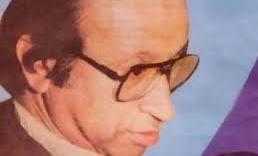
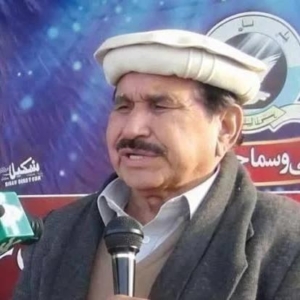
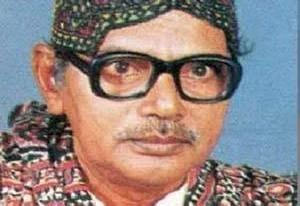
Ustad Bukhari, born Syed Ahmed Shah Bukhari, brought Sindhi poetry closer to the everyday experiences of cultivators, labourers and ordinary families. Unlike literary traditions that placed the poet above society as an interpreter of remote truths, his work drew its strength from intimacy with people. The fields, villages, working hands and familiar speech of Sindh became the substance of his imagination.
His accessibility was neither artistic weakness nor intellectual simplification. It represented a deliberate relationship with his audience. Poetry becomes socially transformative when those ordinarily excluded from written intellectual discourse can recognise their experiences within it. Bukhari’s language was direct because the injustices he confronted did not require elaborate disguises.[2]
He inherited the cultural universe of Shah Abdul Latif Bhitai and the progressive awakening associated with Shaikh Ayaz, but gave it an unmistakably popular expression. Love, nature, social responsibility and collective struggle occupied the same imaginative space. His work resisted the separation of aesthetic pleasure from material existence.
A farmer watching a failed harvest, a labourer receiving inadequate wages and a family struggling against poverty were not marginal figures awaiting sympathy. They belonged at the centre of the social world poetry was expected to illuminate.
The significance of this approach becomes clearer when considered against the political conditions of Pakistan during the late twentieth century. Military rule sought obedience, while entrenched agrarian hierarchies continued to restrict social mobility. Economic development was repeatedly celebrated through aggregate figures, although those figures could conceal the unequal distribution of its benefits.
Bukhari’s poetry challenged this abstraction. It restored human beings to discussions from which they had been excluded. His continuing appeal during General Ziaul Haq’s dictatorship demonstrated that poetry rooted in ordinary speech could preserve spaces of dissent even when organised political activity faced severe restrictions.[3]
His resistance also carried a warning for provincial movements. The struggle for Sindh’s cultural and political rights could not be considered complete if its peasants remained dependent upon powerful landlords or its workers were denied economic security. A homeland liberated from external domination but governed through internal inequality would still fail many of its inhabitants. This insistence gives Bukhari’s poetry a significance beyond regional identity. It connects the right to cultural existence with the right to material wellbeing.
Rahmat Shah Sail carried a related concern into Pashto poetry, but from a markedly different social experience. Born in Malakand, he encountered poverty directly and left formal education early to support his family.
Much of his working life was spent as a tailor. His literary development therefore did not follow the conventional route of institutional privilege. Reading, labour, observation and sustained artistic discipline became his education.[4]
This biography matters because Sail’s poetry does not approach deprivation as an intellectual curiosity. His engagement with ordinary people developed within the same economic world that shaped their limitations.
In his writing, romantic love and political awareness are not opposing impulses. The beloved, the homeland, the wounded community and the desire for peace repeatedly enter the same emotional landscape. Love is not an escape from history; it becomes a means of confronting its cruelty.
The distinction is particularly important in understanding the consequences of war for Pakhtun society. Decades of conflict across Afghanistan and Pakistan transformed familiar landscapes into spaces of displacement, militarisation, bereavement and uncertainty.
Families encountered the consequences of strategic decisions over which they exercised little meaningful control. Communities became entangled in competing claims of national security, geopolitical necessity and ideological mobilisation.
Poetry could not reverse these forces. It could, however, refuse the language through which their human costs were normalised.
Sail’s literary world makes room for experiences too easily displaced from official narratives: the mother awaiting her child, the worker separated from his village, the destruction of familiar places and the longing for a life not permanently organised around fear.
His poem Kabul and Peshawar Are the Closest of Friends offers a particularly revealing expression of this imagination. The relationship between the two cities cannot be reduced to borders and diplomatic disagreements. Language, family histories, shared cultural memories and movement across generations have created human connections that survive political hostility.[5]
Such poetry does not demand the abolition of states or deny their legitimate responsibilities. It asks that those responsibilities be exercised without erasing the communities whose lives extend across boundaries.
The moral force of Sail’s work also lies in refusing to convert grief into an endless justification for vengeance. When political language treats entire populations as threats, humanist poetry insists upon distinguishing individuals from the violence imposed upon or committed in their names.
His recognition as a major progressive Pashto poet, including a lifetime achievement honour in 2024, reflects an artistic influence extending across generations. Accounts of his literary career also record imprisonment associated with his political commitments. His persistence illustrates how cultural resistance can survive through forms of expression that are simultaneously intimate and public.[6]
Atta Shad represents another dimension of the same intellectual journey. Writing in Balochi and Urdu, he helped transform modern Balochi poetry through innovation in diction, imagery, symbolism and poetic form. Where Mir Gul Khan Naseer often made political resistance explicit, Shad demonstrated that artistic experimentation could itself enlarge the possibilities of cultural freedom.
He was not indifferent to the suffering of his people. Rather, he questioned the assumption that political commitment required a single literary vocabulary or an exclusively declaratory style.
His work expanded the imaginative possibilities of Balochi by bringing local landscapes, cultural memories and modern sensibilities into new relationships.
The desert, mountains and settlements of Balochistan were neither exotic scenery nor merely geographical markers. They formed a living environment through which human aspiration, loss and endurance could be explored.[7]
This development had wider implications. A language denied adequate institutional recognition is often treated as suitable for folklore but incapable of sustaining sophisticated modern thought. Shad’s literary achievements challenged that prejudice. His experiments in free verse and poetic expression demonstrated that Balochi could engage modern intellectual and aesthetic concerns without relinquishing its cultural inheritance.[8]
His simultaneous engagement with Urdu was equally significant. The relationship between languages need not be competitive. The injustice begins when one language acquires institutional supremacy while another must continually justify its existence.
Through his work in both languages, Shad helped make Balochi experience intelligible to audiences beyond Balochistan without accepting that its cultural legitimacy depended upon external approval.
His artistic independence also deserves attention. Progressive literature has sometimes been weakened by the expectation that every poem should function as an immediate political declaration. Such demands risk turning the writer into an instrument of ideological authority.
Shad demonstrated that resistance could also operate through imagination, ambiguity, formal innovation and the enlargement of emotional understanding.
A society becomes intellectually freer not merely when prohibited opinions can be expressed, but when its people can imagine experiences beyond officially approved categories.
The contributions of these three poets illuminate different dimensions of human freedom. Bukhari brought the working population into the moral centre of literature. Sail transformed the suffering of communities living amid conflict into an appeal for peace and solidarity. Shad enlarged the artistic capacities of a language and demonstrated that cultural identity and universal imagination could enrich one another.
Their work also raises questions that remain unresolved in contemporary Pakistan. What meaning does development possess when prosperous cities depend upon workers denied secure housing and adequate wages? What becomes of national belonging when the inhabitants of resource-rich regions experience deprivation and exclusion?
Can durable peace emerge when the suffering of communities is subordinated to competing strategic calculations? Can a federation command genuine loyalty while treating its linguistic diversity as an administrative inconvenience?
These questions belong as much to political economy and constitutional governance as to literary criticism.
Poetry cannot replace democratic institutions, equitable distribution, independent courts or accountable government. Nor should poets be romanticised as substitutes for organised social and political action. Their distinct contribution is to reveal the human consequences of arrangements that institutions may prefer to describe impersonally.
The deepest continuity between these writers and their predecessors lies here. The right to speak one’s language develops into the right to define one’s existence. Cultural recognition becomes inseparable from economic opportunity, political participation and freedom from humiliation.
Bukhari, Sail and Shad remind us that the homeland is not an object of unquestioning worship. Its worth must also be judged by the lives people are able to build within it.
A nation cannot claim to have honoured its poets merely by naming roads, organising commemorative ceremonies or publishing collected works. Their intellectual inheritance remains alive only when the conditions against which they wrote are subjected to continuing scrutiny.
The journey now approaches another essential dimension of resistance: women whose poetry challenged not only the state and economic hierarchy but also patriarchal authority within the home, society and literary establishment.
Their voices will demonstrate that freedom cannot be divided into public and private compartments. A society that demands liberty from its rulers while denying autonomy to its women has not understood the meaning of emancipation.
Faiz will return at the culmination of this journey, when these diverse experiences of resistance can be brought into conversation with his vision of human liberation. Until then, the poets of Sindh, Pakhtunkhwa and Balochistan remind us that the measure of belonging is not the intensity with which people praise their homeland, but the dignity with which they are permitted to live in it.
Notes
- Dr Ikramul Haq, “Poetry, Resistance and Humanity—VII: When the Margins Spoke Their Own Names”, Minute Mirror, November 3, 2026.
- Muhammad Chhuttal Bozdar, “Analysis of Progressive Thought in the Poetry of Ustad Bukhari”, Sindhi Boli Research Journal, Vol. 16, No. 2 (2024).
- “Call to include Ustad Bukhari’s poetry in syllabus”, Dawn, October 13, 2014.“Tribute paid to Ustad Bukhari”, Dawn, April 28, 2015.
- Poetry Translation Centre, “Rahmat Shah Sayel: Biography and Poetry”.
- Rahmat Shah Sayel, “Kabul and Peshawar Are the Closest of Friends”, Poetry Translation Centre.
- Sher Alam Shinwari, “Senior Pashto poet gets lifetime achievement award”, Dawn, May 27, 2024.Rahmat Shah Sail literary archive.
- Sajid Hussain, “Atta Shad: The architect of modern Balochi poetry”, Balochistan Times, November 14, 2016.Rekhta, “Atta Shad: Literary Profile”.
- Saeed Ullah and Nasreen Gul, “Free Verses in Balochi Literature: An Experience in Form”, Makhz, Vol. 5, No. 3 (2024), pp. 62–81.University of Turbat, “IBLC remembers legendary poet Atta Shad”, February 18, 2020.
(To be continued)
______________________________________________________
Dr. Ikramul Haq, Advocate Supreme Court, Adjunct Faculty at Lahore University of Management Sciences (LUMS), member Advisory Board and Visiting Senior Fellow of Pakistan Institute of Development Economics (PIDE), holds an LLD in tax laws. He was full-time journalist from 1979 to 1984 with Viewpoint and Dawn. He also served Civil Services of Pakistan from 1984 to 1996.
We welcome your contributions! Submit your blogs, opinion pieces, press releases, news story pitches, and news features to opinion@minutemirror.com.pk and minutemirrormail@gmail.com