Summary
- Shaikh Ayaz, Narayan Shyam, Ajmal Khattak and Mir Gul Khan Naseer wrote from different histories, but all confronted a politics that asked the margin to supply loyalty, labour and resources while the centre retained the authority to name the nation.1 The colonial state had governed through hierarchy, classification and distance.
- Poetry became a portable homeland, carrying river, dust, idiom and memory into Bombay, Ajmer and the dispersed settlements of exile.5 That there was a Sindh and a language of Sindhis.6 His fear was not simply that readers might forget a literary tradition.
- Ayaz, Shyam, Khattak and Naseer did not make the province a prison of identity.
Part VI ended with a promise to widen the map of dissent. That map changes as soon as the province is no longer treated as scenery and its language is heard as an argument. Shaikh Ayaz, Narayan Shyam, Ajmal Khattak and Mir Gul Khan Naseer wrote from different histories, but all confronted a politics that asked the margin to supply loyalty, labour and resources while the centre retained the authority to name the nation.1
The colonial state had governed through hierarchy, classification and distance. Independence removed the foreign sovereign but did not automatically undo that architecture. English remained the language of upper administration; Urdu became the principal emblem of national cohesion; the older languages of the provinces were too often confined to folklore, domestic speech and ceremonial praise. A language could be admired as culture while being denied power as knowledge. One Unit gave this habit an administrative shape by converting distinct histories into inconveniences to be managed from above.2
Shaikh Ayaz answered this flattening by making Sindhi memory contemporary. His poetry drew upon Shah Abdul Latif, Marvi, Dodo Soomro, the Indus, the desert and the peasant, but these were not museum pieces. They became a living vocabulary through which the present could be judged. Ayaz wrote in Urdu as well, and his Urdu rendering of Shah Jo Risalo carried Latif beyond Sindhi readership. His return to Sindhi was not retreat from a wider world. It was a refusal to enter that world only after surrendering his own address.3
Sindhri taan sir ker na deendo, sahendo ker mayar.4
The question became an unofficial anthem during resistance to One Unit: who would withhold sacrifice from Sindh and then escape the shame of that refusal? Its power lay in turning attachment to place into public responsibility. Ayaz’s Sindh was not merely territory. It held the poor, the excluded, the lover and the rebel. He endured arrest and detention because the establishment understood what literary criticism sometimes forgets: a poem sung by a crowd is no longer confined to the page.
His work also prevents an easy romanticism of provincial nationalism. Ayaz’s humanism and progressive commitments brought the landlord, the dictator and inherited social authority under scrutiny. Love of Sindh could not mean obedience to every power operating in Sindh. The language deserved freedom because its speakers deserved dignity, not because one elite should replace another. This distinction separates cultural resistance from chauvinism.
Across the new border, Narayan Shyam faced a different danger. Hindu Sindhis who migrated to India after Partition entered a state in which Sindhi eventually received constitutional recognition, but there was no Sindhi province to hold language, landscape and everyday life together. Shyam left Sindh in 1948. Poetry became a portable homeland, carrying river, dust, idiom and memory into Bombay, Ajmer and the dispersed settlements of exile.5

That there was a Sindh and a language of Sindhis.6
His fear was not simply that readers might forget a literary tradition. It was that Sindhi could survive as an entry in a book after disappearing from the home, the street and the speech of children. Shyam’s resistance was quieter than the procession and more vulnerable than the banned poem. It opposed erasure through use. His Sahitya Akademi award in 1970 recognised the artistic achievement of Wari-a-Bharyo Palaand, but recognition could not replace the community of daily speakers on which a language depends.
Ajmal Khattak inherited another geography of resistance. Pashto poetry already carried the memory of Khushal Khan Khattak and the ethical force of the Khudai Khidmatgar movement. Ajmal brought that inheritance into a modern struggle against class domination, dictatorship and the denial of Pakhtun political rights. Da Ghairat Chagha, published in 1958, was banned in both Pakistan and Afghanistan. The ban revealed the reach of his challenge: governments divided by a border could agree that an awakened public was dangerous.7
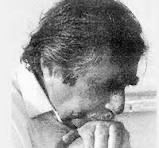
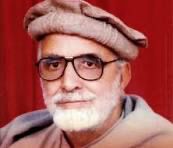
Khattak’s idea of honour did not rest upon revenge or masculine display. It acquired meaning through the condition of the poor. He insisted that poetry must leave ornamental praise and speak of empty stomachs, exploitation and oppression. After the violence at Liaquat Bagh in 1973, he spent more than a decade in exile in Afghanistan; Jalawatan Kee Shairee preserved the emotional cost of separation. Exile did not weaken the bond between language and place. It made that bond conscious.
The Balochi voice of Mir Gul Khan Naseer went further still in refusing the false choice between external domination and internal privilege. He wrote in Balochi, Brahui, Urdu and Persian, opposed imperial rule and became a major figure in Baloch political consciousness. He also attacked the sardari order, class arrogance, coerced labour and the use of custom to protect power. For him, freedom from the centre without freedom from the chief would remain another incomplete liberation.8
Is it a crime to be born as a Baloch?9
The line is a complete constitutional question in ten words. It asks why identity becomes suspicious when it speaks from a neglected province, and why equal citizenship is made conditional upon silence. Naseer’s poems placed hunger, homelessness and unpaid work beside the mansions of the powerful. He wanted education for girls and boys, political and economic reform, and an end to the system that converted inherited authority into destiny. His Balochistan was not an abstraction waiting to be defended by slogans; it was a society whose people had to be freed from both imperial arrangements and local exploitation.
This is where language meets political economy. Extraction begins before a mine is opened or a pipeline is laid. It begins when a place is described mainly by what can be taken from it, while its inhabitants appear as labour, demographic detail or security risk. Poetry reverses the direction of that gaze. The river, mountain and desert cease to be inventory. They become lived worlds, joined to memory, livelihood and the right to decide.
Ayaz, Shyam, Khattak and Naseer did not make the province a prison of identity. Each reached beyond it through progressive, humanist or international currents. Their achievement was to show that universality does not require anonymity. A federation becomes humane when its peoples can enter it by their own names; uniformity is not unity, and enforced silence is not integration. Language rights are therefore not a decorative concession. They determine who may describe injustice, whose knowledge enters public reason and which losses the nation is capable of hearing.
The next stage of this journey will follow later voices—Ustad Bukhari, Rahmat Shah Sail and Atta Shad—who carried provincial memory into new encounters with migration, war, militarisation and the market. Faiz still awaits us at the end. Before reaching him, resistance must be heard not as a single national chorus but as a conversation among languages that refused disappearance.
[To be continued]
Endnotes
- Dr Ikramul Haq, Poetry Resistance and Humanity VI When Poetry Withheld Consent, Minute Mirror, October 27, 2026.
- Hamza Alavi, Nationhood and the Nationalities in Pakistan, Economic and Political Weekly 24, no. 27 (1989), pp. 1527–1534; Tariq Rahman, Language Planning and Politics in Pakistan, Sustainable Development Policy Institute, 1995.
- Julien Levesque, Sindhi Nationalism during One Unit, in Pakistan at Seventy Five; see also Shaikh Ayaz and resistance poetry, Dawn, July 6, 2015.
- M. Qasim Bughio, ed., Shaikh Ayaz International Conference on Language and Literature, 2007.
- Motilal Jotwani, Narayan Shyam The Poet of Hope and Affirmation, Indian Literature 23, no. 5 (1980), pp. 103–107; Sahitya Akademi, Birth Centenary Symposium on Narain Shyam, Annual Report 2022–2023, p. 91.
- Nandita Bhavnani, Partition Poetry in Sindhi, Sahapedia; Sahitya Akademi, Akademi Awards Sindhi.
- Danish Ahmad and Rao Nadeem Alam, Resisting State Nationalization through Poetry A Case Study of Pashto Poetic Resistance, Pashto 48, no. 657 (2019); Sher Alam Shinwari, Obituary A cry goes silent, Dawn, February 21, 2010.
- Javed Haider Syed, Kaleemullah Barech and Amjad Abbas Khan Maggasi, Mir Gul Khan Naseer An Evaluation of his Contributions to the Baloch Cause, Balochistan Review 32, no. 1 (2015), pp. 27–36.
- Syed, Barech and Maggasi, Mir Gul Khan Naseer, pp. 30–35; Irfan Anwar, Progressive experience in the poetry of Mir Gul Khan Naseer, Balochistaniyat 11 (2022), pp. 33–50.
__________________________________________________________
Dr. Ikramul Haq, Advocate Supreme Court, Adjunct Faculty at Lahore University of Management Sciences (LUMS), member Advisory Board and Visiting Senior Fellow of Pakistan Institute of Development Economics (PIDE), holds an LLD in tax laws. He was full-time journalist from 1979 to 1984 with Viewpoint and Dawn. He also served Civil Services of Pakistan from 1984 to 1996.
We welcome your contributions! Submit your blogs, opinion pieces, press releases, news story pitches, and news features to opinion@minutemirror.com.pk and minutemirrormail@gmail.com