Summary
- False rumours about Ebola are putting health workers at serious risk in the Democratic Republic of Congo, where misinformation has triggered violent attacks on medical teams and disrupted efforts to control the country’s latest outbreak.
- These rumours have led to repeated attacks on treatment centres, health workers and burial teams.
- Health workers say many families refuse to accept the restrictions because they believe the disease is fake or because they fear authorities will take control of the burial.
False rumours about Ebola are putting health workers at serious risk in the Democratic Republic of Congo, where misinformation has triggered violent attacks on medical teams and disrupted efforts to control the country’s latest outbreak. Health officials say growing distrust within affected communities is making it harder to contain the deadly virus and protect vulnerable people.
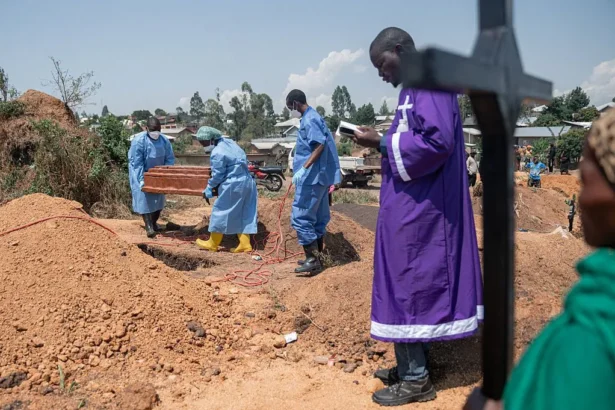
One of the latest attacks took place in the eastern city of Bunia, where Red Cross volunteer Daniel Uyirwoth Welo and three colleagues were assaulted while carrying out a safe burial for a person who had died from Ebola. Welo said the crowd believed rumours that the coffin was empty and accused health workers of inventing the disease to make money. He recalled being beaten with spades and machetes before managing to escape.
The incident is one of several violent attacks linked to misinformation since the outbreak began in May. According to government figures, more than 1,750 people have been infected and around 600 have died. Aid organisations say the real number of attacks may be even higher because many cases in remote areas are never officially reported.
Health authorities say false claims continue to spread through local communities and social media. Some people insist Ebola does not exist, while others accuse medical teams of deliberately infecting patients or harvesting organs. These rumours have led to repeated attacks on treatment centres, health workers and burial teams.
Earlier this month, an Ebola treatment centre in Ituri province was set on fire after tensions over the burial of a suspected victim turned violent. Local reports said a police officer was killed during the clashes. Similar attacks have also damaged isolation facilities and forced medical workers to suspend operations in several areas.
Safe burials remain one of the most important methods of preventing the spread of Ebola because the bodies of victims can remain highly infectious after death. Medical teams follow strict procedures to avoid direct contact with the deceased, but these measures often conflict with traditional funeral customs. In many parts of the Democratic Republic of Congo, families view touching and preparing the body as an important way of honouring loved ones before burial.
Health workers say many families refuse to accept the restrictions because they believe the disease is fake or because they fear authorities will take control of the burial. Some relatives have even abandoned the bodies of family members rather than report suspected Ebola deaths because they worry about quarantine or being separated from their communities.
Medical experts warn that misinformation is also preventing people from seeking treatment early. Many residents believe Ebola treatment centres are places where patients go to die, leading some to avoid hospitals until they become critically ill. By the time many patients arrive for medical care, their chances of survival have already fallen sharply.
The current outbreak is caused by the Bundibugyo strain of the Ebola virus. While no approved vaccine or treatment currently exists for this strain, the World Health Organization has launched clinical trials to test two possible treatments. Researchers say it will take several months before the effectiveness of those medicines can be confirmed.
Experts believe years of conflict, political instability and distrust of government institutions have contributed to the spread of misinformation across eastern Congo. Health officials say restoring public confidence has become just as important as providing medical treatment. They stress that without community support, efforts to contain the outbreak will remain difficult and the virus will continue to spread.
We welcome your contributions! Submit your blogs, opinion pieces, press releases, news story pitches, and news features to opinion@minutemirror.com.pk and minutemirrormail@gmail.com