Summary
- The US Climate Prediction Centre said there is an 81% chance of a “very strong” El Nino during that period, which would rank among the biggest such events in the historic record dating back to 1950.
- This adds to a prediction made by Tim Stockdale, an El Nino expert at the European Centre for Medium-Range Weather Forecasts, who said this week it would be “a very, very big surprise” if the event failed to be a record-breaker.
- Isla Simpson, a climate scientist at the US National Centre for Atmospheric Research, told AFP that “there’s quite a lot of evidence from our models that global warming increases the variance of El Nino, so you get bigger El Nino events and also bigger La Nina events.” La Nina is the cooling phase of the El Nino-Southern Oscillation cycle.
The El Nino weather pattern has intensified over the past month and is highly likely to “rank among the largest” ever recorded when it peaks between October and December, US forecasters have warned. The US Climate Prediction Centre said there is an 81% chance of a “very strong” El Nino during that period, which would rank among the biggest such events in the historic record dating back to 1950.
A “very strong” El Nino is defined as being 2.0 degrees Celsius or more above an index value. The CPC also put the odds at 97% that the event will persist through early spring 2027. This adds to a prediction made by Tim Stockdale, an El Nino expert at the European Centre for Medium-Range Weather Forecasts, who said this week it would be “a very, very big surprise” if the event failed to be a record-breaker.
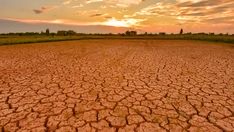
El Nino warms surface temperatures in the central and eastern equatorial Pacific Ocean, triggering worldwide changes in winds, atmospheric pressure, and rainfall patterns, and pushing warmer overall global temperatures. It typically has knock-on effects globally, including drier conditions and drought in Australia, along with wetter winters in East Africa and the southern United States.
Isla Simpson, a climate scientist at the US National Centre for Atmospheric Research, told AFP that “there’s quite a lot of evidence from our models that global warming increases the variance of El Nino, so you get bigger El Nino events and also bigger La Nina events.” La Nina is the cooling phase of the El Nino-Southern Oscillation cycle.
Within the United States, El Nino events are typically “drought-busting” over some regions, including California, but drying in others. The connections to Europe are smaller and less certain, but there is some evidence that El Nino can increase the likelihood of cold conditions later in the winter in Northern Europe. “Most likely, what we’ll see are the canonical El Nino teleconnections,” Simpson said, “but in any given event, things can deviate from that just because we have all of these random uncertainties.” As the world braces for what could be a record-breaking El Nino, experts are urging governments and communities to prepare for the potential impacts on agriculture, water resources, and public health.
We welcome your contributions! Submit your blogs, opinion pieces, press releases, news story pitches, and news features to opinion@minutemirror.com.pk and minutemirrormail@gmail.com