Summary
- I raise this not to relitigate one man’s guilt or innocence in a courtroom I am not sitting in, but to make a structural point: the same energy policy architecture that produced Pakistan’s capacity-payment crisis was built, negotiated, and defended by people who moved seamlessly from ministry to premiership to private life, largely untouched by the consequences their decisions imposed on ordinary consumers and, ultimately, on the unemployed young men now being recruited into insurgency.
- If even a fraction of recovered wealth and averted capacity payments were channeled transparently — tracked, published, and audited in real time — into merit-based employment, functioning mines, and basic services in Balochistan, KPK, and AJK, the insurgency would not need years to fade.
- Do not let it pass by half-measures and quiet diplomacy while young men in Balochistan, AJK, and KPK keep choosing the gun because no one showed them the money ever really moved.
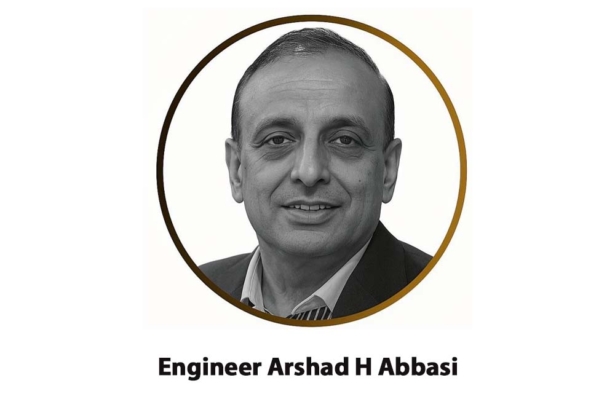
I have stood in places most policymakers only read about in briefing papers. I spent time in Afghanistan during the Ashraf Ghani years, and the whole of 2010 in what was then Ex-FATA — a zone so dangerous that even seasoned aid workers called it the place where devils refuse to go. Later, I worked on rehabilitation efforts in Azad Jammu and Kashmir. None of what I am about to argue is theoretical. It is drawn from villages of EX-FATA I walked through, water I watched women carry for miles on donkeys, and children I saw crossing frozen ground without shoes while, an hour’s drive away, the Afghan elite lived behind walls that looked like fortresses.
That contrast is the whole story of why the Taliban won. Over two decades, the Western-backed Afghanistan collapsed not primarily on the battlefield but in the space between Kabul’s donor-funded skyline and the rural provinces that never saw a rupee — or a dollar — of that money trickle down. Billions moved through Kabul. Almost none of it moved past it. Into that vacuum, the Taliban did not need to conquer the countryside. They simply had to show up where the state never had, and offer order where there was only neglect. In 2010, in FATA, I watched the same mechanism recruit teenage boys into suicide bombing — and the driving force was rarely ideology in its purest form. It was poverty, weaponised by men who understood exactly how to turn deprivation into obedience.
I say this because Pakistan is now watching its own soldiers and citizens bleed in Balochistan, Khyber Pakhtunkhwa, and Azad Jammu and Kashmir, and we keep mistaking the symptom for the disease. In Balochistan, it is poor living conditions and the absence of work that push young men toward the BLA and other militant groups — not some inherited hatred of the state, but the calculation of someone with nothing left to lose. In KPK, mining activity that could employ tens of thousands sits frozen, and extremist preachers walk into that economic silence with a ready-made narrative of grievance, exactly as I watched happen in FATA 16 years ago. In Azad Jammu & Kashmir (AJK), where I subsequently served on the front lines of post-disaster rehabilitation, the work executed under the leadership of General Musharraf and Lieutenant General Nadeem was nothing short of extraordinary. They transformed the region—erecting world-class infrastructure that spanned rural housing, modern hospitals, and state-of-the-art universities. Having witnessed his work firsthand, I can unhesitatingly attest that Lt. Gen. Nadeem exemplified the highest standards of professional integrity and selfless duty in the field.
Regrettably, subsequent regimes, particularly the current political regime, failed to capitalize on this monumental achievement. Worse still, political negotiators deliberately suppressed these successes under strict orders to deny General Musharraf the credit he rightly deserved
It was neither the foreign conspiracies spun about Modi nor the shadow plays attributed to Netanyahu that brought us to our knees—it was the quiet, deliberate treason of our own. The true architects of our ruin sat comfortably in our own cabinets, presiding over the Ministry of Planning and the Ministry of Petroleum.
Let the record be unsealed, and let the ledger of corruption show the reality of our sabotage. While the global solar revolution was gaining unstoppable, undeniable momentum as far back as 2012, our planners turned a blind eye to the sun. Instead, they peddled dirty imported coal and structurally flawed LNG infrastructure, deceitfully masquerading them as national “game-changers.” They were not mistakes; they were choices.
They willfully shackled this nation to predatory FSRU contracts, riddled with toxic force majeure loopholes that bled our public treasury dry to enrich foreign syndicates and domestic middlemen. Their actions expose a chilling, unvarnished truth: capital was never the bottleneck. Financial constraints were a myth. The true poverty of this nation was the shameless, treasonous lack of political will to break free from the payout loop and build a sovereign future.
According to Pakistan’s own energy regulator, NEPRA, consumers were burdened with roughly Rs1.81 trillion in capacity payments in fiscal year 2024–25 alone — fixed payments to power producers simply for having plants available, regardless of whether they generated a single unit of electricity. That figure made up 61 percent of the country’s entire power purchase cost. On a per-unit basis, Pakistanis paid roughly Rs14.3 for capacity alone, compared to about Rs9.0 for the energy actually consumed. Multiply that pattern across recent years and the country has handed over trillions of rupees to keep idle machinery on standby, while Pakistani manufacturers pay electricity rates nearly double what their competitors pay in India and Vietnam, hollowing out the very industries that could have employed the young men now being recruited by militants instead.
Even a third of what has been paid out in capacity charges over the past five years — redirected honestly into youth employment programs in KPK, Balochistan, and AJK — would have done more to end this insurgency than any military operation conducted so far. This is not sentiment. It is arithmetic that any finance ministry could run in an afternoon.
And here the accountability question becomes unavoidable. The man who, as federal minister for petroleum and natural resources from 2013 to 2018, championed the LNG import architecture that helped lock Pakistan into the very capacity-payment structure now crushing consumers, later became Prime Minister of Pakistan. He subsequently faced formal NAB proceedings, an indictment, and questions in court over unexplained deposits connected to that period — a matter of public record, still contested by his supporters as political victimization, but investigated nonetheless by the country’s own anti-graft body. I raise this not to relitigate one man’s guilt or innocence in a courtroom I am not sitting in, but to make a structural point: the same energy policy architecture that produced Pakistan’s capacity-payment crisis was built, negotiated, and defended by people who moved seamlessly from ministry to premiership to private life, largely untouched by the consequences their decisions imposed on ordinary consumers and, ultimately, on the unemployed young men now being recruited into insurgency. Whatever the final legal verdict, the pattern is the one Interior Minister Naqvi and the DG ISPR have themselves now openly admitted to: a convergence failure, where policy decisions enrich a narrow circle while the regions bearing the consequences are left to fight over scraps. I fully endorse that diagnosis. Where I differ is in insisting we say plainly what the prescription must be.
The world has already shown Pakistan the playbook for recovering what has been taken. The Philippines recovered more than a billion dollars from Ferdinand Marcos’s hidden accounts through sustained international legal pursuit. Nigeria clawed back hundreds of millions of dollars looted by the Sani Abacha regime. Peru pursued and recovered funds stolen by Vladimiro Montesinos. None of these recoveries happened overnight, and none happened without political will at the very top. But all of them happened. Pakistan does not lack the legal precedent. It lacks the resolve to use it against its own.
Alongside asset recovery, Pakistan must finish what it has only half-started: renegotiating every Independent Power Producer agreement clause by clause, not the partial, selective renegotiations conducted so far, and extending that same rigor to the LNG agreements with Qatar and the FSRU contracts that continue to lock in costs the country can no longer justify. Partial reform protects the politically connected. Complete reform protects the country.
If even a fraction of recovered wealth and averted capacity payments were channeled transparently — tracked, published, and audited in real time — into merit-based employment, functioning mines, and basic services in Balochistan, KPK, and AJK, the insurgency would not need years to fade. It would lose its recruiting argument within months, because the argument was never really about ideology. It was about a state that fed its capital while starving its periphery, exactly as I watched happen in Kabul, exactly as I watched it happen in EX-FATA, and exactly as I am now watching repeat itself, province by province, inside my own country. We do not need a new war to win this one. We need the courage to follow the money home.
A Final Word to the Field Marshal
Sir, no institution in Pakistan today commands the trust, the discipline, or the sheer leverage that you command. That is not flattery — it is simply the reality of where this country stands. It means something harder and, in the long run, far more lasting: using every ounce of that leverage to make sure those institutions finally do the job they were built for, in the open, on the record, where every citizen can watch it happen. Order NAB to publish the status of every stalled inquiry. Insist the courts set final dates for cases that have drifted for years. Demand that every rupee recovered from looted wealth be tracked publicly, line by line, to the districts of Balochistan, KPK, and AJK it is owed to. That is not restraint for its own sake — it is the only version of justice that outlives any one man’s tenure, because it is built into the system rather than borrowed from your office.
DG ISPR alongside the Interior Minister said that this is a convergence failure. Both are not wrong. But the fix for a convergence failure is not one more man standing above the law — Pakistan has tried that path before, and each time the growth it bought did not survive the return to civilian rule that inevitably followed. The fix is a Field Marshal who spends his authority forcing accountability into daylight, so that the next generation never again has to ask one man to be their hero, because the system itself finally works. That is the legacy worth having. That is the moment in front of you. Do not let it pass by half-measures and quiet diplomacy while young men in Balochistan, AJK, and KPK keep choosing the gun because no one showed them the money ever really moved. Two hundred and sixty million citizens stand behind you. You hold the historic opportunity to become the champion of Gen Z—a generation completely exhausted by corrupt, self-serving political elites. While a handful of paid media loyalists may protest, the international community will ultimately respect and applaud your leadership for bringing stability to a nuclear-armed nation.
We welcome your contributions! Submit your blogs, opinion pieces, press releases, news story pitches, and news features to opinion@minutemirror.com.pk and minutemirrormail@gmail.com