Summary
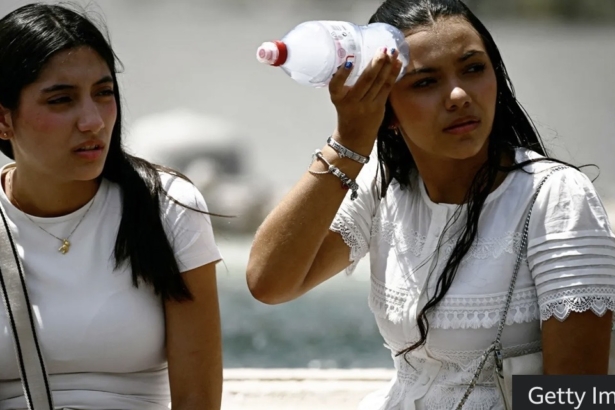
- A brutal heatwave sweeping across Europe has pushed France to raise its health alert to the highest level, as scorching temperatures break records across the continent and raise fears of a significant rise in mortality.
- Forecasters in Germany and the Czech Republic have warned of extreme conditions, with temperatures in Germany potentially hitting 40°C in western and southwestern areas.
- Florence’s Uffizi museum has halted ticket sales until 28 June because its air conditioning system could not cope with the extreme temperatures, which reached 32°C inside the museum.
A brutal heatwave sweeping across Europe has pushed France to raise its health alert to the highest level, as scorching temperatures break records across the continent and raise fears of a significant rise in mortality.
French Prime Minister Sébastien Lecornu announced the health alert level was being raised to its maximum to boost hospital staffing and protect vulnerable populations. The decision comes after France recorded its hottest day on Wednesday for the second consecutive day, with the average minimum temperature reaching 22°C overnight. Nantes in the northwest saw temperatures of 27.2°C.
Heat-Related Deaths and Cardiac Arrests
French Health Minister Catherine Rist issued stark warnings, noting that “young people are also suffering from cardiac arrests.” The ambulance service in Paris reported four times more cardiac arrests than normal over a 24-hour period. While stressed there were no confirmed figures for heat-related deaths, Paris Mayor Emmanuel Grégoire confirmed that the mortality rate was on the rise in the capital.
“We must not believe we are invulnerable,” Grégoire warned, adding that even those with no underlying medical issues would be affected by the prolonged heat. Cycling also came with risks, as people might start feeling faint and could fall, potentially ending up in hospital.
Tragically, a three-year-old child was found dead in a car in the Paris region, days after two young children were found dead in a family’s car in the southern town of Carpentras. In the northwestern city of Rennes, Professor Louis Soulas, head of the Accident and Emergency department, linked the deaths of five or six people in their homes to the heatwave.
Europe-Wide Impact
The heatwave conditions have left Spain, the UK, and France sweltering for days, and are now shifting eastward. Forecasters in Germany and the Czech Republic have warned of extreme conditions, with temperatures in Germany potentially hitting 40°C in western and southwestern areas.
An extreme weather warning is now in place across much of the Czech Republic. Meanwhile, Italy is bracing for the peak of the heat on Monday, when 40°C is expected in various northern regions. Night-time temperatures in those areas might not drop below 29°C. Florence’s Uffizi museum has halted ticket sales until 28 June because its air conditioning system could not cope with the extreme temperatures, which reached 32°C inside the museum.
Climate Crisis Fingerprints
United Nations climate change chief Simon Steill has declared that “Europe’s savage heatwave has the fingerprints of the climate crisis all over it.” He called for “a faster shift to renewables, protecting forests and boosting climate resilience.”
Forecaster Lorenzo Tedici told Italian media: “Gone are last century’s June days of 32°C daytime temperatures and cool 17°C nights. We have become so accustomed to excess that today we welcome a forecast 34°C as good news.”
We welcome your contributions! Submit your blogs, opinion pieces, press releases, news story pitches, and news features to opinion@minutemirror.com.pk and minutemirrormail@gmail.com