
Summary
- The Federal Board of Revenue (FBR) has developed a comprehensive strategy powered by artificial intelligence (AI) to achieve its ambitious tax revenue target of Rs15,264 billion for the upcoming fiscal year 2026–27.
- The tax authority expects to generate an additional Rs1,020 billion in revenue through a combination of strict compliance, policy shifts, and modern enforcement measures.
- Addressing this prior shortfall, Langrial maintained that the strategic reduction of the tax burden on specific sectors proves the government’s capacity to hit the new Rs15,264 billion threshold through smarter digital compliance rather than higher rates.
The Federal Board of Revenue (FBR) has developed a comprehensive strategy powered by artificial intelligence (AI) to achieve its ambitious tax revenue target of Rs15,264 billion for the upcoming fiscal year 2026–27.
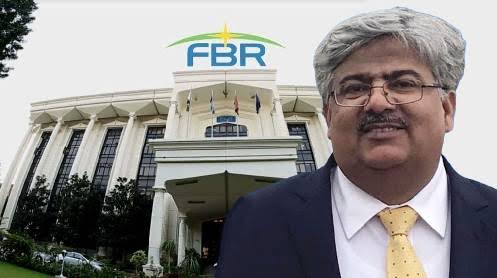
FBR Chairman Rashid Mahmood Langrial confirmed that an AI-based enforcement and monitoring system will be launched next month. The agency plans to deploy a digital algorithmic settlement mechanism to resolve outstanding tax transactions and disputes.
The tax authority expects to generate an additional Rs1,020 billion in revenue through a combination of strict compliance, policy shifts, and modern enforcement measures. The necessary digital infrastructure is already fully operational to support this revenue drive.
The high collection target comes despite recent tax relief measures granted to several sectors. The government has recently extended relief to the salaried class, exporters, and the real estate sector, whilst also rationalising the super tax and introducing a fixed tax scheme for retailers.
To counteract these concessions, the FBR will shift to conducting monthly General Sales Tax (GST) audits. This continuous monitoring is expected to substantially lift overall collections over the next twelve months.
Langrial noted that core economic indicators will dictate the trajectory of the tax drive. The bureau is banking on a projected rebound in Gross Domestic Product (GDP) growth, positive momentum in Large-Scale Manufacturing (LSM), and inflation trends to hit its numbers.
The federal government previously briefed the International Monetary Fund (IMF) and parliament on a package of 26 distinct revenue-enhancing measures designed to secure the extra Rs1,020 billion.
The strategy follows a series of downward revisions during the current fiscal year ending 30 June 2026. The FBR’s original target of Rs14,130 billion was systematically reduced to Rs13,979 billion, and eventually scaled back to Rs12,983 billion.
The baseline target agreed with the IMF for the current year stands at Rs12,961 billion. Addressing this prior shortfall, Langrial maintained that the strategic reduction of the tax burden on specific sectors proves the government’s capacity to hit the new Rs15,264 billion threshold through smarter digital compliance rather than higher rates.
We welcome your contributions! Submit your blogs, opinion pieces, press releases, news story pitches, and news features to opinion@minutemirror.com.pk and minutemirrormail@gmail.com