Summary
- More than thirteen centuries after the martyrdom of Imam Hussain ibn Ali, the grandson of Prophet Muhammad (PBUH), the questions raised on the sands of Karbala remain alive: What should a person do when power becomes unjust?
- The greatness of Karbala is not that Imam Hussain achieved a military victory; he did not.
- Karbala reminds humanity that justice is not limited to political freedom.
History is not simply a record of dates, battles, and personalities. It is a living mirror through which nations and societies examine their own conscience. Some events disappear into the pages of history, while others continue to speak to humanity across centuries. The tragedy of Karbala is one such event whose message has never faded. More than thirteen centuries after the martyrdom of Imam Hussain ibn Ali, the grandson of Prophet Muhammad (PBUH), the questions raised on the sands of Karbala remain alive: What should a person do when power becomes unjust? Should truth surrender before authority? Can societies survive when fear replaces courage and silence replaces resistance?
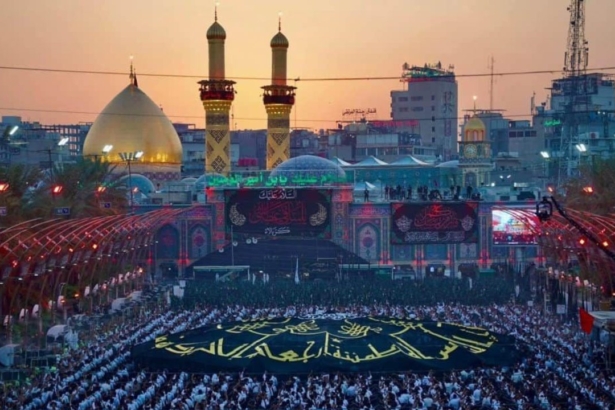
The tragedy of Karbala took place on 10th Muharram, 61 AH (680 CE), near the Euphrates River in present-day Iraq. Imam Hussain, along with his family members and companions, stood against the rule of Yazid I because he believed that accepting such authority would compromise fundamental principles of justice, morality, and accountability. Although Imam Hussain and his companions were martyred by a much larger force, their sacrifice became a timeless symbol of resistance against oppression and a struggle for truth.
Karbala was never only a military confrontation. It was a moral battle between principles and interests, between conscience and convenience, between justice and power. Its importance lies not in the size of the army or the outcome of the battlefield, but in the courage of those who chose dignity over submission.
Every era has its own Karbala. Every society faces moments when individuals and communities must decide whether to remain silent in the face of injustice or raise their voices for what is right.
Karbala: A Battle Beyond the Battlefield
The historical background of Karbala reflects a critical period of political transformation in early Islamic history. Following the death of Muawiya I, the succession of Yazid created serious disagreement, and Imam Hussain refused to give allegiance to a ruler whose governance he believed did not represent the ethical and moral values expected from leadership.
His journey toward Kufa eventually led him to Karbala, where he and his companions were surrounded by a powerful army. Despite knowing the enormous imbalance of power, Imam Hussain refused to compromise his principles.
The greatness of Karbala is not that Imam Hussain achieved a military victory; he did not. His victory was moral, spiritual, and historical. The rulers of that time possessed weapons and authority, but Imam Hussain possessed truth and courage. History proved that physical power may defeat people temporarily, but it cannot destroy ideas based on justice and sacrifice.
This is the central lesson of Karbala: the value of a struggle is not measured only by immediate success, but by the principles for which one stands.
Pakistan and the Continuing Question of Justice
Pakistan was created with the vision of democracy, equality, social justice, and protection of human dignity. However, after decades of independence, the country continues to face serious challenges that reveal a distance between national ideals and ground realities.
The message of Karbala becomes highly relevant when we examine issues such as political instability, corruption, economic inequality, weak institutions, and the suffering of ordinary citizens. A society cannot claim moral progress if millions of people continue to struggle for basic necessities while resources and opportunities remain concentrated among a limited group.
When a farmer struggles to survive because of economic pressure, when educated youth remain unemployed despite their abilities, when poor communities are denied basic facilities, these are not merely administrative failures. They are questions of justice, responsibility, and human dignity.
The spirit of Karbala teaches that injustice does not become acceptable simply because it becomes common. Wrong remains wrong, even when society becomes accustomed to it.
Power Without Accountability: A Political Challenge
One of the strongest lessons of Karbala is that power without accountability creates injustice. History repeatedly shows that rulers and institutions lose legitimacy when they separate themselves from the problems and pain of ordinary people.
Pakistan’s political journey has often been marked by struggles over power, conflicts between institutions, and difficulties in building stable democratic traditions. Too often, politics becomes focused on gaining control rather than serving the public.
The question inspired by Karbala is simple but profound: Is power a responsibility or a privilege?
Leadership is not only about holding authority; it is about protecting the rights of people. A government that ignores poverty, suppresses criticism, fails to provide justice, or prioritizes personal interests over public welfare moves away from the ethical values represented by Karbala.
True leadership requires humility, accountability, and service.
Economic Inequality: The Modern Desert of Karbala
The battlefield of modern times is not always fought with weapons. Sometimes it exists in the form of poverty, hunger, unemployment, and deprivation.
Pakistan faces significant economic challenges. Rising prices, unemployment, and unequal distribution of opportunities have increased frustration among ordinary citizens. Many families struggle to meet their basic needs while witnessing growing differences between privileged and deprived sections of society.
Karbala reminds humanity that justice is not limited to political freedom. Justice also means economic dignity. A society cannot truly progress when some citizens enjoy unlimited opportunities while others fight for survival.
The lesson of Imam Hussain’s sacrifice demands compassion for the weak and responsibility toward those who suffer. A just society must ensure that development reaches every section of the population.
Sindh: A Land of Resistance, Spirituality and Struggle
Sindh has historically been known as a land of tolerance, spirituality, and resistance against injustice. The teachings of great spiritual figures such as Shah Abdul Latif Bhittai and Sachal Sarmast emphasized love, humanity, peace, and dignity.
Within this cultural landscape, the message of Karbala has always held a deep emotional and moral significance. Sindh’s traditions have often celebrated standing with the oppressed and speaking against injustice.
However, modern Sindh faces serious challenges. Many rural communities continue to struggle with shortages of clean drinking water, weak healthcare systems, unemployment, educational difficulties, environmental destruction, and governance failures.
From the deserts of Thar to the rural areas of upper Sindh, many people continue to demand basic rights and equal opportunities. The question remains: If the message of Karbala teaches humanity to stand with the oppressed, then who will speak for those whose voices remain unheard?
Water Crisis and the Symbol of Human Dignity
The issue of water carries a special connection with the tragedy of Karbala. The denial of water to Imam Hussain’s camp remains one of the most painful symbols of injustice in history.
Today, when communities in Sindh struggle for safe drinking water despite living near rivers and canals, the issue becomes more than a development problem. It becomes a question of human dignity and state responsibility.
Access to clean water is not a luxury; it is a basic human right. When citizens depend on private arrangements for essential needs because public systems fail, it reflects a deeper governance crisis.
The moral lesson of Karbala reminds societies that denying basic necessities to people is a serious injustice.
Social Problems and the Responsibility of Society
Karbala also teaches that injustice survives not only because of those who commit oppression but also because of those who remain silent.
Pakistan and Sindh face many social challenges, including drug addiction, violence against women, intolerance, exploitation of vulnerable groups, and weakening social values. These issues continue when communities accept them as unavoidable realities.
The companions of Imam Hussain demonstrated extraordinary courage despite knowing the consequences. Their example reminds modern societies that silence in the face of injustice indirectly strengthens injustice.
A responsible society must not only criticize problems; it must participate in solving them.
The Role of Youth in Carrying Karbala’s Message
The youth are the strongest carriers of Karbala’s message because they represent the future of society.
Imam Hussain’s struggle was not limited to his own time; it was a message for generations to come. Today’s young generation must understand that leadership is not only about achieving positions, wealth, or influence. True leadership is about honesty, knowledge, service, and responsibility.
Education and critical thinking are the modern tools against ignorance and injustice. A society that remembers Karbala only through rituals but ignores its values fails to understand its true meaning.
The greatest tribute to Imam Hussain is not only remembering his sacrifice but applying his principles in daily life.
Conclusion: Every Generation Faces Its Own Karbala
Karbala is not merely a historical event confined to the seventh century. It is a continuing moral question for humanity.
Every generation faces situations where courage is required, where justice demands sacrifice, and where truth must compete against power.
For Pakistan and Sindh, the message of Karbala is clear: a nation cannot become strong only through economic growth, political slogans, or material progress. Real strength comes from justice, equality, compassion, and respect for human dignity.
The sacrifice of Imam Hussain teaches that standing for truth may be difficult, but surrendering before injustice carries a greater loss.
Because Karbala’s real battlefield is not only found in the desert of Iraq.
It exists wherever injustice challenges humanity.
And every generation must answer the same question:
Will it stand with power, or will it stand with truth?
We welcome your contributions! Submit your blogs, opinion pieces, press releases, news story pitches, and news features to opinion@minutemirror.com.pk and minutemirrormail@gmail.com