Summary
- At the recently held conference on Pakistan at Harvard University, the lack of execution was identified as the most vital missing link.
- My spontaneous response was: “The system is definitely constipated.” Like 56 other colonised states, Pakistan suffers from serious chronic constipation.
- On August 13, 2002, I took charge as Chairman of the Pakistan Science Foundation (PSF).
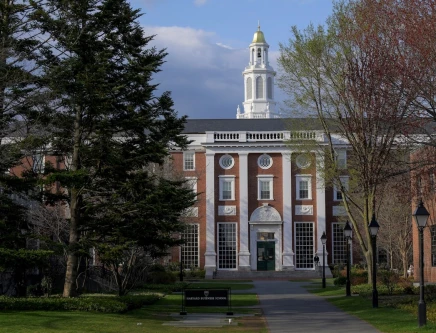
At the recently held conference on Pakistan at Harvard University, the lack of execution was identified as the most vital missing link. Despite immense potential, performance was lacking. There is no dearth of ideas or talent, yet the ground realities remain grim. The missing links have to be identified and corrected for meaningful development and growth, which have eluded the nation comprising over 250 million struggling souls.
A few years ago, Abdullah Shah, the then Chief Minister (CM) of Sindh and the father of the current incumbent, pointed out that he continued to do file work while sitting on the commode every morning. My spontaneous response was: “The system is definitely constipated.”
Like 56 other colonised states, Pakistan suffers from serious chronic constipation. A system that was designed to choke cannot deliver. Only one nation was able to break free and liberate itself from the Royal yoke; it then rose to become the world’s superpower. After driving out the British, George Washington, the father of the nation, completely dismantled the choked system. A fresh start was made. In 1787, a written constitution was approved by all the federating states to form a union called the United States of America (USA), which recently celebrated 250 years of freedom. The Liberty Bell of Philadelphia was used as a symbol, ringing loudly that day.
Pakistan started off well in August 1947. Despite all its teething problems, hope was kept alive. Both my parents actively participated in the freedom movement. After migration, the family had to struggle in the new land. The first generation born free was raised with care and compassion to take over from where their parents would leave off. By 1956, the first Constitution had also been passed. The first Islamic Republic emerged on the world map. The Government of India Act 1935 was left behind to be consigned to the history books. In 1958, elections were to be held under the new agreement between the rulers and the ruled, but instead, the boots took control. It proved to be the beginning of the end of Jinnah’s Pakistan.
Having been on both sides of the prevailing system, I have experienced both power and powerlessness. On August 13, 2002, I took charge as Chairman of the Pakistan Science Foundation (PSF). It was an autonomous organisation created through an Act of Parliament in 1974. The Chairman was appointed by the President for a term of three years. Once in the saddle, he could not be removed. I read the Act very carefully; there was an asterisk linked to a Martial Law amendment, which stated that the President could remove the Chairman if desired. On inquiry, I was told that the amendment had been made to accommodate a relative. My term ended in 2005. I made a farewell call on the Secretary of the Ministry. At the ripe age of 52, I was sent home with the remark: “You did great work but did not follow our directives.” A retired scientist, 20 years older, replaced me to neutralise the gains of my efforts.
When Pervez Musharraf took control of the country, he announced major reforms in three areas: devolution, education and health. Devolution was to be pursued through the National Reconstruction Bureau (NRB), while human development was to be addressed through the National Commission for Human Development (NCHD). The NRB was headed by Lt Gen (R) Tanvir Naqvi and the NCHD by Dr Naseem Ashraf, a US-based paediatrician and a friend of the Chief Executive (CE). I had a chance to meet both of them. Gen Naqvi was beaming with confidence. “My plan will change the course of the nation,” were his words. When I asked him about implementation, he very casually said that the bureaucracy would be told to implement it. When I highlighted my concerns about the choked system, he directed me to discuss the matter with the office of the CE. In other words, the plan was drawn up without an implementation mechanism in place.
Dr Naseem’s offer was very attractive. He promised to raise funds overseas through his contacts, while the Government of Pakistan was required to provide only the local infrastructure. He promised to take care of both the health and education sectors. Unfortunately, the flow of dollars did not materialise, and the entire programme had to be shut down.
Now Harvard University has highlighted the missing links. There will be some debate and discussion, but the ground realities will remain unchanged. Munir Niazi, the poet, talked about some evil spell that had engulfed the nation (Asabi Saiya). In Punjabi, there is a saying about the donkey remaining under the tree despite efforts to move it (Khoti Rae Bor Thalay). Unfortunately, we are all aware of the ills, but no one is willing to stick their head out. The inertia is overwhelming. Those who try are sidelined and punished. I came home at 52, while those who defy the system spend their time as OSDs (Officers on Special Duty) until they retire.
Today, the Islamic Republic of Pakistan is a rudderless state that remains afloat due to divine benevolence. Negativity prevails all over. Even Gen Z, our hope for the future, has decided to leave because its members have been intimidated by their own state. Serious soul-searching is required before it is too late. Now that Harvard has spoken, it may be taken as a wake-up call by those who look westwards for answers.
We welcome your contributions! Submit your blogs, opinion pieces, press releases, news story pitches, and news features to opinion@minutemirror.com.pk and minutemirrormail@gmail.com