Summary
- Since 2018, the Fifth Schedule of the Petroleum Products (Petroleum Levy) Ordinance, 1961, which sets the maximum levy rates, has been amended through Finance Acts, that is, Money Bills.
- On 24 November 2026, the National Assembly Standing Committee on Petroleum Division, chaired by Syed Mustafa Mehmood, could not finalise the Petroleum Products (Petroleum Levy and Climate Support Levy) (Amendment) Bill, 2026, citing unresolved legal and drafting issues.
- https://minutemirror.com.pk/petroleum-levy-and-climate-support-levy-bill-2026-hits-roadblock-665183/ Statutes and constitutional provisions cited: Finance Act 2018; Finance Act 2022; Finance Bill 2024; Petroleum Products (Petroleum Levy) Amendment Act 2011; Constitution of Pakistan, Article 73.
Pakistan’s petroleum pricing is no longer an energy policy instrument. It is a revenue machine, and its flaws run through every stage: how the levy is imposed, what it is legally, how prices are fixed, and who pays. Collections tell the story. The petroleum levy raised Rs1.57 trillion in fiscal year (FY) 2025-26. For FY2026-27 the oil and gas receipts target is Rs1.998 trillion, of which the levy alone is Rs1.677 trillion, nearly 84 per cent.2 A “levy” on two products now carries about a tenth of what the Federal Board of Revenue is expected to collect.
An imposition built on a constitutional shortcut
The first flaw is procedural. Since 2018, the Fifth Schedule of the Petroleum Products (Petroleum Levy) Ordinance, 1961, which sets the maximum levy rates, has been amended through Finance Acts, that is, Money Bills. The Finance Act 2018 capped the levy at Rs30 per litre. The Finance Act 2022 raised the cap to Rs50, and the Finance Bill 2024 proposed Rs80 for diesel and petrol.1
Article 73 of the Constitution confines Money Bills to the matters listed in clause (2). The Supreme Court, in the Workers Welfare Fund case, upheld the Lahore High Court’s warning that matters outside those categories must not “stealthily crawl into a money bill.”3 A levy that is not a tax cannot ride on tax legislation. Yet each time, the Senate was reduced to making non-binding recommendations within fourteen days, rather than taking part in ordinary legislation.
By contrast, the 2011 amendment to the same Ordinance passed through both Houses as the Constitution requires. The argument we advanced in 2024 remains unanswered: if the foundation is unconstitutional, the superstructure of administrative orders built upon it is untenable.1
Neither tax nor fee, whichever suits the government
The second flaw is conceptual. The government treats the levy as a tax when it needs Money Bill speed, and as a non-tax when it needs to keep the proceeds. Because the levy is not legally a tax, it never enters the divisible pool under the National Finance Commission (NFC) Award, and provinces get nothing from it. The same logic explains why petrol is effectively spared sales tax, which would have to be shared with the provinces.2
The per-litre structure shows the design: Rs80 petroleum levy, Rs5 climate support levy and Rs17.28 customs duty as of August 2026.2 The government’s resistance to IMF suggestions to replace the levy with sales tax is revealing. The petroleum minister himself has linked any reduction to finding an alternative revenue source. The reason is simple: the levy is retained entirely by the federation. This is fiscal federalism circumvented by classification.
A pricing mechanism that mimics the market without being one
The third flaw lies in the price formula. Under the mechanism approved in July 2026, the free-on-board price of motor spirit and high-speed diesel is based on a seven-working-day rolling average of Platts Arab Gulf assessments, and OGRA publishes ex-depot prices daily without federal approval for each revision.2 This looks technical and market-driven. It is neither.
Import parity means local refineries are paid as if their output were imported, whatever it actually costs to produce. The petroleum minister has said that around 70 per cent of diesel is refined domestically, with PARCO running at full capacity and other refineries at 84-85 per cent utilisation.2 Yet consumers pay import-parity prices on a large domestic share.
Meanwhile, the formula’s apparent neutrality hides the largest component of the pump price: the levy and duties layered on top, set by government at will. A price that moves daily with Gulf benchmarks, but never falls below a fiscal floor chosen by the Treasury, is a tax with a market-sounding label.
The 24-hour experiment and its victims
The daily mechanism has produced its own distortions. The Pakistan Petroleum Dealers Association warned at a Karachi press conference that determining prices every 24 hours is unsustainable. They said daily changes leave petrol station owners managing stock and cash under constant uncertainty, and cautioned that stations may close across the country if the situation continues.
They demanded a minimum dealers’ margin of 8 per cent and rejected the proposal to hand pricing authority to oil marketing companies.4 Neither a government that decides everything nor a private oligopoly that decides everything is a sound answer.
The dealers’ complaint exposes the deeper problem: the mechanism was designed around the Treasury’s convenience, not around the supply chain it governs. Nobody consulted those who actually sell the fuel.
Legislative confusion in 2026
The government’s own legislative drafting reflects this confusion. On 24 November 2026, the National Assembly Standing Committee on Petroleum Division, chaired by Syed Mustafa Mehmood, could not finalise the Petroleum Products (Petroleum Levy and Climate Support Levy) (Amendment) Bill, 2026, citing unresolved legal and drafting issues.
The committee directed the Petroleum Division to consult the Law and Justice Division and senior tax experts to remove inconsistencies and simplify the language. Two related bills, on the natural gas development surcharge and the gas infrastructure development cess, were also deferred.5 A levy collected in the trillions is being run on legislation that its own parliamentary committee finds flawed. The same meeting heard concerns about the diversion and adulteration of cheaper diesel, and raised questions about transparency in imported LPG procurement. These are the symptoms of a policy framework assembled in haste.
Who pays
The burden falls heavily. In September 2026, headline inflation was 10.3 per cent, but transport inflation reached 27.43 per cent year-on-year and urban motor fuel rose 37.73 per cent. Petrol and diesel remain about 50 and 45 per cent above pre-conflict levels despite recent declines. Staple foods remain over 14 per cent above their pre-conflict level, with wheat flour 19 per cent higher.2 The chain is straightforward: fuel raises logistics costs, which raise food prices.
At the bottom, a Bykea rider in Islamabad told Arab News that from a Rs200 ride, after the company’s 20 per cent, around Rs100 of the remaining Rs160 goes on petrol.2 Relief exists, but it is thin: a subsidy programme covers 9 million low-income people, with motorcycle users receiving Rs500 per week.
The government says it has provided about Rs129 billion in price relief, financed by cutting development spending. In other words, citizens are being asked to fund the relief for a burden the state itself created.
The way forward
The real issue is not the technical parameters of the formula. Whether prices are set weekly, daily or “deregulated”, the outcome stays the same if the levy remains the government’s preferred way to fill fiscal gaps and avoid NFC sharing.2 Several reforms follow:
- Any change to levy ceilings should pass through both Houses by the ordinary legislative procedure, not as part of a Money Bill.
- The levy should be phased down gradually, as the Jamaat-e-Islami proposal suggests (towards Rs5-10 per litre), and replaced by taxes with a wider base: withdrawal of exemptions, higher excise on luxury imports, surcharges on the largest corporations and highest incomes, and taxation of agricultural income.
- Fuel pricing should be transparent, with a published breakdown of refinery cost, import parity, levy, duty and dealer margin, and consultation with dealers before any change.
- Provinces should share in revenue from petroleum products, consistent with the spirit of the NFC.
Until then, every price notification will repeat the same story: the formula changes, the extraction does not.
References
- Haq, I. (2024). “Unconstitutionally Levying A Petroleum Levy”. The Friday Times, 15 June. https://www.thefridaytimes.com/15-Jun-2024/unconstitutionally-levying-a-petroleum-levy
- Bukhari, H. and Haq, I. (2026). “Extraction & POL price fixing”. Business Recorder, 16 October. https://www.brecorder.com/news/40444436
- Supreme Court of Pakistan, Workers Welfare Funds v East Pakistan Chrome Tannery (Pvt.) Ltd(2016) 114 TAX 385, affirming 2011 PTD 2643 (Lahore High Court); discussed in The Friday Times, 18 November 2023. https://www.thefridaytimes.com/18-Nov-2023/malice-towards-none-all-billions-belonging-to-workers-remain-unpaid
- Bilal, K. (2026). “Petroleum dealers warn of petrol station closures over 24-hour pricing mechanism”. Minute Mirror, 23 November. https://minutemirror.com.pk/petroleum-dealers-warn-of-petrol-station-closures-over-24-hour-pricing-mechanism-664764/
- Tanoli, N. (2026). “Petroleum levy and climate support levy bill 2026 hits roadblock”. Minute Mirror, 24 November. https://minutemirror.com.pk/petroleum-levy-and-climate-support-levy-bill-2026-hits-roadblock-665183/
- Statutes and constitutional provisions cited: Finance Act 2018; Finance Act 2022; Finance Bill 2024; Petroleum Products (Petroleum Levy) Amendment Act 2011; Constitution of Pakistan, Article 73.
_______________________________________________________________
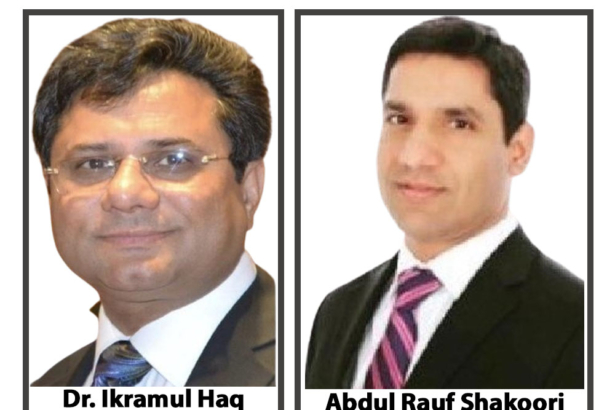
Dr. Ikramul Haq, Advocate Supreme Court, specializes in constitutional, corporate, environment, media, ML/CFT related laws, IT, intellectual property, arbitration and international tax laws. He holds an LLD in tax laws with specialization in transfer pricing. He was full-time journalist from 1979 to 1984 with Viewpoint and Dawn. He served Civil Services of Pakistan from 1984 to 1996.
He established Huzaima & Ikram in 1996 and is presently its chief partner. He studied journalism, English literature and law. He is Chief Editor of Taxation. He is country editor and correspondent of International Bureau of Fiscal Documentation (IBFD) and member of International Fiscal Association (IFA). He is Visiting Faculty at Lahore University of Management Sciences (LUMS) and member Advisory Board and Visiting Senior Fellow of Pakistan Institute of Development Economics (PIDE).
He has coauthored with Huzaima Bukhari many books that include, Tax Reforms in Pakistan: Historic & Critical Review, Towards Broad, Flat, Low-rate, and Predictable Taxes (third edition, 2024), Pakistan: Enigma of Taxation, Towards Flat, Low-rate, Broad and Predictable Taxes (revised/enlarged edition of December 2020), Law & Practice of Income Tax, Law , Practice of Sales Tax, Law and Practice of Corporate Law, Law & Practice of Federal Excise, Law & Practice of Sales Tax on Services, Federal Tax Laws of Pakistan, Provincial Tax Laws, Practical Handbook of Income Tax, Tax Laws of Pakistan, Principles of Income Tax with Glossary and Master Tax Guide, Income Tax Digest 1886-2011 (with judicial analysis).
He is author of Commentary on Avoidance of Double Taxation Agreements, Pakistan: From Hash to Heroin, its sequel Pakistan: Drug-trap to Debt-trap and Practical Handbook of Income Tax. Two books of poetry are Phull Kikkaran De (Punjabi 2023) and Nai Ufaq (Urdu 1979 with Siraj Munir and Shahid Jamal).
He regularly writes columns/article/papers for many Pakistani newspapers and international journals and has contributed over 3500 articles on a variety of issues of public interest, printed in various journals, magazines and newspapers at home and abroad.
_______________________________________________________________
Abdul Rauf Shakoori, Advocate High Court, is a subject-matter expert on AML-CFT, Compliance, Cyber Crime and Risk Management. He has been providing AML-CFT advisory and training services to financial institutions (banks, DNFBPs, Investment companies, Money Service Businesses, insurance companies and securities), government institutions including law enforcement agencies located in North America (USA & CANADA), Middle East and Pakistan.
His areas of expertise include legal, strategic planning, cross-border transactions including but not limited to joint ventures (JVs), mergers & acquisitions (M&A), takeovers, privatizations, overseas expansions, USA Patriot Act, Banking Secrecy Act, Office of Foreign Assets Control (OFAC). Over his career he has demonstrated excellent leadership, communication, analytical, and problem-solving skills and have also developed and delivered training courses in the areas of AML/CFT, Compliance, Fraud & Financial Crime Risk Management, Bank Secrecy, Cyber Crimes & Internet Threats against Banks, E–Channels Fraud Prevention, Security and Investigation of Financial Crimes. The courses have been delivered as practical workshops with case study driven scenarios and exams to ensure knowledge transfer.
His notable publications are Rauf’s Compilation of Corporate Laws of Pakistan, Rauf’s Company Law and Practice of Pakistan and Rauf’s Research on Labour Laws and Income Tax and others.
His articles include: Revenue collection: Contemporary targets vs. orthodox approach, It is time to say goodbye to our past, US double standards, Was Due Process Flouted While Convicting Nawaz Sharif?, FATF and unjustly grey listed Pakistan, Corruption is no excuse for Incompetence, Next step for Pakistan, Pakistan’s compliance with FATF mandates, a work in progress, Pakistan’s strategy to address FATF Mandates was Inadequate, Pakistan’s Evolving FATF Compliance, Transparency Curtails Corruption, Pakistan’s Long Road towards FATF Compliance, Pakistan’s Archaic Approach to Addressing FATF Mandates, FATF: Challenges for June deadline, Pakistan: Combating the illicit flow of money, Regulating Crypto: An uphill task for Pakistan. Pakistan’s economy – Chicanery of numbers. Pakistan: Reclaiming its space on FATF whitelist. Sacred Games: Kulbhushan Jadhav Case. National FATF secretariat and Financial Monitoring Unit. The FATF challenge. Pakistan: Crucial FATF hearing. Pakistan: Dissecting FATF Failure, Environmental crimes: An emerging challenge, Countering corrupt practices .
The recent publication, coauthored by these writes with Huzaima Bukhari is:
Pakistan Tackling FATF: Challenges & Solutions, available at:
https://aacp.com.pk/book-detail/pakistan-tackling-fatf-challenges-and-solutions-35
https://www.amazon.com/dp/B08RXH8W46
We welcome your contributions! Submit your blogs, opinion pieces, press releases, news story pitches, and news features to opinion@minutemirror.com.pk and minutemirrormail@gmail.com