Summary
- The growing movement, driven largely by Generation Z, has emerged as one of the most prominent public challenges to the current administration, reflecting widespread dissatisfaction over unemployment, alleged examination scandals, and concerns about the country’s education system.
- The movement continues to be led primarily by young people, and many observers describe it as the collective voice of Generation Z demanding greater transparency, fairness, and employment opportunities.
- Whether the administration chooses dialogue, policy reforms, or stronger security measures in response to the protests could significantly influence public opinion and shape India’s political landscape in the months ahead.
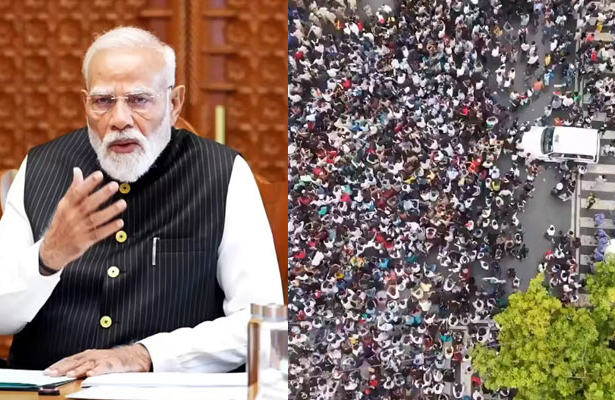
India is witnessing a significant wave of youth-led protests that has intensified political pressure on Prime Minister Narendra Modi’s government during its third consecutive term. The growing movement, driven largely by Generation Z, has emerged as one of the most prominent public challenges to the current administration, reflecting widespread dissatisfaction over unemployment, alleged examination scandals, and concerns about the country’s education system.
The protest movement has gained momentum through a platform known as the “Cockroach Janata Party,” which has become a symbolic outlet for the frustration of young Indians. Although the name began as a satirical expression on social media, it has rapidly evolved into a broader movement that has attracted thousands of participants across different regions. The campaign highlights the growing anger among students and young professionals who believe that the government has failed to address issues affecting their future.
The movement received further attention following the hunger strike and reported forced removal of activist Sonam Wangchuk, developments that protesters say strengthened public support for the demonstrations. Many participants argue that such actions have reinforced concerns about the government’s response to peaceful dissent and have encouraged more young people to join the protests.
According to a reports , the demonstrations are being viewed as the biggest wave of public pressure faced by Prime Minister Modi since the beginning of his third term in office. The protests are rooted in several long-standing grievances, including examination irregularities, rising unemployment among educated youth, and declining confidence in India’s education system. Protesters believe that these issues have seriously affected career opportunities and undermined trust in public institutions
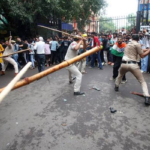
Tensions escalated during a protest march toward the Indian Parliament, where clashes broke out between demonstrators and security personnel. Authorities attempted to stop protesters from reaching the Parliament complex, leading to confrontations that further heightened the political atmosphere
Official figures released after the clashes stated that at least 180 people were injured, including 118 police officers and 60 protesters. The remaining injured individuals were not immediately identified. In response to the unrest, authorities temporarily suspended mobile internet services in several sensitive areas of the city, citing security concerns. Such restrictions have drawn criticism from rights groups and civil society organizations, which argue that internet shutdowns limit communication and restrict access to information during times of public unrest.
One of the protesters’ primary demands is the resignation of the country’s Education Minister. Demonstrators argue that accountability is necessary in light of the alleged examination controversies and the broader crisis facing the education sector. The movement continues to be led primarily by young people, and many observers describe it as the collective voice of Generation Z demanding greater transparency, fairness, and employment opportunities.
According to Deutsche Welle (DW), the campaign initially began as a satirical online movement but quickly transformed into an organized nationwide protest. What started as digital criticism on social media has evolved into large-scale street demonstrations that reflect deep frustration among young Indians over limited job prospects, educational challenges, and uncertainty about their future.
As the movement continues to expand, political analysts believe it represents a critical test for the Modi government. Whether the administration chooses dialogue, policy reforms, or stronger security measures in response to the protests could significantly influence public opinion and shape India’s political landscape in the months ahead.
We welcome your contributions! Submit your blogs, opinion pieces, press releases, news story pitches, and news features to opinion@minutemirror.com.pk and minutemirrormail@gmail.com