Summary
- PPP Chairman Bilawal Bhutto‑Zardari delivered fiery speeches promising constitutional rights and employment opportunities, while PML‑N leader Nawaz Sharif emphasized development projects and infrastructure.
- Campaign promises and rhetoric Bilawal Bhutto‑Zardari urged voters to support PPP’s “arrow” symbol, promising to secure constitutional rights and provincial status for GB.
- With Bilawal promising constitutional rights and Hafeezur Rehman emphasizing development, the outcome will determine not only GB’s leadership but also the trajectory of its long‑standing demand for provincial status.
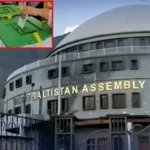
Polling for 24 directly elected seats of the Gilgit-Baltistan Legislative Assembly concluded on Sunday after a day of voting that unfolded under tight security and largely peaceful conditions. The elections, delayed for four months due to harsh winter weather, mark a pivotal moment for the mountainous region’s political trajectory. Yet even as ballots were cast without violence, allegations of irregularities and federal interference quickly surfaced, raising questions about transparency and fairness in a contest that has drawn national attention.
A delayed but crucial vote
The Gilgit-Baltistan Assembly comprises 33 seats in total: 24 contested through direct elections, six reserved for women, and three for technocrats and professionals. Political parties nominate candidates for the reserved seats through proportional representation, meaning the outcome of the direct vote will shape the balance of power in the chamber.
Sunday’s vote was originally scheduled months earlier but was postponed due to the severe winter conditions that often make parts of the region inaccessible. Polling began at 8 a.m. and concluded at 5 p.m., with voters turning out across the ten districts of GB. The Election Commission reported 963,034 registered voters, including 566,097 men and 396,937 women.
A total of 396 candidates contested the elections, with 266 running as independents. Only eight women stood for election, five of them as independents, underscoring the challenges of female political participation in the region.
Main contenders for power
The race for chief minister is expected to be closely fought between PPP’s Amjad Hussain and PML‑N’s Hafeezur Rehman. Both parties campaigned aggressively, with their leaders touring the region in the weeks leading up to the vote. PPP Chairman Bilawal Bhutto‑Zardari delivered fiery speeches promising constitutional rights and employment opportunities, while PML‑N leader Nawaz Sharif emphasized development projects and infrastructure.
Other parties also fielded candidates: IPP with 15, PML‑Q with 11, Tehreek‑i‑Islami Pakistan and Pakistan Nazriyati Party with 10 each, and JUI‑F with nine. PTI, weakened by internal divisions and lacking its electoral symbol, allied with Majlis Wahdat‑e‑Muslimeen (MWM).
Allegations of irregularities
Despite the peaceful atmosphere, PPP leaders quickly raised concerns about transparency. Secretary General Nayyar Hussain Bukhari alleged that presiding officers were not issuing Form‑45, the official document recording vote counts at polling stations. “We have contacted the chief election commissioner and informed him about the matter,” Bukhari said.
PPP spokesperson Shazia Marri described the delay as “unacceptable,” claiming voter lists had been altered and polling stations relocated. One example cited was the Balachi polling station in Astore‑II’s Bunji area, which PPP said was moved overnight from a roadside location to a hilltop, discouraging voters known to support the party. The station had 206 registered voters, and PPP alleged the relocation was designed to suppress turnout. Residents reportedly blocked the Gilgit‑Skardu Road in protest.
Marri vowed the party would not allow “an attempt to steal the public’s mandate” to succeed. PPP’s Nadeem Afzal accused the federal government of “electoral engineering,” pointing to the presence of federal ministers Amir Muqam and Aleem Khan in GB. He claimed their activities pressured local officials and undermined the neutrality of the process.
“There are also reports that presiding officers are being pressurised not to issue Form‑45, which raises a question on the election’s transparency,” PPP leader Qamar Zaman Kaira added in a statement.
Election Commission and judiciary’s role
GB Chief Election Commissioner Raja Shahbaz Khan toured polling stations in Gilgit, praising security arrangements and noting strong female turnout. He said women were voting in large numbers, reflecting growing awareness of democratic rights. Khan assured the Supreme Appellate Court that elections would be conducted transparently, after the court directed the commission to ensure fairness following a letter from Khyber Pakhtunkhwa Chief Minister Sohail Afridi.
The appellate court emphasized equal opportunities for all parties and affirmed its commitment to justice. In response, the CEC detailed steps taken to guarantee impartiality, including delegating magistrate powers to returning officers to maintain order.
Security arrangements
Security was extensive, with 6,000 Punjab police and 2,000 Islamabad police deployed, including 150 from the security division. Of 1,391 polling stations, 488 were categorized as normal, 349 as sensitive, and 551 as highly sensitive. Diamer district had the highest number of highly sensitive stations, with 119 out of 174.
Caretaker Interior Minister Sajid Ali Baig said he visited polling stations and found the environment peaceful, though he acknowledged public demands for more police in certain areas. Minor irregularities were reported but addressed promptly.
Campaign promises and rhetoric
Bilawal Bhutto‑Zardari urged voters to support PPP’s “arrow” symbol, promising to secure constitutional rights and provincial status for GB. “I want to get the people of Gilgit‑Baltistan haq‑i‑hakmiyat (right to govern). I want to get Gilgit‑Baltistan constitutional rights. Come, make PPP win so we can make GB the fifth province,” he said. He also pledged employment opportunities and land rights for youth.
PML‑N’s campaign focused on development, promising infrastructure projects and economic growth. Nawaz Sharif’s visit to Gilgit was intended to rally support and highlight the party’s record of investment in the region.
Political context
The last elections in November 2020 were won by PTI, which was also in power at the federal level. However, PTI’s chief minister Khalid Khurshid Khan was disqualified in July 2023 over a fake degree allegation. A coalition government was then formed by PTI, PPP, and PML‑N members, with Haji Gulbar Khan, an estranged PTI member, elected as chief minister.
In the run‑up to the current polls, PTI complained of being denied a level playing field, citing expulsions of leaders from GB and restrictions on campaign activities. PPP also criticized the deployment of Punjab police and federal ministers’ involvement in PML‑N’s campaign.
Broader implications
The elections carry weight beyond GB’s borders. PPP has framed the contest as part of its push for constitutional recognition of GB as Pakistan’s fifth province, a longstanding demand of residents. PML‑N has emphasized development, seeking to position itself as the party of economic progress. PTI, weakened but still present, has tried to rally support by highlighting alleged unfair treatment.
Observers say the outcome will shape GB’s political future and influence national debates about provincial status, resource allocation, and representation. The region’s strategic location, bordering China and serving as a gateway to the China‑Pakistan Economic Corridor (CPEC), adds to the stakes.
Conclusion
While polling concluded without violence, the PPP’s allegations of manipulation — particularly regarding Form‑45 and polling station changes — raise serious questions about transparency. The Election Commission’s assurances and judicial oversight will be tested as results are compiled. With Bilawal promising constitutional rights and Hafeezur Rehman emphasizing development, the outcome will determine not only GB’s leadership but also the trajectory of its long‑standing demand for provincial status.
The peaceful conduct of voting reflects growing democratic awareness among GB’s citizens, but the controversy surrounding transparency underscores the fragility of trust in electoral institutions. As results emerge, the credibility of the process will be as important as the numbers themselves in shaping the region’s political future.
We welcome your contributions! Submit your blogs, opinion pieces, press releases, news story pitches, and news features to [email protected] and [email protected]