Summary
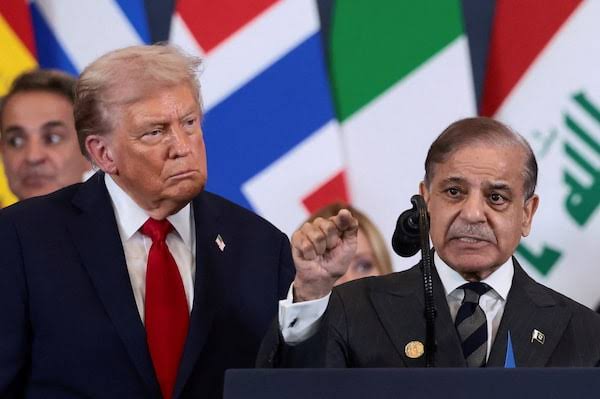
- Pakistan’s mediation has drawn widespread international acclaim after Prime Minister Shehbaz Sharif announced on June 15, 2026, that Islamabad will host the signing ceremony of a landmark peace memorandum between the United States and Iran in Geneva on June 19.
- Pakistan’s domestic perspective Addressing the National Assembly, Prime Minister Sharif called the mediation an unprecedented milestone in Pakistan’s foreign policy.
- Leaders worldwide have acknowledged that Pakistan’s mediation not only ended a destructive conflict but also delivered economic relief to markets and positioned Islamabad as a credible global peace broker.
Pakistan’s mediation has drawn widespread international acclaim after Prime Minister Shehbaz Sharif announced on June 15, 2026, that Islamabad will host the signing ceremony of a landmark peace memorandum between the United States and Iran in Geneva on June 19. The agreement permanently ends a 107‑day war that erupted on February 28 following joint US and Israeli strikes on Iran, a conflict that destabilized energy markets, disrupted global trade, and strained Pakistan’s own economy.
International appreciation
The announcement triggered an outpouring of praise from world leaders. Turkish President Recep Tayyip Erdogan thanked Pakistan for its “exceptional mediation efforts,” noting the constructive roles of Qatar and Saudi Arabia. British Prime Minister Keir Starmer congratulated US President Donald Trump and the mediators from Pakistan and Qatar for halting hostilities. China’s Foreign Ministry highlighted Islamabad’s persistence in bringing two adversaries back to the negotiating table. UN Secretary‑General Antonio Guterres described the agreement as a vital step toward resolving the Middle Eastern crisis.
European and Asian capitals echoed similar sentiments. Italian Prime Minister Giorgia Meloni said Pakistan and Qatar had created an “opportunity for peace” that the global community must seize. Japan’s Foreign Ministry conveyed appreciation for Pakistan’s “sustained” efforts during a high‑level call. Canada, Australia, Kuwait, New Zealand, and the Netherlands also issued statements recognizing Pakistan’s intervention as critical in preventing a wider collapse of global financial and energy supply chains.
Pakistan’s domestic perspective
Addressing the National Assembly, Prime Minister Sharif called the mediation an unprecedented milestone in Pakistan’s foreign policy. He noted that Islamabad had worked tirelessly since brokering a preliminary ceasefire on April 8, even hosting a sensitive meeting between US Vice President JD Vance and Iranian Parliament Speaker Bagher Qalibaf. Sharif credited Pakistan’s military leadership, paying tribute to Chief of Army Staff and Chief of Defence Forces Field Marshal Syed Asim Munir for his resilience in keeping dialogue alive when negotiations nearly collapsed.
Sharif emphasized that the memorandum will reopen the Strait of Hormuz, halt military operations across all fronts including Lebanon, and elevate Pakistan from a regional player to an indispensable arbiter of global peace.
Global impact
The deal is expected to ease the energy crisis triggered by the war, stabilize trade routes, and reduce geopolitical tensions across the Middle East. Leaders worldwide have acknowledged that Pakistan’s mediation not only ended a destructive conflict but also delivered economic relief to markets and positioned Islamabad as a credible global peace broker.
We welcome your contributions! Submit your blogs, opinion pieces, press releases, news story pitches, and news features to [email protected] and [email protected]