Summary
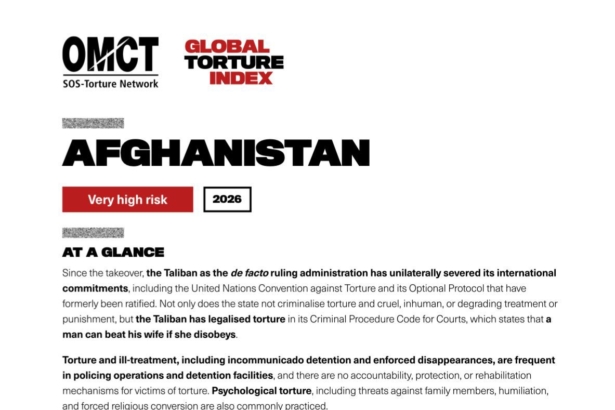
- The Global Torture Index 2026, released by the World Organisation Against Torture (OMCT), has placed Afghanistan in the “extremely high risk” category for torture, inhumane treatment, and state repression, highlighting growing concerns over the treatment of women, human rights activists, and civilians under Taliban rule.
- According to official and monitoring reports cited in the index, the number of women held in Taliban custody has increased significantly, rising from 840 in 2021 to 1,825 in 2025.
- Human rights advocates argue that after restricting women’s access to education, employment, and freedom of movement without a male guardian, the detention and alleged mistreatment of women for so-called “moral crimes” has increasingly become a tool of political control and social enforcement under Taliban governance.
The Global Torture Index 2026, released by the World Organisation Against Torture (OMCT), has placed Afghanistan in the “extremely high risk” category for torture, inhumane treatment, and state repression, highlighting growing concerns over the treatment of women, human rights activists, and civilians under Taliban rule.
According to official and monitoring reports cited in the index, the number of women held in Taliban custody has increased significantly, rising from 840 in 2021 to 1,825 in 2025. Afghanistan currently holds approximately 23,000 detainees in prisons and detention facilities, representing an incarceration rate of 54 per 100,000 people.
The report further states that 52 percent of detainees have not been convicted of any crime and remain in custody without formal sentencing or legal resolution.
Among the prison population are around 1,000 women, accounting for approximately 4.3 percent of all prisoners. These women are reportedly being held in official and unofficial detention facilities operated by the Taliban’s intelligence agency, the Ministry of Interior, and the Ministry for the Promotion of Virtue and Prevention of Vice.
Independent monitoring organizations and United Nations observers have documented allegations of severe human rights abuses inside these facilities. Reports claim that female detainees are subjected to physical violence, electric shocks, flogging, and sexual abuse while being denied access to legal representation and due process.
Human rights advocates argue that after restricting women’s access to education, employment, and freedom of movement without a male guardian, the detention and alleged mistreatment of women for so-called “moral crimes” has increasingly become a tool of political control and social enforcement under Taliban governance.
We welcome your contributions! Submit your blogs, opinion pieces, press releases, news story pitches, and news features to opinion@minutemirror.com.pk and minutemirrormail@gmail.com