Summary
- VISAKHAPATNAM: Google’s ambitious $15 billion data centre investment in India is facing mounting resistance from environmental groups, residents and legal activists, turning what was expected to be a landmark technology project into one of the country’s most closely watched development disputes.
- Water concerns spark protests In recent weeks, environmental activists have intensified protests against the project, warning that the data centre could worsen water shortages in a city already struggling to meet daily demand.
- India’s Andhra Pradesh High Court this week directed the state government to respond to allegations raised by environmental group Jal Biradari (Water Community), which claims the project could place additional pressure on regional water resources.
VISAKHAPATNAM: Google’s ambitious $15 billion data centre investment in India is facing mounting resistance from environmental groups, residents and legal activists, turning what was expected to be a landmark technology project into one of the country’s most closely watched development disputes.
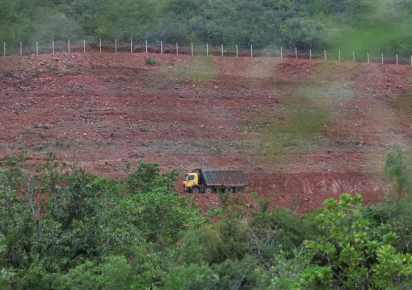
The massive project, being developed in partnership with Indian billionaire Gautam Adani’s group, is under construction in Tarluvada near the coastal city of Visakhapatnam in Andhra Pradesh. Touted as Google’s largest-ever investment in India, the facility is expected to strengthen the company’s cloud computing and artificial intelligence infrastructure while generating an estimated 188,000 jobs.
However, critics argue that the economic benefits could come at a significant environmental cost.
Water concerns spark protests
In recent weeks, environmental activists have intensified protests against the project, warning that the data centre could worsen water shortages in a city already struggling to meet daily demand.
Demonstrators, including schoolchildren, have marched through Visakhapatnam carrying banners reading “We Cannot Drink DATA”, while others painted handcuffs over Google’s logo to symbolise what they describe as the environmental consequences of unchecked technological expansion.
At a public awareness gathering attended by local campaigners, members of the environmental organisation Green Visakha outlined plans for neighbourhood campaigns and beach demonstrations aimed at increasing public awareness.
Raja Rama Mohan Roy, founder of Green Visakha, argued that development should never come at the expense of local communities.
“Development should not be at the cost of the livelihood of the people,” Roy said, pointing to government figures showing that Visakhapatnam currently receives around 410 million litres of water daily, despite requiring approximately 480 million litres. Water rationing has become a regular feature of life for the city’s 2.5 million residents, raising concerns about future demand.
Legal battle gains momentum
Opposition to the project has now reached the courts.
India’s Andhra Pradesh High Court this week directed the state government to respond to allegations raised by environmental group Jal Biradari (Water Community), which claims the project could place additional pressure on regional water resources.
The court is scheduled to hear the public interest litigation again on August 24.
Meanwhile, three additional petitions have been filed before India’s National Green Tribunal by the Human Rights Forum. The petitioners argue that authorities approved the project without conducting sufficient environmental assessments regarding water usage and ecological impacts.
Environmental groups are questioning the government’s reported commitment to provide guaranteed water supplies for the project over the next two decades while many residents continue experiencing periodic shortages.
Wildlife under threat?
Another major concern centres on the project’s location.
According to campaigners, the construction site lies only about 860 metres from the Kambalakonda Wildlife Sanctuary, a protected forest known for its biodiversity and home to species including leopards, pangolins, spotted deer and numerous bird species.
Activists fear continuous construction, heavy machinery and increased industrial activity could disturb wildlife through noise, habitat disruption and increased human presence.
The Andhra Pradesh government, however, insists the development complies with all legal requirements and maintains that the sanctuary is located at a safe distance under existing regulations.
Google also said it intends to minimise environmental impacts by installing sound-dampening technologies designed to reduce noise pollution around the facility.
Government and Google defend project
Despite growing criticism, Andhra Pradesh authorities continue to describe the project as transformational for the state’s economy.
Officials rejected accusations that environmental clearances were rushed or that local drinking water resources would be diverted for industrial use.
In a statement, the state government acknowledged citizens’ right to protest but said many claims circulating about the project were “incorrect and misleading.” It added that authorities remain willing to examine legitimate concerns and provide clarification where necessary.
Google has similarly defended the project, stating that construction will comply fully with Indian environmental regulations.
The company said it plans to use advanced air-cooling technology, significantly reducing dependence on water compared with conventional cooling systems used by many data centres.
Google also stressed that sustainability remains a key part of its global operations and that the Visakhapatnam facility would be designed to protect local water resources while supporting India’s rapidly expanding digital economy.
Global debate over data centres
The controversy reflects a broader international debate over the environmental footprint of modern data centres.
As demand for artificial intelligence, cloud computing and digital services continues to surge, technology companies worldwide are investing billions in new infrastructure. Yet these facilities often require enormous amounts of electricity and cooling, placing additional pressure on local water and power supplies.
Similar concerns have emerged across the United States and Europe, where communities have challenged large-scale data centre developments over resource consumption, environmental sustainability and their impact on nearby residents.
For Google, the Andhra Pradesh project represents a major strategic investment in one of its fastest-growing markets. But with legal challenges pending and public protests gathering momentum, the future of the project may depend not only on engineering and investment, but also on the company’s ability to convince local communities that technological progress can coexist with environmental protection.
We welcome your contributions! Submit your blogs, opinion pieces, press releases, news story pitches, and news features to opinion@minutemirror.com.pk and minutemirrormail@gmail.com