Summary
- Saudi Arabia’s oil exports to Asia are facing fresh uncertainty after Yemen’s Houthi movement announced a blockade targeting Saudi ports in the Red Sea, raising fears of major disruptions to global energy supplies and higher oil prices.
- The impact became evident after two oil tankers carrying nearly 2.8 million barrels of Saudi crude reversed course in the Red Sea instead of continuing through the Bab al-Mandeb Strait.
- Around six million barrels of crude oil pass through Bab al-Mandeb every day on their way to Asian markets, with Saudi Arabia accounting for nearly two-thirds of that volume.
Saudi Arabia’s oil exports to Asia are facing fresh uncertainty after Yemen’s Houthi movement announced a blockade targeting Saudi ports in the Red Sea, raising fears of major disruptions to global energy supplies and higher oil prices.
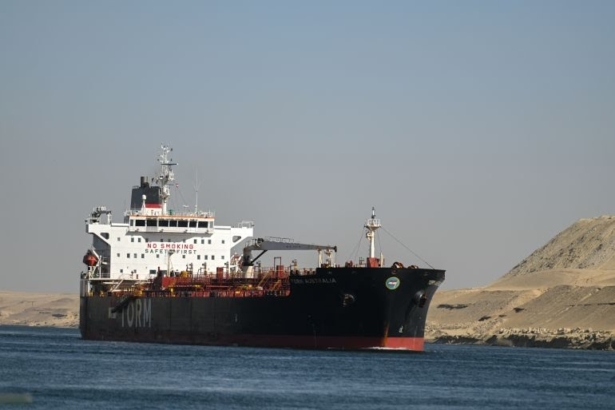
The impact became evident after two oil tankers carrying nearly 2.8 million barrels of Saudi crude reversed course in the Red Sea instead of continuing through the Bab al-Mandeb Strait. The vessels had departed from the Saudi port of Yanbu and were originally bound for Asian markets.
The latest development has created concerns over the security of Saudi Arabia’s alternative export route. For months, the kingdom relied heavily on its Red Sea pipeline network and Yanbu terminal to bypass disruptions in the Strait of Hormuz, where regional tensions have significantly reduced shipping traffic.
With Bab al-Mandeb now under threat, Saudi Arabia’s backup route is also facing serious challenges. Energy analysts warn that this could restrict oil exports, tighten global supplies and increase pressure on international crude prices.
Asian countries are expected to suffer the greatest impact because they depend heavily on Middle Eastern oil. Around six million barrels of crude oil pass through Bab al-Mandeb every day on their way to Asian markets, with Saudi Arabia accounting for nearly two-thirds of that volume.
India is considered the most vulnerable, as more than half of its crude oil imports travel through the Red Sea route. Pakistan is also among the affected countries, with around 36 percent of its crude imports passing through Bab al-Mandeb. Other major importers exposed to disruptions include the Philippines, South Korea, Japan, Taiwan and China.
To avoid conflict zones, shipping companies are evaluating a much longer route through Egypt’s Suez Canal, the Mediterranean Sea and around Africa’s Cape of Good Hope before heading towards Asia.
Although this route bypasses both the Strait of Hormuz and Bab al-Mandeb, it comes with significant drawbacks. The journey could take more than twice as long, extending delivery times by several weeks. Longer voyages would also increase fuel consumption, insurance costs and freight charges, making crude oil more expensive for buyers.
Logistical challenges further complicate the situation. Most Saudi crude from Yanbu is transported on Very Large Crude Carriers (VLCCs), which are too large to pass through the Suez Canal when fully loaded. Operators would need to either transfer part of the cargo through Egypt’s SUMED pipeline or use smaller tankers, both of which would add time and operational costs.
Energy experts believe these limitations could reduce Saudi Arabia’s export capacity even if alternative shipping routes remain available.
Some refiners in Asia have already started preparing for longer supply routes, while shipping companies are adjusting vessel schedules in anticipation of prolonged disruptions.
Analysts also warn that if instability continues in both the Strait of Hormuz and Bab al-Mandeb, the consequences could extend beyond shipping. Higher transportation costs, tighter crude supplies and increased demand for oil tankers could push global oil prices above the $100-per-barrel mark.
Alternative supplies from countries such as Russia, the United States and Venezuela may help ease shortages, but those options are limited by production constraints, longer shipping distances and higher transportation expenses.
We welcome your contributions! Submit your blogs, opinion pieces, press releases, news story pitches, and news features to opinion@minutemirror.com.pk and minutemirrormail@gmail.com