
Summary
- A day after Bilawal targeted Malik Ahmed Khan, the Speaker hit back, and in doing so set out a blunt and comprehensive position on Imran Khan, 9 May, and Maulana Fazlur Rehman’s remarks about martyrs.
- The culprits of 9 May cannot be protected by calling them political workers, he said.
- The attempt to portray Imran Khan as a political prisoner, he said, is a deliberate political strategy aimed at diverting attention from the crime of 9 May, creating a sense of victimhood among workers, gaining sympathy internationally, and giving a political colour to judicial proceedings.
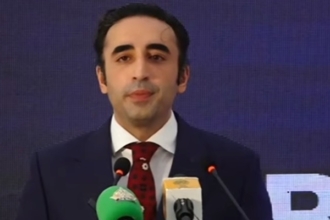
LAHORE: The war of words between PPP Chairman Bilawal Bhutto Zardari and Punjab Assembly Speaker Malik Ahmed Khan is continuing with no sign of cooling down. A day after Bilawal targeted Malik Ahmed Khan, the Speaker hit back, and in doing so set out a blunt and comprehensive position on Imran Khan, 9 May, and Maulana Fazlur Rehman’s remarks about martyrs.
His core argument was simple: calling Imran Khan a political prisoner distorts the facts. What happened on 9 May, he said, was not political activity. It was a crime, and Imran Khan and PTI are responsible for it.
How Is Imran Khan A Political Prisoner?
A political prisoner, he said, is someone jailed for an ideology, a democratic struggle, or a peaceful political stance.
Imran Khan, in his view, did none of that. He did not wage a democratic struggle, he did not lead a peaceful protest, and he did not fight for the supremacy of the Constitution and law. He did politics of attacking state institutions.
A person who spreads hatred against the state, targets institutions, and incites workers toward arson and siege cannot be called a political prisoner, he said. He is an accused facing the law.
9 May was not a protest, It was a crime
Malik Ahmed Khan called 9 May one of the darkest days in Pakistan’s history.
It was not sudden, he said, nor the result of momentary provocation. It was the outcome of years of politics of hatred, indoctrination against institutions, and convincing workers that the state was their enemy.
On 9 May, he said, military installations were attacked, martyrs’ memorials were desecrated, public property was set on fire, and Pakistan’s honour was damaged around the world. That, he said, was not protest. It was organised crime.
Desecration Of Martyrs’ Memorials
The Speaker dwelt specifically on the desecration of martyrs’ memorials. Martyrs gave their lives for this country, he said. Their sacrifices belong to no single party, government or era. They are the trust of the whole of Pakistan.
Whoever damaged their memorials, insulted them, or set fire to their statues did not merely damage a building. He wounded the sentiments of the entire nation. The culprits of 9 May cannot be protected by calling them political workers, he said. The law must take its course.
No Reconciliation Without An Apology
On the question of forgiveness, Malik Ahmed Khan was clear: there can be no reconciliation without an apology to the nation for 9 May.
First, he said, the crime must be admitted. Then an apology must be sought from the nation. Then the process of justice must be completed under the law.
PTI, he argued, is still trying to present itself as the victim by calling 9 May a conspiracy instead of accepting responsibility. A crime cannot be hidden behind a narrative of victimhood.
Maulana Fazlur Rehman’s Remarks: Already Clarified
On Maulana Fazlur Rehman’s remarks about martyrs, Malik Ahmed Khan offered a very different reading.
Maulana Fazlur Rehman is a religious scholar, the Speaker said, and his knowledge of the place and status of martyrs is greater than that of ordinary political leaders. Presenting his statement out of context, after he has clarified it, is not fair.
A Statement And A Crime Are Not The Same
Malik Ahmed Khan drew a sharp distinction between the two cases. Maulana Fazlur Rehman gave a statement, then clarified it. He attacked no military installation, desecrated no martyrs’ memorial, and incited no worker to arson or siege.
In contrast, on 9 May, attacks were carried out in practice, properties were burnt, memorials were broken, and law was broken. There is a world of difference between clarifying a statement and committing a crime in practice, he said. The two cannot be weighed on the same scale.
Why The Political Prisoner Narrative?
The attempt to portray Imran Khan as a political prisoner, he said, is a deliberate political strategy aimed at diverting attention from the crime of 9 May, creating a sense of victimhood among workers, gaining sympathy internationally, and giving a political colour to judicial proceedings. Facts cannot be changed by a narrative, he said. Courts decide on evidence, not slogans.
No One Is Above The Law
For Pakistan to move forward, Malik Ahmed Khan said, the supremacy of law must be maintained at all costs. No person is above the law, no party is bigger than the state, and no leader is so sacred that his crime can be covered up. If the culprits of 9 May are forgiven, he warned, others will follow the same path tomorrow, and that will be dangerous for the country.
Pakistan, he said, must now come out of the politics of hatred, bury the politics of chaos, respect the sacrifices of martyrs, and run democracy within the ambit of the Constitution. Democracy does not mean arson and siege, he said. It means the Constitution, the law, and service to the people.
We welcome your contributions! Submit your blogs, opinion pieces, press releases, news story pitches, and news features to opinion@minutemirror.com.pk and minutemirrormail@gmail.com