Summary
- The Islamabad High Court has directed all provincial chief ministers to ensure that government resources, public funds and official machinery are not used for the PTI’s planned September 27 march and protest in Islamabad.
- The chief ministers were directed to ensure that provincial resources are not used to facilitate any march, procession or rally.
- The court directed that the undertaking should clearly state that permission would not be granted for an illegal protest and that unlawful gatherings would be stopped within the authorities’ jurisdiction.
The Islamabad High Court has directed all provincial chief ministers to ensure that government resources, public funds and official machinery are not used for the PTI’s planned September 27 march and protest in Islamabad.
The court disposed of a petition challenging the planned demonstration. A larger bench headed by IHC Chief Justice Sardar Muhammad Sarfraz Dogar heard the case. Justice Muhammad Azam Khan and Justice Muhammad Asif were also part of the bench.
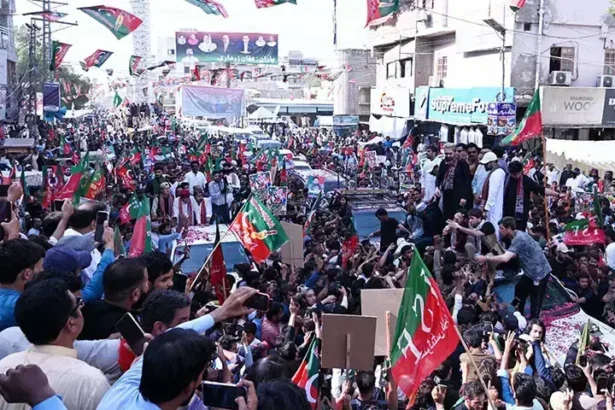
The PTI has announced a nationwide protest for September 27. The party plans to hold demonstrations, including in Islamabad, to demand the release of its founder Imran Khan and call for the supremacy of the Constitution.
The petition was filed by citizen Waqas Ahmed. He argued that the planned protest could disrupt routine life in the federal capital. He also raised concerns about traffic, business activities and access to essential services.
In its order, the court stated that no political party or leader could occupy public roads, highways, interchanges, toll plazas or government buildings in a manner that blocks access to educational institutions and medical facilities.
The court also stressed that citizens’ freedom of movement must not be obstructed.
The chief ministers were directed to ensure that provincial resources are not used to facilitate any march, procession or rally. Public funds, official vehicles, government machinery and other state equipment must not be deployed for such activities.
The court further ruled that no public servant should be forced to participate in a political march, procession or rally.
It warned that any public office holder who acts in violation of these directions would be considered to have breached constitutional obligations.
The court directed the Islamabad administration and Interior Ministry to safeguard citizens’ constitutional rights. Chief secretaries and provincial police chiefs were also ordered to ensure implementation of the directives.
During the proceedings, the court questioned the arrangements being made by the Khyber Pakhtunkhwa government ahead of the proposed protest.
The KP inspector general of police, Zulfiqar Hameed, appeared before the bench and read out an affidavit submitted to the court. The chief justice questioned him about the steps that would be taken if an unlawful protest or activity took place.
The police chief assured the court that illegal and unconstitutional activities would not be allowed. He said the police would take action and disperse protesters if they engaged in unlawful conduct.
The court directed that the undertaking should clearly state that permission would not be granted for an illegal protest and that unlawful gatherings would be stopped within the authorities’ jurisdiction.
The Islamabad administration also presented its concerns regarding the PTI’s previous protests. The Islamabad advocate general referred to demonstrations held in 2022 and 2024 and sought permission to show video footage of those events.
The court initially expressed reservations about screening videos during proceedings. It later allowed the footage to be shown once.
The government lawyer argued that previous protests had involved violence and damage to public property. He maintained that the administration needed to take preventive measures to protect citizens and maintain law and order.
He also pointed out that protests in Islamabad are subject to a legal framework. According to the government’s position, organisers are required to seek permission and provide details of the proposed gathering so that security arrangements can be made.
The lawyer further argued that authorities could impose restrictions, including Section 144, when necessary to maintain public order.
The petitioner’s counsel, however, maintained that the petition was not premature. He argued that citizens should not be required to wait for violence or damage to occur before seeking protection from the courts.
He also raised concerns about statements attributed to KP Chief Minister Sohail Afridi regarding the mobilisation of large numbers of people for the Islamabad protest.
The lawyer questioned whether such a large gathering could undermine public order and judicial independence if one of its stated objectives was to seek the release of a convicted prisoner.
After hearing arguments from both sides and recording the KP police chief’s undertaking, the court reserved its decision. It later disposed of the petition while issuing directions aimed at preventing the use of government resources for the planned political activity.
We welcome your contributions! Submit your blogs, opinion pieces, press releases, news story pitches, and news features to opinion@minutemirror.com.pk and minutemirrormail@gmail.com