


Summary
- India’s telecommunications minister has rejected claims that the country favours dominant businesses, responding to Elon Musk’s suggestion that billionaire Mukesh Ambani may be using political influence to delay the launch of Starlink’s satellite internet services.
- The Indian government has rejected suggestions of discriminatory treatment, saying that all three licensed satellite internet operators, including Starlink, were at broadly similar stages of the regulatory process.
- The dispute highlights the challenges facing satellite internet providers seeking entry into India, where regulatory requirements and competition with established telecom operators could shape the future of the rapidly developing connectivity market.
India’s telecommunications minister has rejected claims that the country favours dominant businesses, responding to Elon Musk’s suggestion that billionaire Mukesh Ambani may be using political influence to delay the launch of Starlink’s satellite internet services.
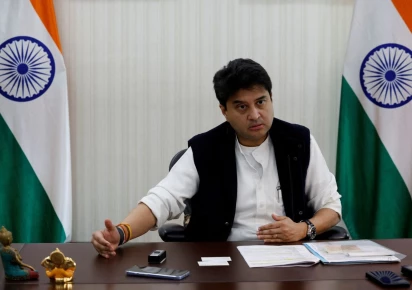
Telecommunications Minister Jyotiraditya Scindia said on Friday that India did not permit monopolies in any sector. His remarks came after Musk publicly questioned why his company’s satellite internet service had yet to begin commercial operations in the country despite years of regulatory efforts.
“Is Ambani the real boss of India?” Musk wrote on social media platform X on Thursday, raising questions about the prolonged delay. However, he provided no evidence to support his suggestion against Ambani.
Starlink, operated by Musk’s SpaceX, is seeking to enter India’s vast telecommunications market, which serves more than a billion internet users. The market is largely dominated by Reliance Jio, owned by Ambani, and Bharti Airtel, led by Sunil Mittal.
The dispute has intensified debate over regulatory procedures, competition and the influence of major business groups in India. The four-year wait for Starlink’s commercial launch has also triggered heated exchanges online, drawing political attention to the issue.
Although Starlink has obtained a licence to operate in India, it still needs to fulfil security-related requirements and receive an allocation of spectrum before launching its commercial services.
The Indian government has rejected suggestions of discriminatory treatment, saying that all three licensed satellite internet operators, including Starlink, were at broadly similar stages of the regulatory process. Officials described allegations of unfair treatment as unfounded.
Reliance Jio had not responded to a request for comment on Musk’s remarks at the time of reporting.
The dispute highlights the challenges facing satellite internet providers seeking entry into India, where regulatory requirements and competition with established telecom operators could shape the future of the rapidly developing connectivity market.
We welcome your contributions! Submit your blogs, opinion pieces, press releases, news story pitches, and news features to opinion@minutemirror.com.pk and minutemirrormail@gmail.com