Summary
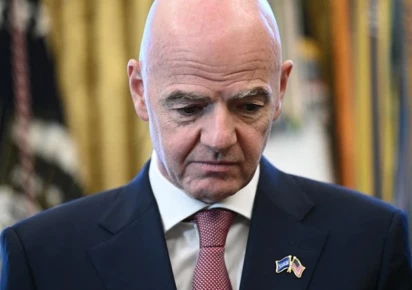
- FIFA President Gianni Infantino is facing renewed criticism after three major football confederations jointly challenged his leadership and decision-making.
- Infantino still retains support in several parts of the football world.
- The dispute comes after Infantino spent a decade at the helm of FIFA and oversaw major changes to the World Cup and the organisation’s distribution of financial resources.
FIFA President Gianni Infantino is facing renewed criticism after three major football confederations jointly challenged his leadership and decision-making.
UEFA, CONCACAF and the Asian Football Confederation (AFC) issued a strongly worded letter on Monday. They stressed that football is a collective institution and should not be controlled by any single individual.
The latest criticism follows Infantino’s controversial proposal to allow private investment in FIFA competitions, including the World Cup. The plan was withdrawn only days after it was announced following strong opposition from several football bodies.
The three confederations had previously criticised the proposal. Their latest statement indicates that tensions with FIFA’s leadership have not eased despite the withdrawal of the plan.
The organisations argued that leadership in football should be based on responsibility, transparency and collective decision-making. They accused FIFA’s leadership of failing to meet those standards.
The dispute could become particularly significant ahead of next year’s FIFA presidential election. Infantino is expected to seek a fourth and final term in office. The election is scheduled to take place in Rabat next March, while candidates must declare their intentions by November 18.
CONCACAF President Victor Montagliani is considered a potential challenger to Infantino.
Infantino had previously appeared likely to face little opposition after FIFA oversaw a successful 2026 World Cup in the United States, Mexico and Canada.
However, the private investment controversy has changed the political landscape within world football.
UEFA played a major role in forcing the proposal off the table. European football officials had warned that they could consider boycotting World Cups if the investment plan went ahead.
Such a move could have seriously affected the tournament because it could have involved major football nations, including Spain, France and England.
The three confederations said FIFA’s own explanation of the controversy had focused too heavily on communication problems. They argued that the issue was more serious and reflected what they described as a failure of judgment.
They also questioned an emergency meeting in Morocco where senior FIFA officials expressed support for Infantino.
According to the confederations, the meeting did not adequately address their concerns because only selected members of FIFA’s management leadership were involved.
They argued that FIFA’s leadership should engage directly with its wider institutional structure and staff.
Infantino still retains support in several parts of the football world. The Confederation of African Football has backed him, while South American football’s governing body CONMEBOL remains broadly supportive.
Support for him also exists within CONCACAF and the AFC, although the confederations do not vote as unified blocs in the FIFA presidential election.
The dispute comes after Infantino spent a decade at the helm of FIFA and oversaw major changes to the World Cup and the organisation’s distribution of financial resources.
The three confederations acknowledged that football had experienced significant growth during the past decade. However, they stressed that these developments were achieved through cooperation between FIFA, continental confederations, national associations and thousands of people involved in the sport.
We welcome your contributions! Submit your blogs, opinion pieces, press releases, news story pitches, and news features to opinion@minutemirror.com.pk and minutemirrormail@gmail.com