Summary
- An Iran billboard in central Tehran now carries the words “We will kill Trump”, sharply raising the tone of official messaging in the capital.
- Why Tehran uses the Iran billboard messageOfficials in Tehran say Trump ordered strikes on civilian targets on purpose, among them a school and a wedding party.
- For now, the Iran billboard shows how far public messaging and quiet diplomacy can diverge.
An Iran billboard in central Tehran now carries the words “We will kill Trump”, sharply raising the tone of official messaging in the capital.
- What the Iran billboard shows
- An exhibition in Tajrish Square
- Why Tehran uses the Iran billboard message
- Diplomacy runs alongside the display
Authorities unveiled the massive billboard, together with banners, across Tehran on Tuesday. The display took the official rhetoric in the city to a new level.
What the Iran billboard shows
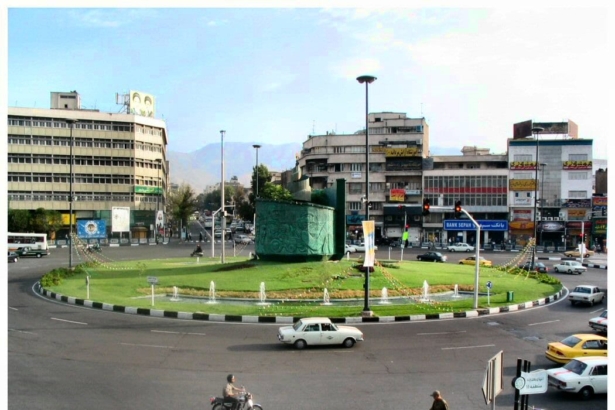
The billboard towers over the busy Enghelab Square. It portrayed the US president in a cell with his head lowered.
Since the war began on February 28, new designs mocking Trump and promising revenge have gone up around Tehran again and again. On that day, US and Israeli strikes killed the supreme leader, Ayatollah Ali Khamenei.
Designs have changed over time, but the newest one goes further than earlier ones. Moreover, it appeared on the day the United States held crucial midterm elections.
An exhibition in Tajrish Square
A separate open-air exhibition in Tajrish Square, in the north of the city, put paintings of Trump on view. One showed his face bloodied on the ground with a foot pressing on his head.
Another showed a bomb over his face, in what looked like a nod to the 1964 work The Son of Man by the Belgian surrealist René Magritte. The mix of art and theatre turned the square into a political stage.
Close by, visitors could see a full-size jail cell replica. An actor who plays Trump spent the day inside it. Next to it, a screen showed images of the damage that US strikes caused in Iran.
Why Tehran uses the Iran billboard message
Officials in Tehran say Trump ordered strikes on civilian targets on purpose, among them a school and a wedding party. They say those attacks killed dozens of people, women and children among them.
Government-backed billboards and murals have filled Iran’s public spaces ever since the revolution of 1979. Authorities use them to honour allies and military figures, and to deliver political messages to rivals, chiefly the United States and Israel.
In that sense, the Iran billboard follows a long tradition, but its direct reference to killing a sitting leader marks a sharp turn in tone.
Diplomacy runs alongside the display
At the same time, renewed diplomatic efforts have been underway in recent days to bring Tehran and Washington to the table. Mediators hope to avoid renewed fighting, which already spread across the region and lifted prices around the world.
Iran said on November 2 that “intensive” exchanges with Washington were under way. It also offered to reopen the Strait of Hormuz, but only on strict terms.
Trump, who faced the midterm vote amid voter discontent driven partly by the Iran war, has said a deal “could happen”. Still, officials in Tehran continue to put up harsh public messages while talks go on. That contrast shows how official rhetoric and quiet diplomacy can move in different directions.
For now, the Iran billboard shows how far public messaging and quiet diplomacy can diverge. Also, the Iran billboard arrives as both governments weigh whether talks can hold off renewed fighting.
We welcome your contributions! Submit your blogs, opinion pieces, press releases, news story pitches, and news features to opinion@minutemirror.com.pk and minutemirrormail@gmail.com