Summary
- Iranian Foreign Ministry spokesperson Esmaeil Baghaei said the agreement should not be viewed as a direct threat to Iran.
- Baghaei said Iran would not resume direct negotiations with the United States while Washington continues to violate an interim agreement between the two sides.
- Iran and the United States are currently not holding direct talks.
Iran has said it has no reason to believe that the new security agreement between Pakistan, Turkey and Saudi Arabia is aimed against Tehran.
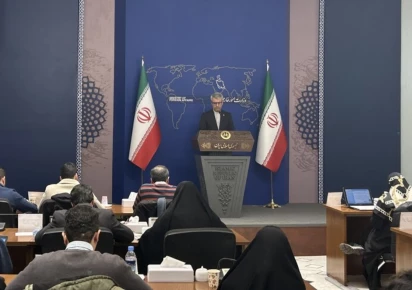
Iranian Foreign Ministry spokesperson Esmaeil Baghaei said the agreement should not be viewed as a direct threat to Iran. He said the new regional security arrangement reflects a broader change in how countries in the Middle East are approaching their security needs.
Baghaei said regional states are increasingly recognising that the United States cannot guarantee long-term security in the region. He also accused Washington of contributing to instability in the Middle East.
He said regional security arrangements could help strengthen stability if they take into account the political and historical realities of the region. He also called for such arrangements to be broad and inclusive.
Baghaei said Iran would not resume direct negotiations with the United States while Washington continues to violate an interim agreement between the two sides.
Iran has also linked the reopening of the Strait of Hormuz to several demands from Washington.
Iranian Foreign Minister Abbas Araghchi said Tehran and Oman were close to finalising an agreement on new shipping routes through the strategic waterway. He said the agreement was in its final stages.
However, Araghchi stressed that an agreement with Oman would not automatically lead to the reopening of the strait. He said the United States would first need to meet several conditions set by Tehran.
Iran is demanding compensation for damage caused by US attacks. It is also calling for an end to US military threats and sanctions against Iran.
Iran has further demanded an end to attacks against its regional allies. Other demands include the removal of restrictions on Iranian shipping and the release of frozen Iranian assets.
The Strait of Hormuz is a major international route for oil and gas shipments. Its prolonged closure has raised concerns over global energy supplies and shipping.
Iran and the United States are currently not holding direct talks. Tehran says it will not enter direct negotiations while Washington continues to breach the interim agreement reached earlier this year.
Messages between the two countries are being exchanged through intermediaries.
Iran has also made a major change in its national security leadership. Former Revolutionary Guards commander Mohsen Rezaei has been appointed secretary of the Supreme National Security Council.
Rezaei replaces Mohammad Bagher Zolghadr, who had been appointed to the position in March.
No official reason was given for the change. The move, however, comes at a sensitive time for Iran as tensions with the United States and Israel remain high.
Rezaei, 71, is a senior figure in Iran’s political and security establishment. He led the Islamic Revolutionary Guard Corps from 1981 to 1997.
He served during much of the Iran-Iraq war. He later spent more than two decades as secretary of Iran’s Expediency Discernment Council.
Rezaei also served as vice president for economic affairs from 2021 to 2023 under former President Ebrahim Raisi.
Iran’s Supreme Leader Mojtaba Khamenei has also appointed Rezaei as his representative on the Supreme National Security Council.
Zolghadr has been appointed as Khamenei’s political adviser.
The Supreme National Security Council coordinates Iran’s security and foreign policy. It includes senior military, intelligence and government officials.
Meanwhile, differences between the United States and Israel are reportedly growing over military operations across the region.
Israeli broadcaster Channel 13 reported that Washington is pushing Israel to move toward ending fighting on three fronts. These include Gaza, Lebanon and Iran.
US Central Command chief Admiral Brad Cooper reportedly conveyed the message during a visit to Israel.
Washington wants progress toward reducing military operations and closing the three active fronts. Israeli officials, however, have indicated that they want to maintain freedom to act against Iran.
Israeli military officials reportedly told their US counterparts that Israel intends to retain the ability to strike Iran if Tehran continues developing its nuclear programme or rebuilding its ballistic missile capabilities.
Washington is also pushing for further Israeli withdrawals from positions in southern Lebanon.
In Gaza, the United States is seeking progress toward a broader settlement. It is also supporting the deployment of a multinational force in the territory.
Israeli security officials have reportedly objected to some US demands. These include reducing military operations and targeted killings in Gaza.
The developments point to growing differences between Washington and Tel Aviv over how to manage conflicts involving Iran, Lebanon and Gaza.
At the same time, the United States appears to be adopting a more cautious approach toward Iran. Tehran, however, continues to link the reopening of the Strait of Hormuz to major concessions from Washington.
We welcome your contributions! Submit your blogs, opinion pieces, press releases, news story pitches, and news features to opinion@minutemirror.com.pk and minutemirrormail@gmail.com