Summary
- Iran has expressed appreciation to Pakistan for abstaining during a United Nations Security Council vote that allowed a meeting on Tehran’s nuclear programme to proceed.
- Iravani argued that because the resolution had ended, there was no legal justification for the secretary general to present reports or for the Security Council to continue debating Iran’s nuclear programme under its non proliferation agenda.
- The Security Council meeting reflected continuing disagreements over the future of the 2015 nuclear agreement and the international approach toward Iran’s nuclear programme.
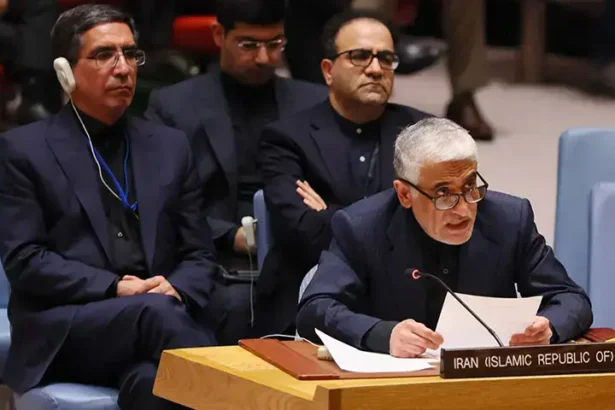
Iran has expressed appreciation to Pakistan for abstaining during a United Nations Security Council vote that allowed a meeting on Tehran’s nuclear programme to proceed. Iranian officials argued that the session had no legal basis and accused several Western countries of using the Security Council for political purposes.
Following the meeting, Iran’s Ambassador to the United Nations, Amir Saeid Iravani, thanked Pakistan and Somalia for not supporting the decision to convene the session. He also acknowledged Russia and China for voting against holding the meeting.
The Security Council session had been requested by Bahrain along with five European members of the council including Denmark, France, Greece, Latvia, and the United Kingdom. The discussion focused on the implementation of Resolution 2231, which endorsed the 2015 nuclear agreement between Iran and world powers, as well as the latest report submitted by the United Nations secretary general.
Iran rejected the legitimacy of the meeting, maintaining that Resolution 2231 expired in October last year and no longer provides a legal framework for further discussions. Iravani argued that because the resolution had ended, there was no legal justification for the secretary general to present reports or for the Security Council to continue debating Iran’s nuclear programme under its non proliferation agenda.
The Iranian envoy also criticised France, Germany, and the United Kingdom over their efforts to use the agreement’s snapback mechanism, which allows for the possible restoration of international sanctions. He argued that those countries had failed to fulfil their own commitments under the 2015 nuclear deal and therefore could not rely on its provisions to seek renewed sanctions.
Iravani further accused the United States and Israel of violating international law through military actions targeting Iran. He said both countries should be held responsible for the consequences of those actions and called for greater international accountability.
Responding to concerns over Iran’s nuclear activities, Iravani insisted that the country’s programme remains peaceful and continues to operate under extensive monitoring by the International Atomic Energy Agency. He rejected allegations that Iran has diverted its nuclear programme toward military purposes and said such claims are not supported by evidence.
The Iranian representative also accused several Western governments of misusing the Security Council to advance political objectives rather than addressing genuine international concerns. He argued that their actions were intended to misrepresent the facts surrounding Resolution 2231 and place unnecessary pressure on Iran.
Speaking about regional security, Iravani addressed recent concerns involving the Strait of Hormuz. He said responsibility for maintaining safe navigation and carrying out any required demining operations rests solely with Iran under the Islamabad Memorandum of Understanding. He warned that outside involvement in those activities could complicate the agreement and increase tensions in the region.
The Security Council meeting reflected continuing disagreements over the future of the 2015 nuclear agreement and the international approach toward Iran’s nuclear programme. While Western countries maintain that the resolution still provides a basis for diplomatic discussions, Tehran continues to argue that its legal authority has ended and that further debates under the same framework are no longer justified.
We welcome your contributions! Submit your blogs, opinion pieces, press releases, news story pitches, and news features to opinion@minutemirror.com.pk and minutemirrormail@gmail.com