Summary
- Meanwhile, Iranian Parliament Speaker Mohammad Bagher Ghalibaf warned that US energy interests in the Gulf could become targets if Washington attacks Iran’s oil and gas infrastructure.
- His remarks followed warnings from US officials that Iranian oil vessels could be targeted in response to attacks on American naval forces.
- US Defence Secretary Pete Hegseth also warned that Iranian oil tankers could be targeted if attacks on US naval forces continued.
TEHRAN: Iran has warned that it will respond if the United Nations nuclear watchdog adopts a resolution against Tehran, as tensions with the United States continue to escalate.
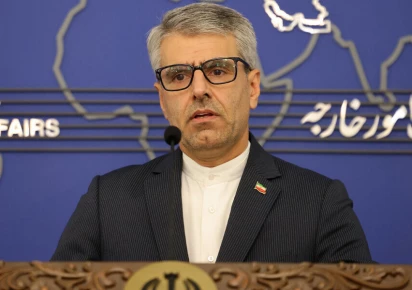
Iranian Foreign Ministry spokesperson Esmaeil Baghaei said on Monday that Tehran would reciprocate any action by the International Atomic Energy Agency (IAEA). He also criticised European countries seeking a new resolution, saying Iran’s nuclear facilities had become inaccessible because of the ongoing conflict.
Responding to US Vice President JD Vance’s remarks that he would not describe the confrontation as a “war”, Baghaei said the situation should instead be viewed as “overt aggression” against Iran.
The spokesperson also confirmed that a Qatari delegation travelled to Tehran on Sunday as part of efforts to reduce tensions. He said a technical delegation from Iran’s Armed Forces General Staff had also recently travelled to Qatar to conduct specialised investigations into the case of missing pilots.
Baghaei separately warned South Korea against becoming militarily involved in operations in the Persian Gulf or the Strait of Hormuz. He said any South Korean military presence or participation would be viewed by Tehran as support for what Iran describes as US aggression.
He stressed that Iran values its long-standing relations with South Korea but warned that countries should not allow themselves to be pressured into supporting military operations against Iran.
Baghaei said any country maintaining a military presence or participating in operations in the Gulf or around the Strait of Hormuz could face “serious consequences”.
Meanwhile, Iranian Parliament Speaker Mohammad Bagher Ghalibaf warned that US energy interests in the Gulf could become targets if Washington attacks Iran’s oil and gas infrastructure.
Ghalibaf said American oil and gas companies operating across the region were exposed to potential retaliation. He warned that any attack on Iranian energy assets would be met with a response against US interests.
His remarks followed warnings from US officials that Iranian oil vessels could be targeted in response to attacks on American naval forces.
US Central Command recently released footage of operations against Iranian vessels. Its commander, Brad Cooper, warned that Washington would impose greater economic costs if Iran attacked US ships.
US Defence Secretary Pete Hegseth also warned that Iranian oil tankers could be targeted if attacks on US naval forces continued.
The situation has further raised concerns over shipping and energy supplies through the Strait of Hormuz.
Iranian Supreme National Security Council Secretary Mohsen Rezaei has said Tehran plans to establish a restricted zone around the Strait and parts of the Gulf in the coming days.
According to Iranian state media, ships entering the proposed zone could be placed on a sanctions list. Tehran has not provided extensive details about how the restrictions would be enforced.
Baghaei has blamed the United States and Israel for disrupting commercial shipping and rising energy prices. He said the Strait of Hormuz had remained open until the February 28 attacks and accused Washington of trying to shift responsibility for the resulting disruption onto Iran.
The latest warnings come as the conflict between Iran and the United States remains unresolved. A ceasefire arrangement reached in June has broken down, while diplomatic efforts to revive negotiations have made limited progress.
After a relative pause in fighting during much of August, attacks have resumed on both sides.
Iran has continued to warn that further attacks on its territory or interests will trigger a stronger response. Tehran has also demonstrated its ability to threaten US interests in neighbouring countries and disrupt shipping through the Strait of Hormuz.
We welcome your contributions! Submit your blogs, opinion pieces, press releases, news story pitches, and news features to opinion@minutemirror.com.pk and minutemirrormail@gmail.com