Summary
- Communities across southern Japan are facing growing hardship after a powerful 7.1 magnitude earthquake left at least 17 people dead, damaged essential infrastructure, and cut off water and electricity for thousands of residents.
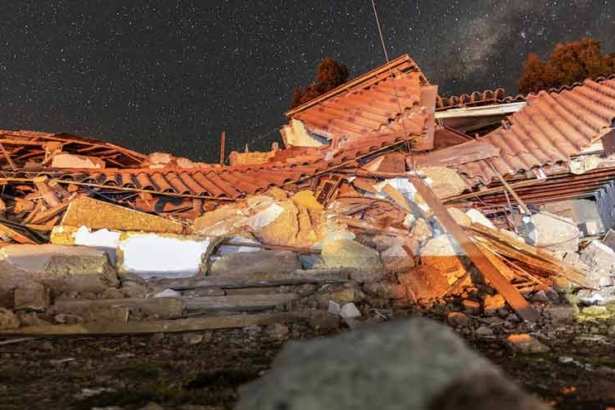
- The earthquake struck Kumamoto Prefecture on Tuesday, causing widespread destruction in Yatsushiro, a port city where cracked roads, collapsed buildings, and broken water pipelines have made daily life increasingly difficult.
- In the hours after the earthquake, military vehicles transported large water tanks to schools and community centres across Yatsushiro.
Communities across southern Japan are facing growing hardship after a powerful 7.1 magnitude earthquake left at least 17 people dead, damaged essential infrastructure, and cut off water and electricity for thousands of residents. As emergency teams continue rescue and relief operations, authorities are racing to address the worsening impact of intense summer temperatures on affected communities.
The earthquake struck Kumamoto Prefecture on Tuesday, causing widespread destruction in Yatsushiro, a port city where cracked roads, collapsed buildings, and broken water pipelines have made daily life increasingly difficult. While damaged homes and public buildings are visible reminders of the disaster, local officials say the lack of clean water and electricity has become one of the biggest challenges facing residents.
Akio Matsushita, a city official involved in coordinating relief efforts, said restoring the damaged water system could take a long time because of the scale of the destruction. He explained that repair crews are still assessing the underground damage and cannot estimate when normal services will resume. With temperatures reaching around 35 degrees Celsius and humidity remaining high, the shortage of water has become especially dangerous. Even city hall has been affected, forcing officials to install temporary toilets above sewer manholes after indoor facilities stopped working.
Authorities have confirmed that at least 17 people lost their lives in the earthquake. Most of the deaths occurred at a paper manufacturing plant operated by Nippon Paper Industries, where severe structural damage trapped workers. Others were reported at an Aeon shopping mall after what officials believe may have been a gas explosion. Six more people remain in cardiopulmonary arrest, while authorities continue investigating additional deaths that may also be linked to the earthquake. Including those cases, the overall death toll could rise to 28.
Emergency responders are also preparing for another serious threat as weather forecasts predict temperatures could approach 40 degrees Celsius over the coming days. Officials have warned that people staying in evacuation centres face an increased risk of heat related illnesses. To reduce that danger, Japan’s Self Defense Forces have begun installing around 300 air conditioning units at evacuation shelters and other important relief locations throughout Kumamoto Prefecture.
In the hours after the earthquake, military vehicles transported large water tanks to schools and community centres across Yatsushiro. Emergency water stored beneath city hall has been used to refill the tanks, allowing residents to collect drinking water. However, supplies remain limited, with each person allowed only three litres.
Among those waiting for water was Masahiro Miyamoto, who spent hours clearing debris after a temple gate collapsed during the quake. Although his own home remained standing, the neighbouring house was destroyed. Without running water, he has depended entirely on military water deliveries. He said the few stores that reopened after the disaster were crowded with shoppers trying to buy food and other essentials, while long lines formed outside petrol stations as people rushed to fill their vehicles.
Japan’s location along the Pacific Ring of Fire makes earthquakes a frequent occurrence. The country has invested heavily in earthquake resistant construction and emergency preparedness, helping reduce casualties during many disasters. Even so, powerful earthquakes continue to cause severe disruption, especially in regions with major industrial facilities.
The latest earthquake has also affected manufacturing across Kyushu, an important centre for Japan’s automobile and semiconductor industries. Several leading companies, including Toyota, Honda, Nissan, Aisin, and Sony, temporarily suspended parts of their production while inspections were carried out. Taiwan Semiconductor Manufacturing Company also evacuated workers and briefly stopped operations to ensure facilities remained safe.
Many residents of Kumamoto still remember the devastating earthquakes that struck the region in 2016, killing more than 260 people and destroying thousands of homes. Even those who survived that disaster said this week’s shaking felt stronger in parts of Yatsushiro. Miyamoto recalled shelves crashing to the floor and computers being thrown across rooms. He said the violent movement was unlike anything he had experienced before, describing the sensation as if he had been lifted off the ground and tossed through the air.
We welcome your contributions! Submit your blogs, opinion pieces, press releases, news story pitches, and news features to opinion@minutemirror.com.pk and minutemirrormail@gmail.com