Summary
- The ordeal of Muhammad Akaber, an overseas Pakistani whose dream home has been blocked for nineteen years by a telecom tower, is one such story.
- When Akaber returned in 2007, expecting to walk through the door of his cherished home, he was met not with welcome but with obstruction.
- Removing the tower is not merely about restoring access to one man’s home; it is about restoring faith in the rule of law.
In Pakistan, stories of injustice often fade into the background noise of daily politics, but some cases demand to be told, not only for their human tragedy but for the larger lessons they carry about governance, corporate accountability, and the rights of citizens. The ordeal of Muhammad Akaber, an overseas Pakistani whose dream home has been blocked for nineteen years by a telecom tower, is one such story. It is a tale of sacrifice, betrayal, and systemic failure—a microcosm of how ordinary citizens are crushed under the weight of bureaucracy and corporate indifference.
Like millions of Pakistanis who leave their homeland in search of opportunity, Muhammad Akaber migrated to Canada in the 1990s. His life abroad was defined by relentless work, long hours, and the sacrifices familiar to every expatriate. His ultimate goal was simple yet profound: to build a home in Pakistan where he could retire in peace, surrounded by family and nature. He chose Mouza Theerian, a scenic hill at the junction of Punjab and Khyber Pakhtunkhwa, and poured his life savings into constructing a house that symbolized not just shelter but legacy. For overseas Pakistanis, such investments are more than personal—they are acts of faith in their homeland. Remittances form the backbone of Pakistan’s economy, and every brick laid by an expatriate is a vote of confidence in the country’s future. Yet, Akaber’s faith was betrayed in the most brutal way imaginable.
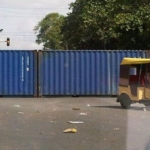
When Akaber returned in 2007, expecting to walk through the door of his cherished home, he was met not with welcome but with obstruction. A colossal Warid Telecom tower had been erected directly in front of his entrance, sealing off access to his property. This was not a minor encroachment—it was a complete blockade, turning his home into a prison he could not enter. The injustice was compounded by the humiliating alternatives forced upon him. To reach his own house, Akaber had to trespass across neighbors’ roofs or haul groceries inside using a rope ladder. For nineteen years, he lived like an intruder in his own domain, stripped of dignity and denied the basic right to enter his property freely. In any civilized nation, such an act would have been unthinkable.
The tower’s placement was not merely a bureaucratic oversight—it was rooted in fraud. The land registry document (Fard) used to justify the tower was forged, belonging to a plot four kilometers away in Mouza Syed Sharqi. The actual land was government property under the KPK Forest Department, illegally appropriated for corporate use. This was not negligence; it was conspiracy, involving forgery, fraud, and collusion between local authorities and telecom interests. Such blatant illegality should have triggered criminal charges. Instead, it was met with silence. Departments passed the buck endlessly: the PTA claimed it was a local matter, the Forest Department looked away, and the district administration shrugged. Each institution abdicated responsibility, leaving Akaber to suffer while the perpetrators thrived.
For nineteen years, Akaber knocked on every door—Prime Minister’s House, Governors of Punjab and KP, district administration, Forest and Revenue departments, and the PTA. Each time, he was met with indifference. His appeals were dismissed with the refrain: “This is not our matter.” The result was a Kafkaesque nightmare where justice was always deferred, never delivered. Meanwhile, his house decayed. Doors rotted, paint peeled, and termites ate away at the wood. What was once a symbol of sacrifice became a monument to betrayal. The tower stood immovable, a physical embodiment of the state’s failure to protect its citizens.
Akaber’s case is not just about one man. It is about every overseas Pakistani who hesitates to invest in their homeland, fearing that their savings will be swallowed by corruption, collusion, and apathy. It is about the erosion of trust in institutions meant to safeguard rights. And it is about the dangerous precedent set when corporate interests override human dignity. In Canada or the UK, Akaber would have been compensated for nineteen years of suffering. The company would have faced penalties for fraud and illegal occupation. In Pakistan, however, justice remains static—like the iron tower blocking his door.
Telecom companies fall directly under the purview of the Ministry of IT and Telecommunication. The Prime Minister and IT Minister cannot wash their hands of this matter. Their intervention is not just desirable—it is necessary. Removing the tower is not merely about restoring access to one man’s home; it is about restoring faith in the rule of law. If the state remains silent, history will record that rulers prioritized corporate interests over human justice. The message to overseas Pakistanis will be clear: invest at your own risk, for your rights are expendable.
Akaber has already lost nineteen years—years of humiliation, frustration, and heartbreak. He cannot reclaim them. But he can be allowed to live the remainder of his life in peace, walking through the door of the home he built with his own sweat and blood. That requires urgent action, not endless red tape. The Prime Minister has built his reputation on being a leader who listens to the common man. This case is a test of that reputation. Will he rise to the occasion, or will Akaber’s suffering be another entry in the long ledger of justice denied?
The story of Muhammad Akaber is a warning and a plea. It warns of the dangers of unchecked corporate power and bureaucratic apathy. It pleads for urgent intervention to restore dignity to a citizen who has been wronged for nearly two decades. More broadly, it calls for a rethinking of how Pakistan treats its overseas citizens—the very people who sustain its economy through remittances. Justice is not a luxury; it is the bedrock of any civilized nation. If Pakistan wishes to attract investment, retain the goodwill of its diaspora, and build a future rooted in fairness, it must act decisively in cases like Akaber’s. The iron tower blocking his home is more than steel and concrete—it is a symbol of systemic failure. Removing it would be more than an act of compassion; it would be a declaration that Pakistan values its citizens over corporate interests.
We welcome your contributions! Submit your blogs, opinion pieces, press releases, news story pitches, and news features to opinion@minutemirror.com.pk and minutemirrormail@gmail.com