Summary
- The Board of Secondary Education Karachi (BSEK) has postponed the announcement of the Matric Science examination results for two days to carry out an additional verification process aimed at ensuring transparency and accuracy.
- Acting Chairman Mashroof Rajput confirmed the decision, stating that around 86,000 students have obtained A-1 and A grades out of approximately 175,000 candidates who appeared in the Matric Science examinations this year.
- According to Rajput, a comparison with last year’s statistics revealed an unexpected increase in top grades, prompting the board to conduct an extensive review.
The Board of Secondary Education Karachi (BSEK) has postponed the announcement of the Matric Science examination results for two days to carry out an additional verification process aimed at ensuring transparency and accuracy.
During the delay, the board has begun scrutinizing students who secured A-1 and A grades. The review was initiated after preliminary data showed that the number of A-1 grades was significantly higher than last year’s figures. Officials have described the rechecking process as “super checking,” designed to verify the authenticity of the compiled results before their official release.
Acting Chairman Mashroof Rajput confirmed the decision, stating that around 86,000 students have obtained A-1 and A grades out of approximately 175,000 candidates who appeared in the Matric Science examinations this year.
According to Rajput, a comparison with last year’s statistics revealed an unexpected increase in top grades, prompting the board to conduct an extensive review. Instead of relying solely on board employees, the verification has been assigned to experienced and reputable teachers. They are matching the compiled results with manually prepared award sheets and cross-checking them against students’ answer scripts to eliminate any discrepancies and ensure complete transparency.
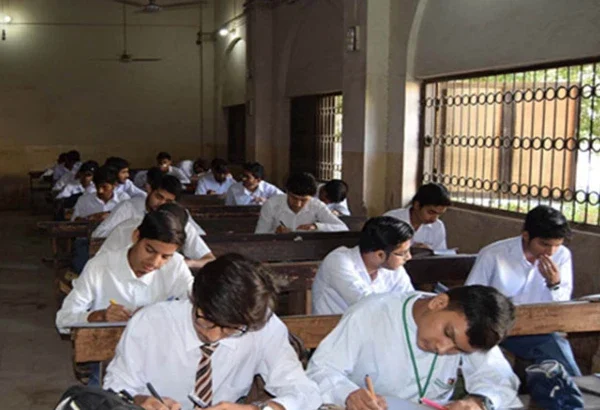
Officials also acknowledged concerns that the unusually high number of top grades may be linked to irregularities during the examination process. Examination centres were reportedly changed multiple times, while complaints of widespread cheating surfaced throughout the exams. These factors are believed to have contributed to the increase in A-1 and A grade holders.
Earlier, the Sindh government launched an inquiry into examination-related issues. Before the inquiry report was officially released, the chairman of the matric board resigned. The report reportedly recommended removing the Controller of Examinations and taking disciplinary action against several other officials. Although the provincial minister approved those recommendations, progress has so far been limited to issuing show-cause notices to four officials.
The board had also planned to introduce full e-marking for the Grade 10 Mathematics and Computer Science papers. However, the initiative could not be fully implemented because software testing remained incomplete and the required server infrastructure had not been procured in time.
Rajput said preparations for electronic marking have now improved. Servers have been purchased, software testing has been completed for the upcoming Grade 9 examinations, and a pilot e-marking exercise was conducted on 62,000 Grade 10 Computer Science answer scripts. However, the trial revealed a 35 percent variation in results compared with manual marking.
We welcome your contributions! Submit your blogs, opinion pieces, press releases, news story pitches, and news features to opinion@minutemirror.com.pk and minutemirrormail@gmail.com