Summary
- This raises an important question: if a prestigious university, which enjoys national and international recognition, is restricted to the residents of a particular city, what will be the significance of the higher education institutions and universities across the country?
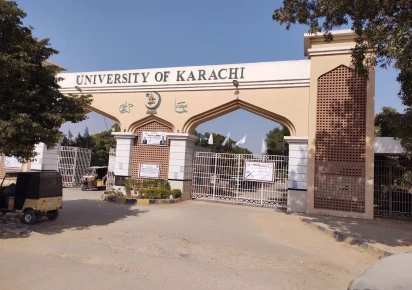
- Karachi University is not an ordinary educational institution.
- Karachi University is not an ordinary institution that can be confined to the geographical boundaries of one city.
By Ali Abbas Khuhawar
We have witnessed over time that Karachi University has become one of the most significant educational institutions in Pakistan. However, the introduction of the KSP (Karachi Sindh Pakistan) policy has raised serious questions about the principles of merit, equal opportunity, and access to higher education.
The basic idea behind this policy is that the available seats at Karachi University will initially be allocated to residents of Karachi, followed by candidates from other parts of Sindh, and then candidates from the rest of Pakistan.
This raises an important question: if a prestigious university, which enjoys national and international recognition, is restricted to the residents of a particular city, what will be the significance of the higher education institutions and universities across the country? Such a policy risks undermining the very purpose of higher education.
Karachi University is not an ordinary educational institution. It is one of the major universities in Sindh and is counted among Pakistan’s leading universities. It has an established academic reputation and international recognition. An institution of this stature should not be restricted by geographical boundaries or made accessible primarily on the basis of city-based preferences.
The KSP policy, therefore, raises serious legal and constitutional concerns. It appears to conflict with the fundamental principles of equality, fairness, and merit. The governing framework of Karachi University should ensure that educational opportunities are provided fairly and without unreasonable discrimination. There should be no compromise on these principles.
The ongoing protests by students against this policy cannot simply be dismissed. Students are not wrong in demanding an open-merit admission system. If the students of Karachi are confident in their academic abilities, they should be willing to compete with students coming from other cities and provinces. The real strength of an educational institution lies in its ability to promote competition based on merit rather than geographical preference.
A university is not a school. It is an institution of higher education operating within the broader framework of the Higher Education Commission (HEC). Its purpose extends far beyond the acquisition of academic qualifications. Universities provide students with opportunities for social interaction, political awareness, intellectual development, cultural understanding, and exposure to different civilisations.
These experiences become possible when students from different geographical, ethnic, linguistic, and cultural backgrounds come together under one academic roof. Pakistan is a country of diverse ethnicities, languages, traditions, and cultures. When students travel from distant parts of the country to study at a university, they bring their experiences, perspectives, and cultural identities with them.
This interaction is one of the greatest advantages of university education. Students learn not only from textbooks and lecturers but also from one another. They develop an understanding of different communities, acquire broader perspectives, and learn to coexist with people whose backgrounds may be entirely different from their own.
If universities are restricted to students belonging to particular cities or regions, this important dimension of higher education will gradually disappear. Such restrictions would undermine the spirit of national integration and the intellectual diversity that universities are supposed to promote.
Students do not attend universities merely to obtain degrees. They attend them to develop their personalities, broaden their intellectual horizons, and understand the world beyond their immediate surroundings. These opportunities should not be unnecessarily restricted.
Therefore, the KSP policy is fundamentally questionable. Karachi University is not an ordinary institution that can be confined to the geographical boundaries of one city. It is a major national educational institution with a broader academic responsibility.
Higher education must be built on merit, equality, competition, and diversity not geographical boundaries. Karachi University should remain a place where talent from across Pakistan has the opportunity to compete and learn.
A university becomes great not merely because of its buildings, history, or reputation, but because of the diversity of minds it brings together.
We welcome your contributions! Submit your blogs, opinion pieces, press releases, news story pitches, and news features to opinion@minutemirror.com.pk and minutemirrormail@gmail.com