Summary
- Police subsequently arrested her husband and the domestic worker, identified as Zeeshan, while her father-in-law was also questioned during the investigation.
- DNA analysis reportedly found that samples from the domestic worker matched postmortem swabs collected from Hina’s body.
- Punjab Chief Minister Maryam Nawaz had earlier said DNA and polygraph test results suggested that the domestic worker had committed the murder and rape, while stressing that the investigation was still under way.
RAWALPINDI: Police have completed their investigation into the murder of digital media executive Hina Javed and submitted the challan to the court after a delay of nearly three months, City Police Officer Sardar Ghias Gul said on Saturday.
The police chief confirmed that the investigation report had been forwarded for further legal proceedings. He also acknowledged weaknesses in the prosecution process, saying that appointing suitable officials to key positions could help prevent suspects from being released due to shortcomings in the cases.
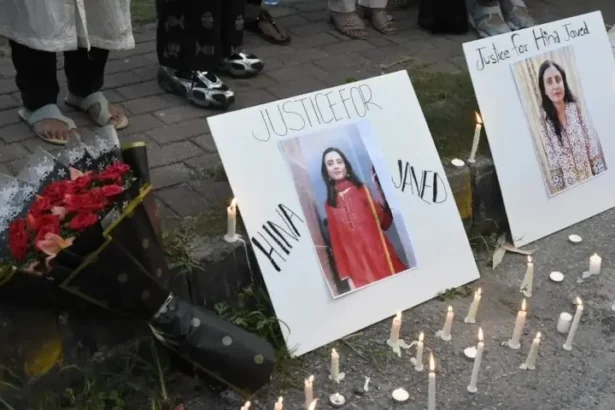
Hina, 45, was found dead at her home in Rawalpindi in August. Her body was discovered in the washroom with apparent signs of torture, including a strangulation mark around her neck, an injury below her right lip and bleeding from her nose. Police ruled out suicide and treated the incident as murder.
Her brother, Fahad Javed, registered a first information report (FIR), accusing her husband, father-in-law and a domestic worker of involvement in the killing. Police subsequently arrested her husband and the domestic worker, identified as Zeeshan, while her father-in-law was also questioned during the investigation.
Forensic findings became an important part of the case. DNA analysis reportedly found that samples from the domestic worker matched postmortem swabs collected from Hina’s body. His DNA profile was also linked to other samples recovered from the crime scene.
The investigation further found that her husband’s DNA matched samples collected from several items at the residence. A Y-STR profile obtained from Hina’s clothing contained DNA from at least three individuals. The husband, father-in-law and domestic worker could not be excluded as possible contributors.
However, Hina’s family repeatedly raised concerns about the transparency of the investigation. Relatives alleged that the husband’s brother had cleaned the room of an accused person and tampered with evidence, with alleged involvement of police personnel. The family demanded a judicial commission to ensure an impartial investigation and called for access to the DNA and forensic reports.
Following these concerns, the Punjab government established a three-member high-powered committee to review the police investigation. The National Assembly Standing Committee on Interior and Narcotics Control also summoned senior police officials, including the Punjab inspector general, to brief it on developments in the case.
Punjab Chief Minister Maryam Nawaz had earlier said DNA and polygraph test results suggested that the domestic worker had committed the murder and rape, while stressing that the investigation was still under way.
On October 29, First Lady Aseefa Bhutto Zardari met Hina’s family at Parliament and called for their demand for a judicial commission to receive due consideration.
Under the law, police are required to submit a challan in a murder case within 15 days after a suspect is remanded to judicial custody. The submission of the report now paves the way for further court proceedings.
We welcome your contributions! Submit your blogs, opinion pieces, press releases, news story pitches, and news features to opinion@minutemirror.com.pk and minutemirrormail@gmail.com