Summary
- KARACHI: Karachi’s deadly combination of reckless heavy-vehicle traffic and street crime has claimed at least 360 lives during the first eight months of 2026, according to data compiled by Minute Mirror from police, rescue, hospital and crime records.
- The toll covers the period from January 1 to September 7, with heavy vehicles such as dumpers, tankers and trailers accounting for 217 deaths, while street crime claimed another 143 lives.
- Street crime continues to claim lives Street crime accounted for another 143 deaths between January 1 and September 7, accompanied by 1,206 injuries, according to the analysis.
KARACHI: Karachi’s deadly combination of reckless heavy-vehicle traffic and street crime has claimed at least 360 lives during the first eight months of 2026, according to data compiled by Minute Mirror from police, rescue, hospital and crime records.
The toll covers the period from January 1 to September 7, with heavy vehicles such as dumpers, tankers and trailers accounting for 217 deaths, while street crime claimed another 143 lives. A further 1,704 people were injured in the two categories, according to the analysis.
The figures mean that, on average, more than one person a day has lost their life in Karachi this year because of either a heavy-vehicle crash or street crime.
The latest incidents have once again highlighted the scale of the crisis. Two young men were killed on Monday in separate incidents, one during a street-crime incident in Liaquatabad and another in a heavy-vehicle crash in Korangi, further intensifying public anger over road safety and law and order.
Heavy vehicles emerge as a major killer
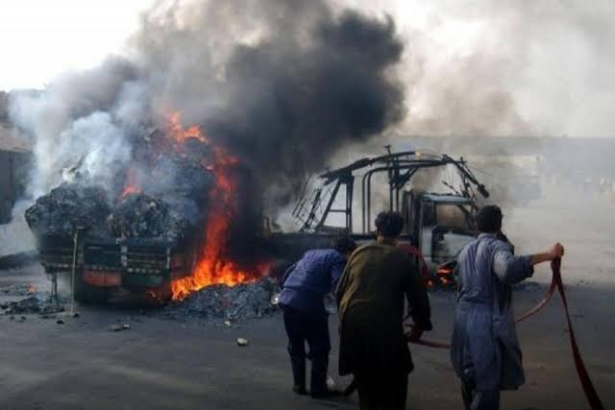
The Minute Mirror analysis shows that dumpers, water tankers and trailers were responsible for 217 deaths during the period under review, alongside 498 injuries.
Korangi emerged as the worst-affected area, with 41 reported dumper-related deaths, while other high-risk industrial and transport corridors included SITE, Landhi and Mauripur. Within Korangi, areas such as Market No. 6 and the Furniture Market have been identified as particularly dangerous locations.
Young people constitute a significant proportion of the victims. According to the compiled data, around 70 per cent of those killed in heavy-vehicle incidents were aged between 15 and 30, including students, motorcyclists and daily-wage workers.
The danger has also persisted during evening hours. The analysis identifies 6pm to midnight as a particularly high-risk period, raising questions about enforcement of restrictions on the movement of heavy vehicles in densely populated and commercial areas.
Despite arrests in some cases, convictions remain limited, with many cases reportedly ending through financial settlements rather than lengthy judicial proceedings.
Street crime continues to claim lives
Street crime accounted for another 143 deaths between January 1 and September 7, accompanied by 1,206 injuries, according to the analysis.
Liaquatabad, Nazimabad and Gulshan were among the areas reporting the highest number of killings, collectively accounting for 61 deaths. The data indicates that robbery and mobile-phone or motorcycle snatching incidents that escalate into shootings remain a major source of fatalities.
Younger citizens are again disproportionately represented among the victims, with the analysis estimating that 68 per cent were below the age of 35.
The pattern has also raised concerns about nighttime security, particularly toward the end of the working week, when crime incidents are reported to increase.
Two crises, one enforcement failure
Community representatives and security observers cited by Minute Mirror have linked the worsening situation to weak enforcement, inadequate monitoring and gaps in policing.
Traffic-safety measures, including speed controls and vehicle tracking systems, have not translated into consistent enforcement on the ground, while residents in several areas continue to complain about heavy vehicles operating on roads where their movement poses serious risks to pedestrians and motorcyclists.
At the same time, incomplete surveillance coverage and limited policing capacity in some commercial districts have complicated efforts to prevent street crime and quickly identify offenders.
Public concern has grown over allegations of organized influence surrounding the movement and operation of heavy vehicles. Calls for an investigation into alleged collusion between transport operators and officials have also intensified following fatal crashes and subsequent protests.
Citizens call for emergency action
The latest deaths have renewed demands for immediate restrictions on heavy-vehicle movement in densely populated areas, stronger prosecution of drivers involved in fatal crashes and a comprehensive investigation into the networks allegedly facilitating unlawful operations.
Civil society groups are also calling for wider deployment of functional CCTV cameras, faster emergency response mechanisms and stronger policing in areas identified as major street-crime hotspots.
The Sindh government has repeatedly announced enforcement drives against both street crime and traffic violations, but critics argue that temporary crackdowns will not be enough without sustained enforcement, accountability and structural reforms.
With several months of 2026 still remaining, the Minute Mirror analysis warns that Karachi could witness a further rise in fatalities unless authorities introduce effective emergency measures.
The data used in this report was compiled from Karachi Police, CPLC, Rescue 1122, JPMC, Abbasi Hospital records and verified media reports covering January 1 through September 7, 2026. The figures are described as conservative and may not capture cases that were not officially reported or independently verified.
We welcome your contributions! Submit your blogs, opinion pieces, press releases, news story pitches, and news features to opinion@minutemirror.com.pk and minutemirrormail@gmail.com