Summary
- “Adnan Siddiqui troubled me deeply during one particular serial, and to be honest, I almost quit production after that,” Pasha said.
- Co-star Sajid Hasan reportedly joked to Pasha on set that the production was heading toward bankruptcy, to which Pasha responded that Siddiqui was a great artist and that was simply the cost of having cast him.
- On the subject of his landmark serial Jangloos, Pasha described the production as so unflinching in its portrayal of feudalism and corruption that it drew the attention of the National Assembly, with immense pressure placed on the team to pull it from air.
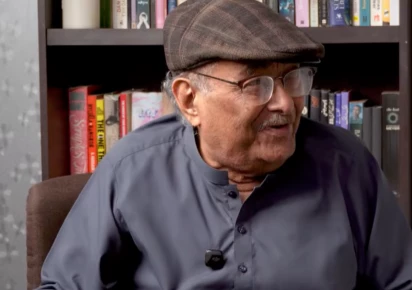
Legendary television director Kazim Pasha has opened up about a candid and wide-ranging conversation covering the golden era of PTV, his creative battles with state censors, and the on-set experience that very nearly ended his directing career altogether.
Speaking in a tell-all interview, Pasha revealed that actor Adnan Siddiqui’s demands during a particular serial pushed him to the brink of walking away from the profession entirely. “Adnan Siddiqui troubled me deeply during one particular serial, and to be honest, I almost quit production after that,” Pasha said.
The trouble began with what started as a single request and quickly snowballed. Siddiqui first asked for a ticket for his personal assistant, then said his three daughters would be joining him, and finally insisted their nanny must also travel, bringing the total to five additional tickets. Co-star Sajid Hasan reportedly joked to Pasha on set that the production was heading toward bankruptcy, to which Pasha responded that Siddiqui was a great artist and that was simply the cost of having cast him.
On location at actor Aijaz Aslam’s bungalow, the challenges continued. Siddiqui would walk off set to eat at a specific restaurant, refusing to resume work until he returned, or demand something particular and flatly decline to shoot until it was provided. Pasha recalled physically leaving the set on multiple occasions out of sheer frustration.
Despite the difficult experience, Pasha’s account of Siddiqui was far from hostile. He was quick to add warmth to the story, describing the actor as a genuinely lovely human being who has never once been disrespectful or shown bad manners toward him, and noting that Siddiqui shares a deep attachment to his daughters.
Beyond the Siddiqui anecdote, Pasha spoke at length about the challenges of working within old PTV’s strict institutional culture. He described how he cast and discovered major stars including Laila Zuberi, navigating conservative family resistance to convince them that the PTV environment was safe and dignified.
He also recalled directing actress Sadia Imam during an emotionally charged shoot, following the mid-production death of actor Qurban Jillani. When Imam struggled to produce authentic tears for a crying scene, Pasha deliberately created an atmosphere of tension and pressure on set, then signalled the cameras to roll the moment she broke down genuinely.
On the subject of his landmark serial Jangloos, Pasha described the production as so unflinching in its portrayal of feudalism and corruption that it drew the attention of the National Assembly, with immense pressure placed on the team to pull it from air. “Jangloos was a mirror to society, and because it hit exactly where it hurt, there were demands to ban it, but we stood our ground,” he said.
Pasha also placed blame for the collapse of Pakistani cinema squarely on formula filmmaking and a refusal to modernise, arguing that these failures allowed PTV to step in as the country’s primary cultural storyteller.
He concluded the conversation by reflecting on a career built on identity and craft over financial reward, saying that watching the talent he nurtured grow into major names in the industry remains his greatest legacy. His daughter, Nida Yasir, who has become one of Pakistani daytime television’s most prominent figures, was cited as a particular source of pride.