Summary
- A Kenyan court has sentenced religious cult leader Paul Mackenzie to 200 years in prison for orchestrating the deaths of 190 children who were starved to death on his orders in one of the country’s deadliest cult-related tragedies.
- Although the trial covered the deaths of 190 children and one adult, the Kenya National Commission on Human Rights has reported that 448 bodies were recovered from the forest.
- Kenya’s human rights groups have called for wider accountability, arguing that local administrators, police officers, intelligence agencies and religious authorities should also face scrutiny over their failure to prevent the deaths.
A Kenyan court has sentenced religious cult leader Paul Mackenzie to 200 years in prison for orchestrating the deaths of 190 children who were starved to death on his orders in one of the country’s deadliest cult-related tragedies.
The ruling was delivered on Friday by Justice Diana Kavedza, who imposed a 100-year sentence for murder by starvation and another 100 years for direct homicide.
Mackenzie led an apocalyptic Christian religious group based in a forest near Kenya’s Indian Ocean coast. Prosecutors said he persuaded his followers to stop eating, along with their children, claiming that starving themselves would allow them to reach heaven before the end of the world.
The court heard that Mackenzie’s associates used threats, violence and intimidation to ensure followers obeyed his instructions. Victims who attempted to obtain food or water were reportedly beaten, restrained and locked inside buildings where they were left to die.
Investigators discovered severely emaciated bodies in shallow graves and latrines in Shakahola Forest. Some victims had reportedly been buried alive.
Justice Kavedza said Mackenzie had gained the trust of vulnerable followers through his charismatic preaching and online presence, including sermons broadcast on YouTube. She highlighted the suffering of children who witnessed their siblings die after prolonged periods without food.
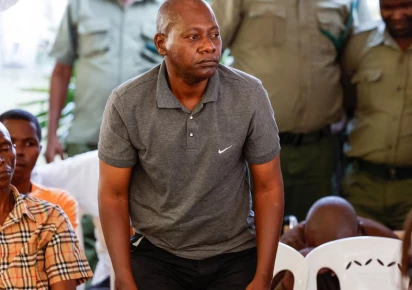
Mackenzie showed no visible reaction as the judge announced his sentence. He had denied the murder allegations, maintaining that he had not forced anyone to starve. However, the court rejected his defence.
Twenty-eight co-accused were also convicted in the case and received prison sentences ranging from 10 to 160 years. Their defence lawyer, Lawrence Obonyo, said appeals would be filed against the verdicts.
The case came to international attention in April 2023, when Kenyan police began discovering mass graves in Shakahola Forest near the coastal town of Malindi.
Although the trial covered the deaths of 190 children and one adult, the Kenya National Commission on Human Rights has reported that 448 bodies were recovered from the forest.
Mackenzie is also facing separate allegations involving the deaths of another 52 people found at a different location. He has pleaded not guilty in that case, which could take the suspected death toll linked to the cult to around 500.
The tragedy devastated families across Kenya. Stephen Mwiti, whose six children were among the victims, questioned why innocent children had been subjected to the starvation practices even if adults had voluntarily followed the group’s teachings.
Another man, Suleiman Zero, said his wife and six children remained missing. Welcoming the court’s decision, he appealed to the government to help locate his family members and recover their bodies if they had died.
Mackenzie’s son, Dan Mackenzie, also expressed support for the verdict. He said he had left the group during his early teenage years after losing faith in its promises and subsequently lost friends and a younger brother.
The case has also raised serious questions about the authorities’ response to warning signs. Mackenzie had reportedly come under police scrutiny as early as 2017, while his church was shut down in Malindi in 2019. He later moved his activities to Shakahola Forest.
Kenya’s human rights groups have called for wider accountability, arguing that local administrators, police officers, intelligence agencies and religious authorities should also face scrutiny over their failure to prevent the deaths.
Justice Kavedza acknowledged institutional failures and urged parliament to introduce measures to prevent similar tragedies.
The mass deaths have renewed calls for stronger oversight of religious organisations in Kenya, although proposed government and parliamentary measures have yet to become law.
We welcome your contributions! Submit your blogs, opinion pieces, press releases, news story pitches, and news features to opinion@minutemirror.com.pk and minutemirrormail@gmail.com