


Summary
- They said the trophy hunting programme was designed to protect wildlife populations, discourage illegal hunting and provide financial benefits to communities living near natural habitats.
- The funds allocated to local communities can support development initiatives and strengthen incentives for residents to protect wildlife and its natural habitat.
- Supporters of regulated programmes argue that carefully controlled hunting can generate conservation funding and provide economic incentives to protect endangered wildlife.
Khyber-Pakhtunkhwa has generated a record $1.21 million through the auction of four international Markhor trophy hunting permits, marking the highest revenue ever earned from a trophy hunting programme in Pakistan.
The permits raised a combined $1,211,800, equivalent to approximately Rs335.7 million, according to a statement issued by the provincial Wildlife Department on Friday. The auction covered conservation areas in Chitral and Kohistan, with village conservation committees expected to benefit from the proceeds.
Among the four permits, Toshi-II in Chitral attracted the highest bid of $335,600. Toshi-I in Chitral fetched $320,600, while the permit for Kigah Khwar in Kohistan was auctioned for $295,600. The Gahirat Gol permit in Chitral secured a bid of $260,000.
Wildlife officials described the auction as a major milestone for Pakistan’s conservation efforts. They said the trophy hunting programme was designed to protect wildlife populations, discourage illegal hunting and provide financial benefits to communities living near natural habitats.
Latifur Rehman, a spokesperson for the KP Wildlife Department, said the programme allowed only a limited number of permits for mature and old male Markhor. The controlled approach aims to support sustainable wildlife management while protecting the species’ long-term survival.
Under the revenue-sharing arrangement, 80 per cent of the money generated through trophy hunting will go directly towards the welfare and development of the relevant local communities. The remaining 20 per cent will be deposited into the government treasury.
The funds allocated to local communities can support development initiatives and strengthen incentives for residents to protect wildlife and its natural habitat. Officials believe that giving communities a direct financial stake in conservation can help reduce poaching and encourage the sustainable management of natural resources.
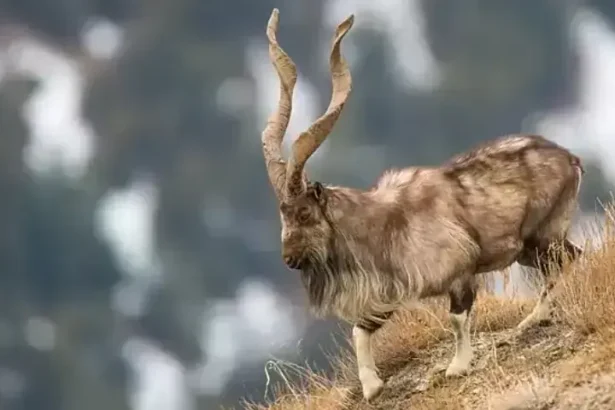
The Markhor, Pakistan’s national animal, is an important part of the country’s natural heritage and biodiversity. Its mountainous habitat includes remote valleys where local communities have traditionally depended on surrounding natural resources for their livelihoods.
However, trophy hunting remains controversial internationally, with critics raising ethical concerns about killing wild animals for sport. Supporters of regulated programmes argue that carefully controlled hunting can generate conservation funding and provide economic incentives to protect endangered wildlife.
The KP government says its approach combines wildlife protection with community development, aiming to ensure that conservation efforts deliver lasting environmental and economic benefits. The record auction revenue is expected to reinforce the role of community-based conservation in protecting the province’s wildlife.
We welcome your contributions! Submit your blogs, opinion pieces, press releases, news story pitches, and news features to opinion@minutemirror.com.pk and minutemirrormail@gmail.com