Summary
- LAHORE: Lahore has once again emerged as the world’s most polluted major city, with its air quality index reaching a hazardous level of 538 on Sunday morning, according to Swiss air quality monitoring platform IQAir.
- IQAir classifies readings above 300 as hazardous, indicating extremely poor air quality that can pose serious health risks to the public.
- The latest figures highlight the continuing air quality crisis in Lahore and the wider Punjab region, where hazardous pollution levels remain a major public health concern.
LAHORE: Lahore has once again emerged as the world’s most polluted major city, with its air quality index reaching a hazardous level of 538 on Sunday morning, according to Swiss air quality monitoring platform IQAir.
The reading was recorded between 9am and 10am, placing Punjab’s provincial capital at the top of the global pollution ranking as toxic smog continued to blanket the city.
IQAir classifies readings above 300 as hazardous, indicating extremely poor air quality that can pose serious health risks to the public.
India’s capital, New Delhi, ranked second among the world’s most polluted major cities, recording a particulate matter reading of 207.
Several other cities in Punjab also reported alarming pollution levels. Bahawalpur recorded a reading of 463, while Sargodha’s air quality level reached 382. Multan registered a reading of 255, according to IQAir.
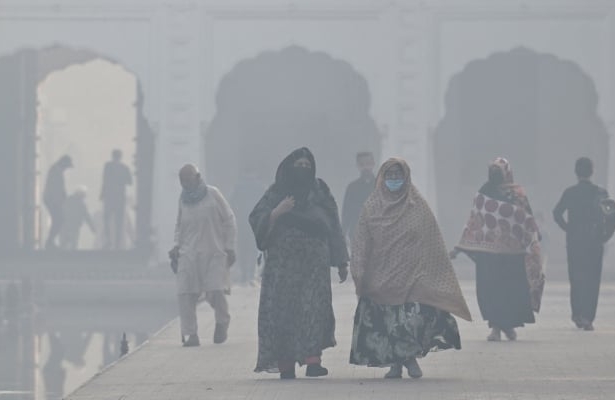
The worsening air quality has kept Lahore covered in dense smog for several days, significantly reducing visibility and disrupting routine activities.
Residents have reported various health problems, including throat irritation, breathing difficulties and itchy eyes as polluted air continues to affect the city.
The deteriorating situation has once again raised concerns over the causes of seasonal smog and the need for coordinated efforts to tackle air pollution across South Asia.
Earlier this month, Punjab Senior Minister Marriyum Aurangzeb attributed the worsening smog in the province partly to large-scale fireworks during Diwali celebrations in India.
In a post on X, she said polluted winds entering Pakistan through the eastern corridor from Indian cities had contributed to the rise in Lahore’s air pollution levels.
Punjab Environment Protection and Climate Change Department Secretary Silwat Saeed had also described air pollution as a major challenge for both countries. She said Pakistan had raised the issue with Indian officials at international forums.
However, environmental pollution across the region is driven by several factors. During winter, colder air traps pollutants close to the ground, allowing harmful particles to accumulate and creating dense smog that can persist for weeks.
Emissions from vehicles, industrial facilities, construction activities and the burning of agricultural residue are among the major contributors to deteriorating air quality in Pakistan and India.
Health experts warn that prolonged exposure to heavily polluted air can increase the risk of serious illnesses, including cardiovascular disease, stroke, lung cancer and chronic respiratory conditions.
The latest figures highlight the continuing air quality crisis in Lahore and the wider Punjab region, where hazardous pollution levels remain a major public health concern.
We welcome your contributions! Submit your blogs, opinion pieces, press releases, news story pitches, and news features to opinion@minutemirror.com.pk and minutemirrormail@gmail.com