Summary
- WASHINGTON: Efforts to revive ceasefire negotiations between Iran and the United States have entered another difficult phase, with mediators pressing Tehran to make concessions on its nuclear programme after Washington rejected an Iranian proposal for a seven-day truce and the reopening of the Strait of Hormuz.
- Arab mediators described the effort to secure movement from Tehran as a long shot, while Iranian officials have so far given little indication that they are ready to make new nuclear concessions.
- Trump rejected the proposal, while US officials argued that Tehran was seeking major concessions before committing to substantive negotiations over its nuclear activities.
WASHINGTON: Efforts to revive ceasefire negotiations between Iran and the United States have entered another difficult phase, with mediators pressing Tehran to make concessions on its nuclear programme after Washington rejected an Iranian proposal for a seven-day truce and the reopening of the Strait of Hormuz.
The latest diplomatic push, reported by The Wall Street Journal, comes as both sides continue to signal that diplomacy remains possible while maintaining sharply different positions on how negotiations should begin. Arab mediators described the effort to secure movement from Tehran as a long shot, while Iranian officials have so far given little indication that they are ready to make new nuclear concessions.
The diplomatic uncertainty was underscored on Monday when Iranian state media reported that Tehran’s delegation at the United Nations General Assembly had no plans for new negotiations with Washington. The report came a day after US President Donald Trump said he expected talks to resume. Iran said it was awaiting Washington’s response to proposals already conveyed through Qatar.
Iran keeps door open to diplomacy
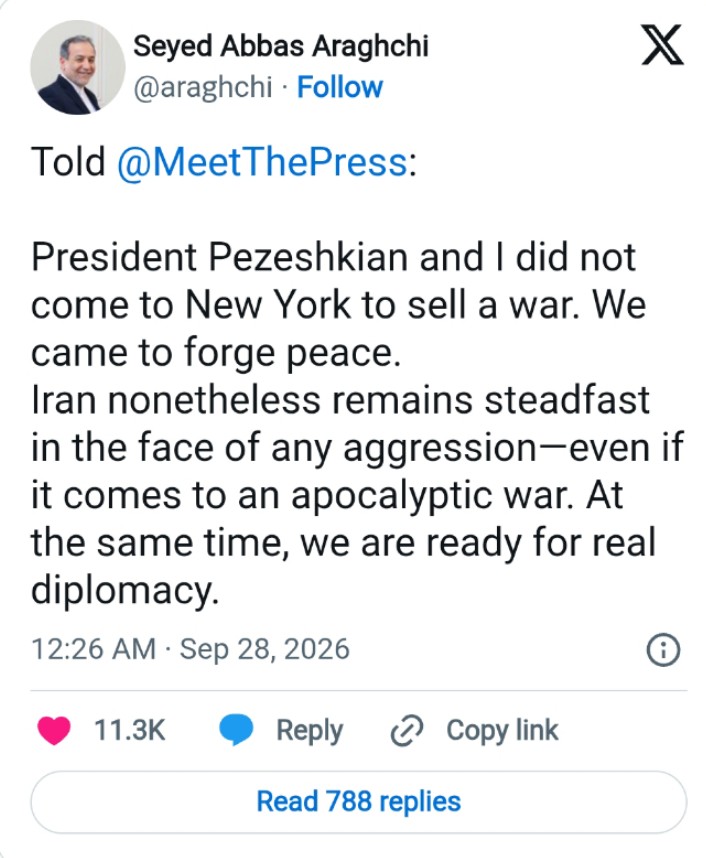
Iranian Foreign Minister Abbas Araghchi has continued to say that Tehran is prepared for diplomacy but would respond if military action resumes.
Speaking to NBC News, Araghchi said Iran remained ready for negotiations while also preparing for renewed conflict. He said President Masoud Pezeshkian and he had travelled to New York seeking peace rather than war.
Iran’s position has been that a negotiated settlement could address the immediate conflict and eventually create space for discussions over its nuclear programme.
Tehran’s proposal, according to reports, called for the Strait of Hormuz to be reopened within seven days if the United States eased military pressure and lifted its blockade. The proposal also sought measures including sanctions relief and the release of Iranian funds frozen overseas.
Trump rejected the proposal, while US officials argued that Tehran was seeking major concessions before committing to substantive negotiations over its nuclear activities. US Secretary of State Marco Rubio has previously said any diplomatic engagement must address concerns over Iran obtaining a nuclear weapon.
Hormuz remains at centre of dispute
The Strait of Hormuz has emerged as one of the most important issues in the standoff. The waterway is a major route for global energy shipments, and disruption to traffic has added pressure to oil markets and the wider economy.
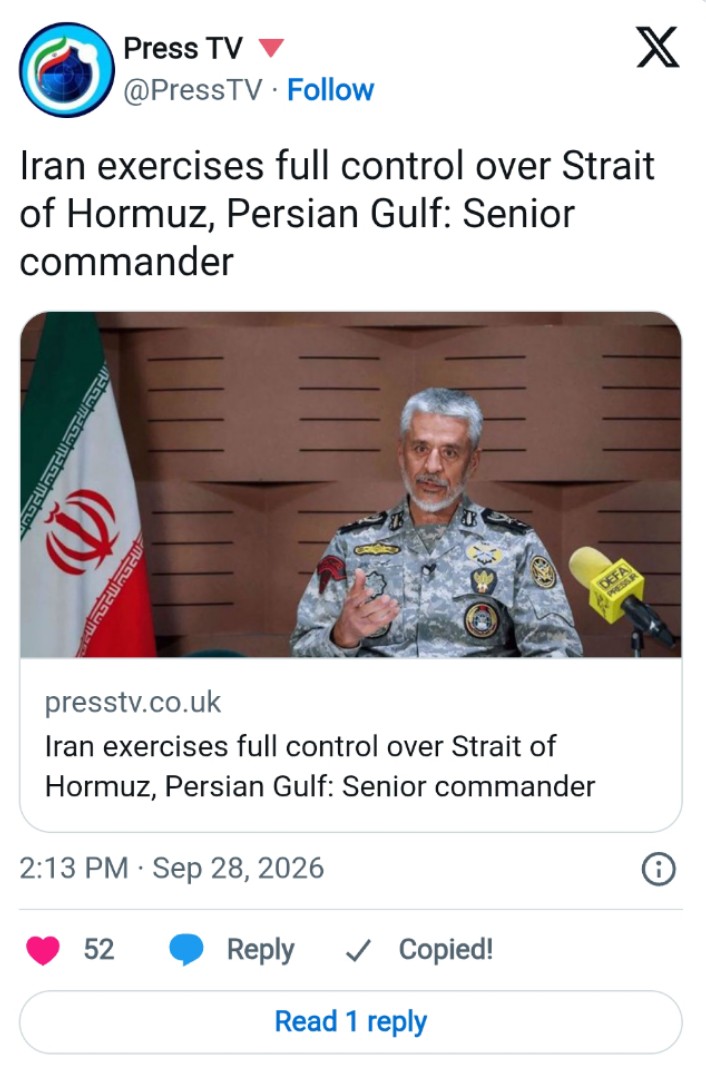
Iranian military officials continue to assert control over the waterway. Iranian Rear Admiral Habibollah Sayyari said the IRGC Navy controls the western portion of the strait and Persian Gulf, while the Army Navy operates in the eastern section and northern Indian Ocean.
The claims come amid a sharp reduction in shipping through Hormuz. Reuters reported earlier this month that only a small number of commodity vessels were crossing the waterway compared with the much higher pre-conflict average.
Iran has maintained that reopening the strait is linked to broader conditions, including an end to US military pressure and the blockade.
Eight US Marines injured in missile strike
The diplomatic impasse has been accompanied by fresh details about military risks in the region.
Eight US Marines were injured on September 14 when an Iranian anti-ship cruise missile struck a maritime vessel in the Strait of Hormuz, NBC News reported, citing three US officials. The vessel was not a US Navy ship.
The Marines, who were operating as part of a battalion landing team, reportedly suffered smoke inhalation and concussion-like symptoms, including headaches and possible traumatic brain injuries. Seven were enlisted personnel and one was an officer.
All eight reportedly returned to duty shortly after the attack. The Pentagon later added them to its Defense Casualty Analysis System, according to officials cited by NBC. The database had recorded 861 injured US service members in the broader conflict as of the latest figure cited in reports.
The previously undisclosed incident adds another layer of risk to efforts to maintain a diplomatic channel while military forces remain active around the strategic waterway.
Tehran rejects pressure over nuclear programme
Iranian President Pezeshkian has said Tehran is willing to discuss its nuclear programme and other issues but would not accept what he described as coercion.
Iran has maintained that it is not seeking nuclear weapons and has said it wants a diplomatic solution to the confrontation. Washington, meanwhile, has made preventing Iran from acquiring a nuclear weapon a central objective of any prospective agreement.
That disagreement is now at the heart of the mediation effort. According to the Wall Street Journal report, mediators are seeking some form of Iranian movement on the nuclear issue that could provide a basis for restarting broader ceasefire discussions.
A senior Middle Eastern official involved in the talks said Iran could potentially compromise but wanted assurances that Israel would not launch another attack after any US-Iran agreement.
Regional tensions widen
The diplomatic uncertainty is unfolding against a broader regional conflict involving Gulf states and Yemen.
Saudi Arabia has been increasingly drawn into the conflict as Houthi forces in Yemen have intensified attacks and threatened regional interests. The conflict has also affected shipping routes and energy infrastructure, adding economic pressure beyond the immediate US-Iran confrontation.
European officials are also examining the impact on maritime security. EU foreign policy chief Kaja Kallas has said the bloc’s Red Sea naval mission, Aspides, needs additional ships before it can operate at full capacity.
Meanwhile, the United Arab Emirates continues to maintain diplomatic and security channels with both Washington and Israel. Israeli Prime Minister Benjamin Netanyahu also visited Abu Dhabi on Sunday and met UAE President Sheikh Mohammed bin Zayed Al Nahyan, according to an Israeli official cited by Reuters.
A narrow diplomatic window
For now, the positions remain far apart. Iran says it is ready for diplomacy but wants Washington to ease pressure and provide guarantees. The United States is seeking commitments on Iran’s nuclear programme before offering major concessions.
Trump has nevertheless indicated that further discussions could take place, while Tehran says no new meeting is currently scheduled and that it is awaiting a response through mediators.
That leaves Qatar and other regional intermediaries facing a difficult task: finding enough common ground for the two sides to return to negotiations while military tensions remain high.
With the Strait of Hormuz still at the centre of the confrontation and new reports emerging about injuries to US personnel, the diplomatic effort is taking place under significant pressure. The immediate question is whether mediators can bridge the gap between Washington’s demand for nuclear concessions and Tehran’s insistence that meaningful negotiations require reciprocal steps first.
We welcome your contributions! Submit your blogs, opinion pieces, press releases, news story pitches, and news features to opinion@minutemirror.com.pk and minutemirrormail@gmail.com