



Summary
- Naqvi said the federal government had wanted a meeting of the provincial apex committee and a joint public commitment to fight terrorism.
- Tarar argued that Article 234 allowed governor’s rule where a provincial government could not be carried on in accordance with the Constitution.
- The law minister said the government was prepared to respond to questions from opposition members.
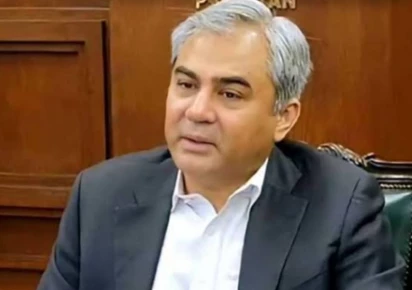
Interior Minister Mohsin Naqvi has defended the federal government’s decision to impose emergency and governor’s rule in Khyber Pakhtunkhwa, saying the Centre had exhausted its options after efforts to address security concerns through dialogue failed.
Speaking during a joint sitting of Parliament on Thursday, Naqvi urged opposition lawmakers to present an accurate account of negotiations between the government and the Pakistan Tehreek-e-Insaf (PTI). He said the federal government had made repeated attempts to bring the provincial administration on board regarding counterterrorism efforts.
The joint session was discussing resolutions seeking parliamentary endorsement of the emergency imposed under Article 232 of the Constitution and governor’s rule under Article 234. The federal government announced the measures on October 11, accusing the PTI-led provincial administration of disengaging from the fight against terrorism.
The decision followed weeks of political tension between the Centre and the PTI. The party had announced a march towards Islamabad to demand the release of its incarcerated founder, Imran Khan.
Naqvi said the federal government had wanted a meeting of the provincial apex committee and a joint public commitment to fight terrorism. He said the proposed statement would have demonstrated that both governments were prepared to work together against militant threats.
Recalling an incident in February in which security personnel were killed, the interior minister said the government had requested the KP chief minister to attend the funerals of the fallen personnel. He alleged that this was the last occasion on which the chief minister attended the funeral of an army officer or soldier.
Naqvi also referred to the October 3 negotiations, saying participants had expressed a clear position on counterterrorism and agreed that the issue was important for Pakistan. He maintained that the federal government had tried its best to resolve differences before taking what he described as an unavoidable step.
Parliament votes to advance emergency resolutions
The joint sitting began amid strong protests from opposition lawmakers, who carried placards rejecting the emergency and chanted slogans against the federal government’s decision.
Parliamentary Affairs Minister Tariq Fazal Chaudhry moved a motion to suspend certain procedural rules so that the two resolutions could be presented. The motion was passed by 214 votes to 56, despite opposition members raising objections.
Chaudhry subsequently introduced resolutions concerning the emergency under Article 232 and governor’s rule under Article 234. Law Minister Azam Nazeer Tarar explained the constitutional provisions and said arrangements had been made to manage provincial affairs during the emergency.
Tarar argued that Article 234 allowed governor’s rule where a provincial government could not be carried on in accordance with the Constitution. He also accused the former PTI-led administration of failing to respond adequately to repeated calls for stronger action against terrorism.
The law minister said the government was prepared to respond to questions from opposition members. He maintained that the parliamentary process would determine whether the measures received the required approval.
Under Article 232, an emergency proclamation must be placed before both houses of Parliament for approval within the prescribed period when issued by the president on his own initiative. A proclamation under Article 234 must be presented to a joint sitting and generally expires after two months unless its continuation is approved. Such a proclamation cannot remain in force for more than six months.
PTI rejects allegations of supporting terrorism
PTI interim chairman Barrister Gohar Ali Khan rejected allegations that his party or the KP government supported terrorists. He said such accusations were damaging and demanded an apology from Prime Minister Shehbaz Sharif for remarks suggesting that the province was backing terrorism.
Gohar said the country was facing a fragile situation and recalled that the opposition had supported the government during the conflict with India. He expressed disappointment that PTI leaders were now being accused of supporting militants.
He rejected the emergency proclamation and said the PTI would continue to oppose the move. He also insisted that his party remained committed to eliminating terrorism and strengthening Pakistan.
Gohar disputed the government’s claim that PTI leaders had failed to attend the funerals of security personnel killed in terrorist attacks. He said he had personally attended several such funerals in KP.
The PTI leader also reiterated his party’s willingness to hold talks with the government, provided its demands were addressed. He complained that opposition speeches were not being given adequate coverage in the media.
Achakzai calls for dialogue and questions Afridi’s whereabouts
National Assembly Opposition Leader Mehmood Khan Achakzai blamed what he described as faulty decisions by the country’s leadership for the current political situation.
He questioned the whereabouts of KP Chief Minister Sohail Afridi, whose government has been rendered non-functional following the imposition of governor’s rule. Reports had also suggested that Afridi was in preventive custody.
Achakzai accused National Assembly Speaker Ayaz Sadiq of failing to manage parliamentary proceedings fairly. The speaker rejected the criticism and referred to disruptions by lawmakers, while saying speeches containing what he considered anti-state content would not be uploaded to the National Assembly’s social media accounts.
The opposition leader offered unconditional support for dialogue on strengthening Parliament and eliminating terrorism, provided the discussions focused on those issues.
He also argued that militancy in the former tribal areas had roots in the Soviet-Afghan war, after which fighters were left in the region and violence spread. Achakzai called for political reconciliation and raised concerns about the treatment of opposition leaders.
He also demanded that Imran Khan be allowed to meet his family, friends and party workers.
Senate Opposition Leader Allama Raja Nasir Abbas accused the government’s negotiating team of derailing the October 3 talks. He said more time should have been given to the negotiations and urged political leaders to focus on public problems instead of exchanging accusations.
Abbas said the Constitution protected citizens’ rights and argued that political differences should be resolved through democratic means.
Sherry Rehman disputes PTI account of negotiations
Pakistan Peoples Party (PPP) Senator Sherry Rehman challenged the PTI’s account of the October 3 negotiations, saying the government’s representatives had remained available and were willing to continue the discussions.
She asked the PTI to clarify the purpose of its proposed march towards Islamabad, which ultimately remained within KP. Rehman said President Asif Ali Zardari and PPP Chairman Bilawal Bhutto-Zardari had consistently supported dialogue, while stressing that terrorism remained a red line for the party.
Rehman denied opposition claims that the government delegation had abandoned the talks. She said the participants had continued waiting for the opposition and were prepared to remain at the negotiating table until an agreement became possible.
She also referred to a social media post by Afridi indicating that the march would proceed while negotiations were still under way. Speaker Ayaz Sadiq similarly questioned the timing of the march and urged both sides to avoid reopening confidential details if they intended to resume dialogue.
Rehman warned that the PPP would not support any emergency imposed in violation of the Constitution. She said Pakistan faced several other serious challenges, including poverty and educational deprivation, which required attention alongside security concerns.
She also recalled the country’s democratic struggles and the lessons of the 1971 separation of East Pakistan, arguing that constitutional safeguards must be protected.
JUI-F questions legal basis for governor’s rule
Jamiat Ulema-i-Islam-Fazl (JUI-F) Senator Kamran Murtaza questioned the evidence presented to justify governor’s rule in KP. He said Parliament had not been provided with documentary evidence sufficient to establish the need for the measure.
Murtaza argued that the proclamation under Article 234 required a report from the provincial governor explaining why the provincial government could no longer function in accordance with the Constitution. He questioned whether the necessary report had been submitted in this case.
He also pointed to the security situation in Balochistan and asked why similar emergency measures had not been introduced there despite serious challenges in some areas.
The senator maintained that free and transparent elections, conducted by a credible election commission, offered the most sustainable way to resolve the country’s political crisis.
We welcome your contributions! Submit your blogs, opinion pieces, press releases, news story pitches, and news features to opinion@minutemirror.com.pk and minutemirrormail@gmail.com






