Summary
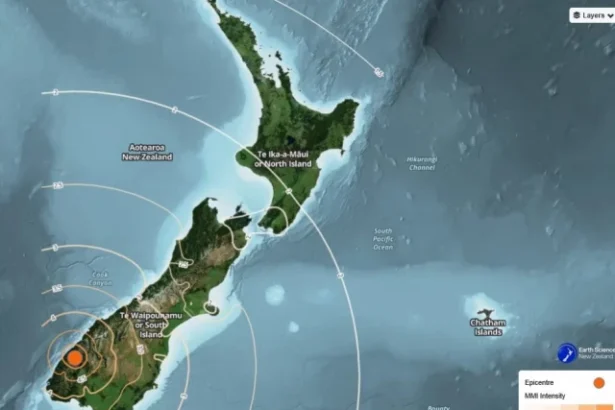
- A magnitude 5.9 earthquake shook the town of Te Anau in New Zealand’s South Island, rattling buildings and prompting authorities to issue a brief tsunami warning before lifting it shortly after.
- The quake struck roughly 40 kilometers north of Te Anau, the entry point to the popular Fiordland tourist region, according to New Zealand’s National Emergency Management Agency.
- While Thursday’s quake caused no reported damage, authorities in New Zealand routinely urge residents and visitors to stay alert during moments of ground shaking, given the country’s history of destructive earthquakes, including the deadly 2011 Christchurch quake that killed 185 people.
A magnitude 5.9 earthquake shook the town of Te Anau in New Zealand’s South Island, rattling buildings and prompting authorities to issue a brief tsunami warning before lifting it shortly after.
The quake struck roughly 40 kilometers north of Te Anau, the entry point to the popular Fiordland tourist region, according to New Zealand’s National Emergency Management Agency. Officials reported no immediate injuries or damage in the area.
The agency initially measured the earthquake at magnitude 6.3 when it hit at 9:14 p.m. local time, later revising the figure down to 5.9. Although officials canceled the tsunami alert, the agency warned that coastal areas could still experience strong and unusual currents along with unpredictable surges near the shore. It urged people to leave the water, stay off beaches and avoid harbors, marinas and rivers until conditions stabilize.
Maylene Puyat, duty manager at Te Anau’s Fiordland Hotel, described the shaking as fairly strong and said it lasted about a minute. She said the hotel shook noticeably but nothing inside the building moved or fell.
Another resident told a local news outlet that the shaking felt long and loud, comparing the sound to a passing train, and said the walls clearly moved during the quake.
New Zealand’s geological hazard monitoring system, GeoNet, received more than 18,000 reports from people who felt the earthquake, reflecting how widely the tremor was noticed across the region.
New Zealand sits along the Pacific Ring of Fire, a zone known for frequent seismic activity due to the movement of tectonic plates beneath the country. The South Island in particular experiences regular earthquakes because of its proximity to the Alpine Fault, a major fault line that runs much of the island’s length. While Thursday’s quake caused no reported damage, authorities in New Zealand routinely urge residents and visitors to stay alert during moments of ground shaking, given the country’s history of destructive earthquakes, including the deadly 2011 Christchurch quake that killed 185 people. The swift tsunami warning and its equally swift cancellation illustrate the balance emergency agencies must strike between issuing timely alerts and avoiding unnecessary alarm once new seismic data becomes available.
We welcome your contributions! Submit your blogs, opinion pieces, press releases, news story pitches, and news features to opinion@minutemirror.com.pk and minutemirrormail@gmail.com