Summary
- The Pakistan Economic Survey 2025 to 2026 records real GDP growth of 3.7%, an economy of about US$452.1 billion and per capita income of US$1,901.
- The Pakistan Bureau of Statistics data show that food imports rose 11.66% to US$9.150 billion in 2025 to 2026 and raw food exports fell 29.49% to US$5.017 billion, an alarming result for a country with substantial agricultural base.
- He has coauthored with Huzaima Bukhari many books that include, Tax Reforms in Pakistan: Historic & Critical Review, Towards Broad, Flat, Low-rate, and Predictable Taxes (third edition, 2024), Pakistan: Enigma of Taxation, Towards Flat, Low-rate, Broad and Predictable Taxes (revised/enlarged edition of December 2020), Law & Practice of Income Tax, Law , Practice of Sales Tax, Law and Practice of Corporate Law, Law & Practice of Federal Excise, Law & Practice of Sales Tax on Services, Federal Tax Laws of Pakistan, Provincial Tax Laws, Practical Handbook of Income Tax, Tax Laws of Pakistan, Principles of Income Tax with Glossary and Master Tax Guide, Income Tax Digest 1886-2011 (with judicial analysis).
The year 2026 has given Pakistan strategic visibility beyond what its economic indicators alone would suggest, placing the country at the center of major regional security, diplomatic and geopolitical developments.
The Mecca Joint Defense Agreement signed on August 7, 2026 by Pakistan, Saudi Arabia and Türkiye provides that an armed attack on one member will be regarded as an attack on all, whereas Türkiye later confirmed plans for political and military coordination, joint exercises and deeper defense industry cooperation.
The Pakistan role in the United States and Israeli war with Iran has also become significant, with Reuters reporting progress in Pakistan supported talks aimed at reducing escalation, reopening the Strait of Hormuz and creating an avenue back to negotiations.
The May 2025 conflict with India also strengthened Pakistan’s military profile. The Pakistani military said on the first anniversary that it had downed at least seven Indian military aircraft, whereas India acknowledged aircraft losses without confirming Pakistan’s number, and the French air chief later said he had seen evidence pointing to three Indian fighter losses, including Rafale. Pakistan’s battlefield performance materially raised its military profile.
The durability of these gains depends on an economy capable of financing security, diplomacy and development without repeated rescue from lenders. The Pakistan Economic Survey 2025 to 2026 records real GDP growth of 3.7%, an economy of about US$452.1 billion and per capita income of US$1,901. But it also records an investment to GDP ratio of only 14.38% and national saving of 14.13% of GDP. The same survey estimates the population at 252.09 million, the labour force at 83.14 million and unemployment at 5.90 million, which means modest growth must support one of the world’s largest populations.
The production structure explains why stability has not yet become transformation. The agriculture sector grew by 2.89 percent and contributed 23.44 percent of GDP whereas employing more than one third of the workforce, yet the country still loses potential income through limited processing and weak value addition. The Pakistan Bureau of Statistics data show that food imports rose 11.66% to US$9.150 billion in 2025 to 2026 and raw food exports fell 29.49% to US$5.017 billion, an alarming result for a country with substantial agricultural base.
The manufacturing image contains genuine improvement but not enough scale. The Economic Survey reports manufacturing growth of 6.6% and large-scale manufacturing growth of 6.1%, but merchandise exports for the year still fell by 5.93% to US$30.139 billion. Similarly, imports rose 8.14% to US$69.761 billion, producing a trade deficit of about US$39.622 billion. However, this gap matters because foreign debt becomes safer only when production generates exports, replaces imports or attracts durable investment.
The debt numbers show the fundamental weakness more severely. The State Bank data place total external debt and liabilities at US$138.85 billion on June 30, 2026, up from US$135.64 billion a year earlier, whereas the government external debt reached about US$87.03 billion. The external debt servicing bill reached US$21.59 billion, including US$16.59 billion of principal and US$5 billion of interest, with US$10.14 billion falling in the fourth quarter alone. The annual servicing bill was therefore equivalent to roughly seventy two percent of annual merchandise exports, although exports are not Pakistan’s only source of foreign currency.
The domestic fiscal accounts tell the same story highlighted in the Ministry of Finance’s Consolidated Federal and Provincial Operations for July 2026 to June 2026. The consolidated federal and provincial fiscal operations recorded revenue of about Rs19.77 trillion against expenditure of about Rs23.09 trillion, leaving an overall deficit of about Rs3.31 trillion, or 2.6 percent of GDP, however, the primary balance showed a surplus of about Rs3.63 trillion, or 2.9 percent of GDP. The difference is largely the legacy cost of borrowing because markup payments alone reached about Rs6.95 trillion, or 5.5 percent of GDP, close to half of tax revenue.
The Ministry of Economic Affairs report makes the dependence visible in the first month of the new fiscal year. The report records US$763.03 million of foreign economic assistance in July 2026, of which US$744.67 million was loans and only US$18.37 million was grants, meaning about 97.6 percent of the inflow created repayment obligations.
The report further shows US$432.73 million of non-project assistance against US$330.30 million of project assistance, whereas US$343.99 million was budgetary support through conventional and Islamic Naya Pakistan Certificates. The report also records US$146.62 million of guaranteed Chinese financing for the Chashma Nuclear Power Plant 5 and US$252.83 million from multilateral sources, including US$130.65 million from IDA and US$59.17 million from the Asian Development Bank.
The government can point to the lower fiscal deficit, the primary surplus, stronger manufacturing growth and restored macroeconomic stability, and the IMF recognized progress when it completed its third review in May 2026. The same IMF assessment nevertheless said sustainable growth still requires a broader tax base, stronger competition, higher productivity, reform of state owned enterprises, better human capital, improved public services and a viable energy sector.
The central criticism is therefore not that every borrowed dollar has been wasted, but that the economy has still not created enough exports, investment, productivity and fiscal revenue to make the accumulated debt comfortably sustainable.
The first practical reform should be a binding national rule that new external borrowing, except temporary crisis finance, must be tied to projects that can demonstrate measurable economic returns, foreign currency earnings, foreign currency savings or essential human capital gains. The same rule should require publication of expected returns, implementation timetables, procurement records and completed project results so Parliament and taxpayers can compare the value created with the debt incurred.
The second reform should replace repeated taxation of the already documented economy with a wider tax base, stronger digital compliance, realistic property valuation, effective provincial taxation and strict control of wasteful current expenditure. The same reform should accelerate restructuring, privatization or closure of persistent loss making state owned enterprises and redirect fiscal space toward education, health, water, transport and productive infrastructure, consistent with IMF reform priorities.
The third reform should turn agriculture into an industrial value chain rather than treating it mainly as crop production. The government should make irrigation efficiency, certified seed, storage, cold chains, grading, food processing, livestock productivity, export certification and agricultural research national priorities so farmers capture more value, and Pakistan imports less food by exporting more finished products.
The industrial policy should connect agriculture with textiles, engineering, pharmaceuticals, minerals, information technology, logistics and energy through reliable power, competitive finance, predictable taxation and export focused incentives instead of permanent protection.
The fourth reform should make employment a test of economic policy because the Economic Survey records 5.90 million unemployed people and a population of 26.56% is between fifteen and twenty nine. The education and skills system should therefore be tied directly to employer demand through apprenticeships, technical institutes linked to industrial clusters, digital skills, modern farming, construction, logistics and export services, while small and medium firms receive simpler regulation and better access to formal credit.
The final objective should be to make Pakistan economically as consequential as it is strategically visible. The G20 describes its membership as the major advanced and emerging economies that together account for about 85% of world GDP and more than 75% of world trade.
The credible route toward a future Pakistani place at that table is therefore larger productive capacity, higher exports, stronger institutions, sustained investment, lower debt dependence, deeper regional trade and millions of productive jobs. The strategic successes of 2025 and 2026 can open doors, but the economic transformation of Pakistan must determine whether those doors lead to lasting national power.
_____________________________________________________________
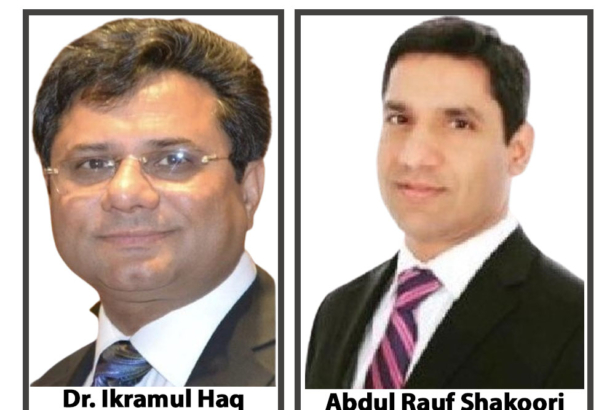
Dr. Ikramul Haq, Advocate Supreme Court, specializes in constitutional, corporate, environment, media, ML/CFT related laws, IT, intellectual property, arbitration and international tax laws. He holds an LLD in tax laws with specialization in transfer pricing. He was full-time journalist from 1979 to 1984 with Viewpoint and Dawn. He served Civil Services of Pakistan from 1984 to 1996.
He established Huzaima & Ikram in 1996 and is presently its chief partner. He studied journalism, English literature and law. He is Chief Editor of Taxation. He is country editor and correspondent of International Bureau of Fiscal Documentation (IBFD) and member of International Fiscal Association (IFA).
He is Visiting Faculty at Lahore University of Management Sciences (LUMS) and member Advisory Board and Visiting Senior Fellow of Pakistan Institute of Development Economics (PIDE).
He has coauthored with Huzaima Bukhari many books that include, Tax Reforms in Pakistan: Historic & Critical Review, Towards Broad, Flat, Low-rate, and Predictable Taxes (third edition, 2024), Pakistan: Enigma of Taxation, Towards Flat, Low-rate, Broad and Predictable Taxes (revised/enlarged edition of December 2020), Law & Practice of Income Tax, Law , Practice of Sales Tax, Law and Practice of Corporate Law, Law & Practice of Federal Excise, Law & Practice of Sales Tax on Services, Federal Tax Laws of Pakistan, Provincial Tax Laws, Practical Handbook of Income Tax, Tax Laws of Pakistan, Principles of Income Tax with Glossary and Master Tax Guide, Income Tax Digest 1886-2011 (with judicial analysis).
He is author of Commentary on Avoidance of Double Taxation Agreements, Pakistan: From Hash to Heroin, its sequel Pakistan: Drug-trap to Debt-trap and Practical Handbook of Income Tax. Two books of poetry are Phull Kikkaran De (Punjabi 2023) and Nai Ufaq (Urdu 1979 with Siraj Munir and Shahid Jamal).
He regularly writes columns/article/papers for many Pakistani newspapers and international journals and has contributed over 3500 articles on a variety of issues of public interest, printed in various journals, magazines and newspapers at home and abroad.
_______________________________________________________________
Abdul Rauf Shakoori, Advocate High Court, is a subject-matter expert on AML-CFT, Compliance, Cyber Crime and Risk Management. He has been providing AML-CFT advisory and training services to financial institutions (banks, DNFBPs, Investment companies, Money Service Businesses, insurance companies and securities), government institutions including law enforcement agencies located in North America (USA & CANADA), Middle East and Pakistan.
His areas of expertise include legal, strategic planning, cross-border transactions including but not limited to joint ventures (JVs), mergers & acquisitions (M&A), takeovers, privatizations, overseas expansions, USA Patriot Act, Banking Secrecy Act, Office of Foreign Assets Control (OFAC).
Over his career he has demonstrated excellent leadership, communication, analytical, and problem-solving skills and have also developed and delivered training courses in the areas of AML/CFT, Compliance, Fraud & Financial Crime Risk Management, Bank Secrecy, Cyber Crimes & Internet Threats against Banks, E–Channels Fraud Prevention, Security and Investigation of Financial Crimes. The courses have been delivered as practical workshops with case study driven scenarios and exams to ensure knowledge transfer.
His notable publications are Rauf’s Compilation of Corporate Laws of Pakistan, Rauf’s Company Law and Practice of Pakistan and Rauf’s Research on Labour Laws and Income Tax and others.
His articles include: Revenue collection: Contemporary targets vs. orthodox approach, It is time to say goodbye to our past, US double standards, Was Due Process Flouted While Convicting Nawaz Sharif?, FATF and unjustly grey listed Pakistan, Corruption is no excuse for Incompetence, Next step for Pakistan, Pakistan’s compliance with FATF mandates, a work in progress, Pakistan’s strategy to address FATF Mandates was Inadequate, Pakistan’s Evolving FATF Compliance, Transparency Curtails Corruption, Pakistan’s Long Road towards FATF Compliance, Pakistan’s Archaic Approach to Addressing FATF Mandates, FATF: Challenges for June deadline, Pakistan: Combating the illicit flow of money, Regulating Crypto: An uphill task for Pakistan. Pakistan’s economy – Chicanery of numbers. Pakistan: Reclaiming its space on FATF whitelist. Sacred Games: Kulbhushan Jadhav Case. National FATF secretariat and Financial Monitoring Unit. The FATF challenge. Pakistan: Crucial FATF hearing. Pakistan: Dissecting FATF Failure, Environmental crimes: An emerging challenge, Countering corrupt practices .
The recent publication, coauthored by these writes with Huzaima Bukhari is:
Pakistan Tackling FATF: Challenges & Solutions, available at:
https://aacp.com.pk/book-detail/pakistan-tackling-fatf-challenges-and-solutions-35
https://www.amazon.com/dp/B08RXH8W46
We welcome your contributions! Submit your blogs, opinion pieces, press releases, news story pitches, and news features to opinion@minutemirror.com.pk and minutemirrormail@gmail.com