Summary
- Petrol and diesel prices in Pakistan have recorded a net increase since the government introduced a daily pricing mechanism on July 21, despite several rounds of reductions during the period.
- The cumulative increase in diesel prices reached Rs62.26 per litre, compared with total reductions of Rs45.17 per litre.
- As a result, diesel recorded a net increase of Rs17.09 per litre.
Petrol and diesel prices in Pakistan have recorded a net increase since the government introduced a daily pricing mechanism on July 21, despite several rounds of reductions during the period.
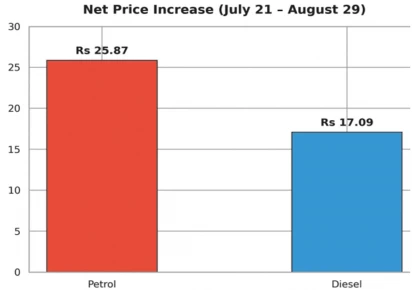
An analysis of fuel price changes up to August 29 shows that petrol has become Rs25.87 per litre more expensive, while the price of diesel has risen by Rs17.09 per litre overall.
Under the daily pricing system, authorities have revised petroleum prices almost every day in response to changes in international oil prices and other relevant costs. Since its introduction, both petrol and diesel have seen repeated increases as well as reductions.
According to the data, petrol prices increased 15 times and declined 12 times between July 21 and August 29. The cumulative increase during this period stood at Rs44.67 per litre, while the combined reductions amounted to Rs18.80 per litre. This resulted in a net increase of Rs25.87 per litre.
Diesel prices followed a similar pattern but saw even more upward revisions. The price of diesel increased 18 times and decreased nine times during the same period.
The cumulative increase in diesel prices reached Rs62.26 per litre, compared with total reductions of Rs45.17 per litre. As a result, diesel recorded a net increase of Rs17.09 per litre.
The figures highlight that frequent price cuts have not been enough to offset the overall rise in fuel prices since the daily pricing system came into effect.
The new mechanism allows the government to adjust petroleum prices more quickly in response to fluctuations in global crude oil prices, exchange rates and other market factors. However, the frequent revisions have also raised concerns among consumers and businesses over price uncertainty.
Transport operators, traders and households can find it difficult to plan their expenses when fuel prices change repeatedly. Higher fuel costs can also affect transportation fares, freight charges and the prices of goods and services across the economy.
We welcome your contributions! Submit your blogs, opinion pieces, press releases, news story pitches, and news features to opinion@minutemirror.com.pk and minutemirrormail@gmail.com