



Summary
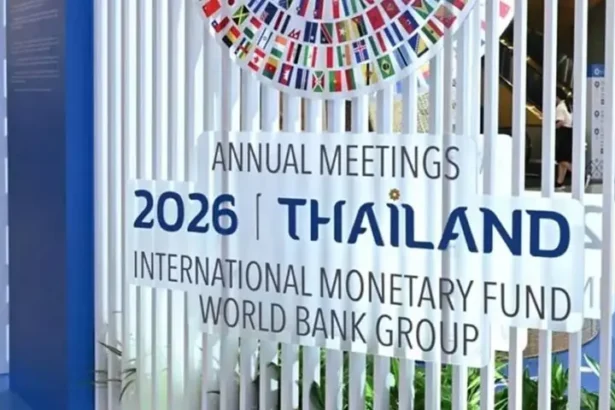
- Federal Minister for Economic Affairs Ahad Khan Cheema, who also serves as Pakistan’s governor to the World Bank, was formally announced as the incoming chair during the plenary session of the 2026 IMF-World Bank Annual Meetings in Bangkok on Friday, according to the Ministry of Economic Affairs.
- The minister reaffirmed Pakistan’s willingness to work with the World Bank Group, the IMF and other member countries to strengthen international cooperation and make the global financial system more responsive to the needs of developing economies.
- Meanwhile, Finance Minister Muhammad Aurangzeb met World Bank Group President Ajay Banga during a dinner hosted by Thailand’s prime minister on the sidelines of the annual meetings in Bangkok.
Pakistan will assume the chairmanship of the Boards of Governors of the International Monetary Fund (IMF) and the World Bank Group next year, marking its first return to the position since 1953.
Federal Minister for Economic Affairs Ahad Khan Cheema, who also serves as Pakistan’s governor to the World Bank, was formally announced as the incoming chair during the plenary session of the 2026 IMF-World Bank Annual Meetings in Bangkok on Friday, according to the Ministry of Economic Affairs.
The development marks a significant milestone for Pakistan as it prepares to take a leading role in discussions on global economic policy and development financing. The ministry said the position would allow the country to contribute to international economic debates and promote dialogue among member states.
The annual meetings, being held from October 12 to 18, have brought together more than 15,000 participants from 191 countries. The gathering includes central bank governors, finance officials, policymakers and business leaders discussing global economic challenges and development priorities.
Following the announcement, Cheema received a briefing from the World Bank Group’s Corporate Secretariat on the responsibilities associated with the chairmanship. He also met World Bank Group Vice President and Corporate Secretary Aradhana Kumar-Capoor to discuss coordination and institutional support for Pakistan’s upcoming term.
Cheema also held a meeting with Carlos Carvallo Spalding, governor of Paraguay’s central bank and the outgoing chair of the Boards of Governors. He congratulated Spalding on completing his tenure and discussed the responsibilities of the office and priorities for the coming year.
During the engagements, Cheema highlighted Pakistan’s commitment to strengthening the representation of developing countries in international financial institutions. He also stressed the need for predictable development financing, better coordination among multilateral institutions and greater mobilisation of private investment to support sustainable and inclusive growth.
The minister reaffirmed Pakistan’s willingness to work with the World Bank Group, the IMF and other member countries to strengthen international cooperation and make the global financial system more responsive to the needs of developing economies.
Meanwhile, Finance Minister Muhammad Aurangzeb met World Bank Group President Ajay Banga during a dinner hosted by Thailand’s prime minister on the sidelines of the annual meetings in Bangkok.
The informal meeting provided an opportunity for interaction alongside the high-level discussions taking place during the gathering, according to state-run Pakistan Television.
Aurangzeb is leading Pakistan’s delegation and holding meetings with international financial institutions, finance ministers, policymakers and investors to discuss economic cooperation and financing priorities.
Pakistan remains engaged with the IMF under a $7 billion Extended Fund Facility and a $1.4 billion Resilience and Sustainability Facility. Earlier this month, the country reached a staff-level agreement with the Fund following the fourth review of the EFF programme and the third review of the RSF facility.
The agreement has made Pakistan eligible to receive approximately $1.2 billion in financing, subject to the completion of the remaining approval process. The funding is expected to support the country’s ongoing economic reform programme and resilience-related initiatives.
We welcome your contributions! Submit your blogs, opinion pieces, press releases, news story pitches, and news features to opinion@minutemirror.com.pk and minutemirrormail@gmail.com






