Summary
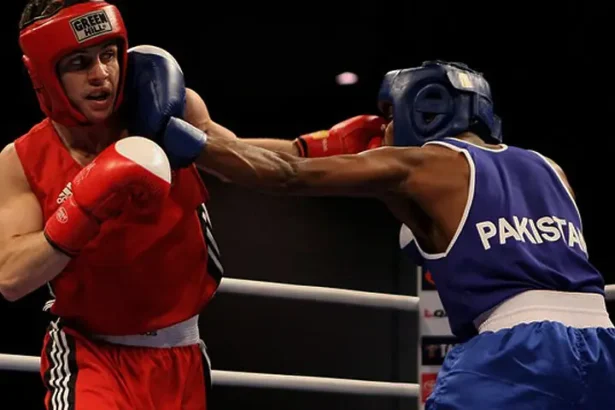
- ISLAMABAD: Pakistan will take one of its smallest boxing contingents in recent memory to the Asian Games in Nagoya, Japan, but the country’s hopes of ending a decade-long medal drought rest firmly on the shoulders of four fighters.
- Eyes already on the 2027 South Asian Games While Nagoya is the immediate target, Pakistan’s boxing officials are already looking ahead to the South Asian Games, scheduled to be held in Islamabad, Lahore and Peshawar from April 3 to 11 next year.
- For Pakistan’s four boxers, Nagoya offers a chance to revive a struggling sport, end a 12-year Asian Games medal wait and prove that talent can still flourish despite limited resources.
ISLAMABAD: Pakistan will take one of its smallest boxing contingents in recent memory to the Asian Games in Nagoya, Japan, but the country’s hopes of ending a decade-long medal drought rest firmly on the shoulders of four fighters.
The seven-member delegation, comprising four boxers, two coaches and a team manager, is scheduled to leave for Japan on September 17, two days before the Games officially open.
Among the quartet, women’s boxer Fatima Zehra is being viewed as Pakistan’s strongest medal prospect. The 60kg fighter recently created history by winning Pakistan’s first-ever Commonwealth Games medal in women’s boxing, claiming bronze in Glasgow.
Pakistan Boxing Federation (PBF) secretary Major Irfan Younis believes Fatima has what it takes to challenge the continent’s best.
“Fatima Zehra is our biggest hope,” Irfan said, expressing confidence that she can deliver another major performance.
Fatima’s challenge, however, will be significantly tougher in Nagoya. Asian boxing features some of the sport’s strongest nations, including Uzbekistan, Kazakhstan and India, making the route to the podium considerably more difficult.
The other woman in Pakistan’s squad is Maria Rind, a 51kg Army boxer from Karachi’s Lyari area. Rind was part of the Commonwealth setup but missed the trip to Glasgow because of financial constraints. She now gets another opportunity to make her mark on the international stage.
Pakistan’s men’s challenge will be led by Sumama Rahman, competing in the 55kg category. Sumama impressed despite losing a unanimous decision to India’s Jadumani Singh Mandengbam at the Commonwealth Games.
Irfan recalled how the young fighter managed to silence the home crowd with his performance, describing him as a “very good fighter”.
The fourth member is Irfan Khan, a six-time national champion from Khyber Pakhtunkhwa who will make his international debut in the 92kg category.
A medal drought stretching back to 2014
Pakistan’s last Asian Games boxing medal came at the 2014 Incheon Games, where Mohammad Waseem won bronze. Waseem later moved into professional boxing and captured a WBA World Gold title.
Since then, Pakistan’s boxers have returned empty-handed from the 2018 Jakarta and 2023 Hangzhou Asian Games.
The federation hopes the current generation can finally end that run, although officials acknowledge that preparation remains a major obstacle.
The squad has been training at the Pakistan Sports Complex in Islamabad since August 24 after an earlier camp in Rawalpindi supported by the Army and Pakistan Olympic Association.
The Army also played a key role in Pakistan’s Commonwealth campaign by arranging a two-month training camp and covering expenses such as accommodation and diet.
Yet the current camp has limited resources. According to Irfan, the team has only four boxers and one regular sparring partner, a serious concern in a sport where fighters need partners of different weights, styles, speeds and stances.
The Army has stepped in again by providing additional boxers who travel daily to train with the national squad.
Money remains Pakistan boxing’s biggest hurdle
Financial problems continue to restrict the federation’s ambitions.
Irfan said the Pakistan Sports Board is sponsoring only two boxers because of budget limitations, while the federation is covering expenses for the remaining members.
Sending a single athlete to an international competition can cost nearly Rs1 million, while organising a National Championship costs around Rs5 million.
The federation has identified promising fighters through Under-17, Under-19 and Under-22 competitions, but limited funding makes it difficult to provide them with enough domestic and international exposure.
Irfan argues that international competition is essential if Pakistan wants to close the gap with regional rivals.
He pointed to India’s success in women’s boxing, saying Pakistani fighters have comparable potential but lack opportunities to compete and train internationally.
Eyes already on the 2027 South Asian Games
While Nagoya is the immediate target, Pakistan’s boxing officials are already looking ahead to the South Asian Games, scheduled to be held in Islamabad, Lahore and Peshawar from April 3 to 11 next year.
With India expected to compete, Irfan says Pakistan must develop a long-term strategy rather than rely on individual performances.
The federation plans to use national-level championships as part of its preparations, with the ultimate objective of developing boxers capable of challenging internationally at the 2028 Olympics.
The Asian Games, therefore, represent more than just another tournament. For Pakistan’s four boxers, Nagoya offers a chance to revive a struggling sport, end a 12-year Asian Games medal wait and prove that talent can still flourish despite limited resources.
For Fatima, Maria, Sumama and Irfan, the biggest fight may begin long before they step into the ring.
We welcome your contributions! Submit your blogs, opinion pieces, press releases, news story pitches, and news features to opinion@minutemirror.com.pk and minutemirrormail@gmail.com