



Summary
- The frequent changes reflect the government’s daily petroleum pricing mechanism, introduced in July to respond to fluctuations in international oil markets.
- Tensions in the Middle East, concerns over oil supplies and disruptions to major shipping routes continue to influence international crude oil prices.
- With international oil prices remaining volatile, further changes in domestic petroleum rates will depend on developments in global markets, supply conditions and the government’s daily pricing decisions.
The federal government has reduced the price of petrol by Rs3.93 per litre while keeping the price of high-speed diesel (HSD) unchanged for three days, from October 17 to October 19.
Under the latest revision, petrol will be available at Rs386.30 per litre, while diesel will continue to cost Rs396.96 per litre. The revised prices were announced through a notification issued by the Petroleum Division.
The latest reduction follows another cut announced a day earlier, when petrol prices were lowered by Rs3.63 per litre. However, diesel prices were increased by 31 paisas per litre for October 16. The frequent changes reflect the government’s daily petroleum pricing mechanism, introduced in July to respond to fluctuations in international oil markets.
Pakistan’s fuel prices remain under pressure due to uncertainty in global energy markets. Tensions in the Middle East, concerns over oil supplies and disruptions to major shipping routes continue to influence international crude oil prices. As Pakistan relies heavily on imported petroleum products, changes in global prices can quickly affect domestic fuel costs.
International oil prices recorded a sharp increase on Friday, with both major crude benchmarks rising by more than 2%. Brent crude futures climbed by $3.41, or 3.2%, to $109.34 per barrel, while US West Texas Intermediate crude rose by $2.74, or 2.8%, to $100.67 per barrel. The US benchmark crossed the $100 mark for the first time since September 21.
Market participants remained concerned about the security of Middle Eastern oil supplies and the volume of diesel Russia could deliver to international markets. These concerns encouraged traders to buy oil amid fears of further supply disruptions.
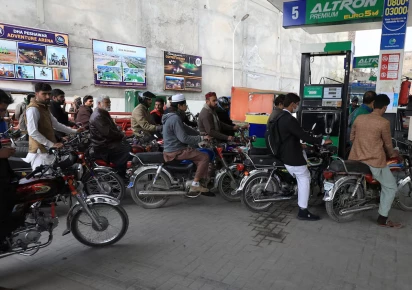
Meanwhile, the government has announced relief measures to reduce the burden of high fuel costs on lower-income consumers. Prime Minister Shehbaz Sharif announced a proposed subsidy of Rs100 per litre for motorcycles, three-wheeler rickshaws and cars with engine capacities of up to 800cc.
The scheme is expected to cover approximately 11.8 million beneficiaries. Motorcycle users and three-wheeler owners would be eligible for relief on up to 20 litres of fuel per month, providing a maximum benefit of Rs2,000. Owners of eligible small cars would receive relief on up to 30 litres per month, with a maximum benefit of Rs3,000.
The government has also introduced austerity and fuel conservation measures in response to rising energy costs. Under the announced restrictions, shops, markets and shopping malls must close by 9pm, while marriage halls and other event venues must shut by 10pm. Restaurants and food outlets are permitted to operate until 11pm, while takeaway and home delivery services remain exempt from the restrictions.
With international oil prices remaining volatile, further changes in domestic petroleum rates will depend on developments in global markets, supply conditions and the government’s daily pricing decisions.
We welcome your contributions! Submit your blogs, opinion pieces, press releases, news story pitches, and news features to opinion@minutemirror.com.pk and minutemirrormail@gmail.com







