Summary
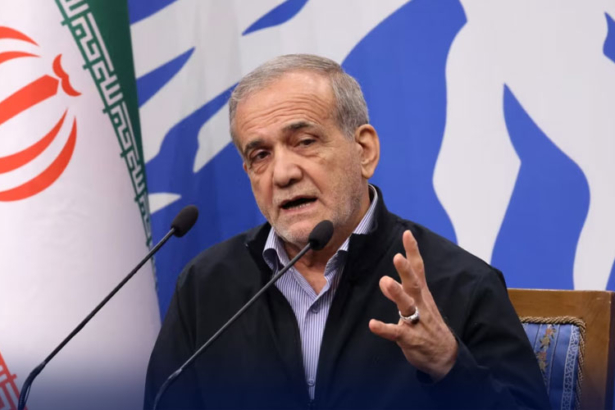
- Iranian President Masoud Pezeshkian has said Tehran will not surrender to external pressure or compromise its military and defensive capabilities, while stressing that Iran remains open to diplomacy if it can help protect the country’s interests.
- The president also questioned why some regional countries allowed their territories to be used for attacks against Iran.
- Despite the concerns, US officials reportedly believe American forces could still inflict significant damage on Iran if President Donald Trump orders further escalation.
Iranian President Masoud Pezeshkian has said Tehran will not surrender to external pressure or compromise its military and defensive capabilities, while stressing that Iran remains open to diplomacy if it can help protect the country’s interests.
In a televised interview marking the second anniversary of his presidency, Pezeshkian said Iran would resist any attempt to force it into submission. He maintained that Tehran had the right to preserve its defence capabilities and would not accept demands aimed at weakening its military strength.
The Iranian president described his country’s response during the latest conflict with the United States and Israel as an act of self-defence. He praised Iran’s armed forces, including the Army, Islamic Revolutionary Guard Corps and Aerospace Forces, for their performance during the fighting.
Pezeshkian also accused Washington and Tel Aviv of attempting to bring Gulf countries together against Iran. He said Tehran was working to prevent further regional divisions and maintained that Muslim countries should cooperate regardless of sectarian differences.
He rejected claims that Iran sought territorial expansion or intended to attack neighbouring states. According to Pezeshkian, Iran wanted peaceful relations with countries in the region and had no plans to seize territory or expand its borders.
The president also questioned why some regional countries allowed their territories to be used for attacks against Iran. He said Tehran did not seek confrontation with those states but would respond against locations from which it was attacked.
Meanwhile, senior US military officials are reportedly pushing for a path toward de-escalation as concerns grow over the effectiveness and sustainability of further military action against Iran.
According to a report, Chairman of the Joint Chiefs of Staff Gen Dan Caine has privately urged senior Trump administration officials to explore options for ending the conflict. The discussions reportedly involved senior figures including CIA Director John Ratcliffe, Secretary of State Marco Rubio and Vice President JD Vance.
US officials are said to believe that continued air operations alone may not be enough to force Tehran to accept Washington’s demands. There are also concerns about Iranian retaliation against US allies and regional energy infrastructure.
The report further indicated that shortages of some US weapons, including air-defence interceptors and precision munitions, could make a prolonged conflict increasingly difficult.
Despite the concerns, US officials reportedly believe American forces could still inflict significant damage on Iran if President Donald Trump orders further escalation. At the same time, Washington is examining diplomatic options that could allow Trump to present an agreement as a political achievement.
A possible agreement between Iran and Oman could provide a major breakthrough in efforts to reopen the Strait of Hormuz, according to a US official.
Washington expects Tehran and Muscat to reach an understanding that would allow commercial shipping and oil traffic to resume through the strategic waterway. The United States has indicated that it could lift its blockade of Iranian ports once commercial shipping is restored and Iran fulfils its commitments.
The Strait of Hormuz is one of the world’s most important energy routes, with a significant share of global oil supplies traditionally passing through it. Disruptions caused by the conflict have contributed to higher energy prices and increased inflationary pressure.
The latest diplomatic activity follows several previous claims that a deal over the strait was close, although Iranian officials have repeatedly denied that formal negotiations were taking place.
Regional tensions have also prompted Pakistan, Saudi Arabia and Türkiye to strengthen military cooperation through a joint defence agreement signed in Makkah.
Under the agreement, an armed attack against any one of the three countries would be treated as an attack against all three. The countries said the pact was intended to strengthen collective deterrence and protect regional security.
Türkiye stressed that the agreement was defensive and was not directed against any particular country. However, the deal comes amid heightened tensions involving Iran and growing concerns about the conflict spreading across the Gulf and wider Middle East.
Meanwhile, diplomatic efforts are continuing on the Lebanon front, where officials are discussing arrangements for monitoring the potential disarmament of Hezbollah under a US-backed framework.
Pezeshkian has also defended diplomatic engagement with Washington despite opposition from Iranian hardliners.
The Iranian president argued that dialogue could be useful if it allowed Tehran to safeguard its national interests and secure its rights.
We welcome your contributions! Submit your blogs, opinion pieces, press releases, news story pitches, and news features to opinion@minutemirror.com.pk and minutemirrormail@gmail.com