Summary
- Prime Minister Shehbaz Sharif has emphasized the need to improve the efficiency and performance of government institutions by adopting modern technology and enhancing the professional training of public sector employees.
- The meeting reviewed the progress made under the government’s administrative reform agenda, which seeks to reduce the size of the public sector, eliminate unnecessary expenditures, and ensure more efficient delivery of public services.
- Concluding the meeting, Shehbaz Sharif reaffirmed the government’s commitment to continuing structural reforms aimed at creating a modern, efficient, and accountable public sector.
Prime Minister Shehbaz Sharif has emphasized the need to improve the efficiency and performance of government institutions by adopting modern technology and enhancing the professional training of public sector employees.
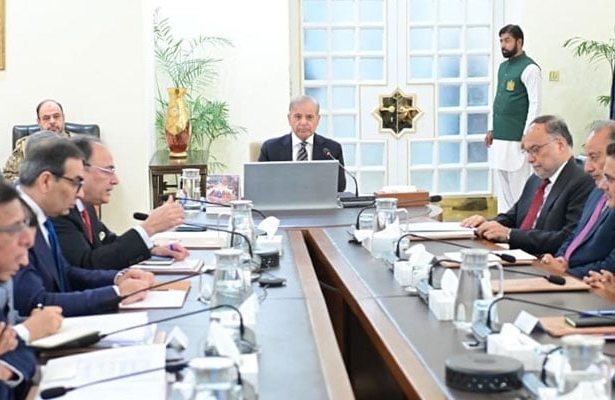
He made these remarks while chairing a high-level meeting on the federal government’s rightsizing initiative and measures aimed at improving the overall efficiency and effectiveness of state institutions. The meeting reviewed the progress made under the government’s administrative reform agenda, which seeks to reduce the size of the public sector, eliminate unnecessary expenditures, and ensure more efficient delivery of public services.
Addressing the participants, the Prime Minister said that technological innovation and skill development are essential for transforming the public sector into a more responsive, transparent, and efficient system. He stressed that government institutions must embrace modern digital solutions while ensuring that employees receive the training required to adapt to new technologies and administrative practices.
Shehbaz Sharif said the government’s rightsizing policy is already producing positive results by reducing unnecessary spending and improving the utilization of public resources. He noted that several major reforms have been implemented under the initiative, including the closure of the Utility Stores Corporation, Pakistan Public Works Department (Pak PWD), and the Pakistan Agricultural Storage and Services Corporation (PASSCO).
According to the Prime Minister, these decisions were taken after careful consideration to streamline government operations, eliminate overlapping functions, and reduce the financial burden on the national exchequer. He said the objective of the reforms is to build a leaner and more efficient public sector capable of delivering better services to citizens while ensuring fiscal discipline.
The Prime Minister stated that the savings generated through the rightsizing initiative would help strengthen the country’s financial position and allow the government to allocate more resources toward priority sectors such as education, healthcare, infrastructure, and economic development.
To ensure transparency and accountability, Shehbaz Sharif directed that all positions and institutions abolished under the rightsizing programme should undergo an independent third-party audit. He said the audit would assess whether the reforms had been implemented effectively and whether the expected financial and administrative benefits had been achieved.
The Prime Minister also instructed the relevant authorities to accelerate the implementation of all remaining rightsizing measures. He emphasized that administrative reforms should be carried out efficiently while maintaining transparency and ensuring that public services are not disrupted during the restructuring process.
During the meeting, officials briefed the participants on the progress achieved so far. They informed the Prime Minister that vacant positions across various federal ministries and government departments have been abolished as part of the government’s effort to reduce unnecessary staffing and improve administrative efficiency.
The meeting was further informed that work is also underway on the privatization of several state-owned enterprises. Officials said the government is taking practical steps to transfer selected public sector entities to the private sector in accordance with its broader economic reform programme. The privatization process aims to reduce the financial burden of loss-making enterprises on the national budget while encouraging greater investment, improved management, and enhanced productivity.
Participants also reviewed the overall progress of the government’s institutional reform agenda and discussed future steps to further improve governance and public sector performance. The Prime Minister reiterated that administrative reforms are essential for ensuring sustainable economic growth, strengthening public finances, and delivering better services to the people.
Concluding the meeting, Shehbaz Sharif reaffirmed the government’s commitment to continuing structural reforms aimed at creating a modern, efficient, and accountable public sector. He said that through the adoption of technology, improved training, transparent governance, and responsible financial management, Pakistan’s government institutions can become more effective in meeting the needs of citizens and supporting the country’s long-term development goals.
We welcome your contributions! Submit your blogs, opinion pieces, press releases, news story pitches, and news features to opinion@minutemirror.com.pk and minutemirrormail@gmail.com