Summary
- Prime Minister Shehbaz Sharif has instructed all federal and provincial authorities to remain on maximum alert and maintain full preparedness to tackle any emergency resulting from the ongoing monsoon rains and the flood situation affecting different parts of the country.
- Shehbaz Sharif also tasked Minister for Planning Ahsan Iqbal with chairing daily meetings of the Flood Committee to closely monitor the evolving situation, review developments, and recommend appropriate measures to minimize the impact of heavy rainfall and flooding.
- Officials informed the meeting that the NDMA is providing full logistical support and resources to provincial governments to manage flood-related emergencies in northern regions, while also assisting authorities in responding to the ongoing heatwave affecting Sindh and Balochistan.
Prime Minister Shehbaz Sharif has instructed all federal and provincial authorities to remain on maximum alert and maintain full preparedness to tackle any emergency resulting from the ongoing monsoon rains and the flood situation affecting different parts of the country.
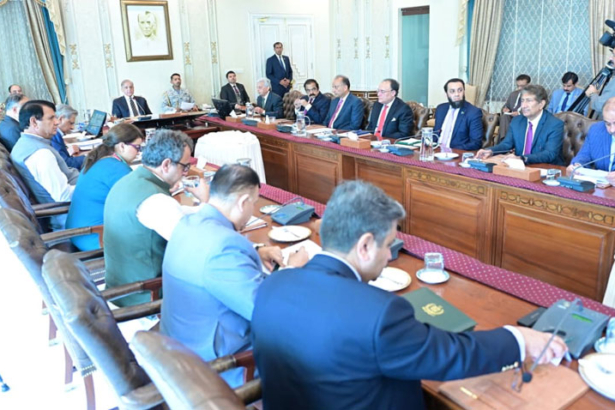
The directive was issued during a high-level review meeting held in Islamabad on Tuesday to assess the impact of the current monsoon spell and evaluate the government’s response to flooding and related emergencies.
During the meeting, the Prime Minister directed the National Disaster Management Authority (NDMA) to maintain close coordination with Provincial Disaster Management Authorities (PDMAs) and provincial governments. He emphasized the importance of ensuring that weather forecasts and monsoon-related alerts are shared promptly with all relevant federal and provincial institutions to support timely decision-making and emergency response.
Shehbaz Sharif also tasked Minister for Planning Ahsan Iqbal with chairing daily meetings of the Flood Committee to closely monitor the evolving situation, review developments, and recommend appropriate measures to minimize the impact of heavy rainfall and flooding.
Highlighting the risks in Pakistan’s mountainous regions, the Prime Minister stressed that the early warning system for Glacial Lake Outburst Floods (GLOFs) and flash floods must remain fully operational. He underscored the need for constant vigilance in vulnerable northern areas where melting glaciers continue to pose a serious threat.
The Prime Minister noted that although Pakistan contributes only a small fraction to global greenhouse gas emissions, it remains one of the countries most severely affected by climate change. He said the government is actively implementing short-term, medium-term, and long-term strategies aimed at reducing the country’s vulnerability to climate-related disasters and strengthening resilience against extreme weather events.
Shehbaz Sharif instructed the NDMA, in collaboration with all relevant departments, to take every possible measure to protect lives, safeguard property, and strengthen disaster response efforts throughout the ongoing monsoon season.
The meeting was attended by NDMA officials and chief secretaries from all four provinces, Gilgit-Baltistan, and Azad Jammu and Kashmir. Participants received detailed briefings on recent rainfall, the extent of damages, and the progress of rescue, relief, and rehabilitation operations.
Officials informed the meeting that the NDMA is providing full logistical support and resources to provincial governments to manage flood-related emergencies in northern regions, while also assisting authorities in responding to the ongoing heatwave affecting Sindh and Balochistan.
The participants were also briefed that another heavy spell of monsoon rainfall is expected over the next two days in Azad Jammu and Kashmir, Gilgit-Baltistan, and southern Sindh. A further nationwide spell of significant rainfall is forecast for the second week of September.
The meeting was informed that the Flood Committee established on the Prime Minister’s instructions continues to hold regular meetings to monitor the situation and ensure the effective implementation of rescue, relief, and rehabilitation measures across the country.
According to the latest figures presented during the briefing, the current monsoon season has claimed 110 lives, injured 360 people, damaged 796 houses, and caused the death of 376 livestock.
Officials also highlighted that the ongoing El Niño phenomenon has accelerated glacier melting in Pakistan’s northern regions, increasing the likelihood of Glacial Lake Outburst Floods and flash floods over the coming month. Authorities have already identified high-risk areas and are taking preventive measures to reduce potential damage.
The meeting was further informed that immediate action has helped bring urban flooding under control in central Punjab, including Lahore, while drainage operations continue in agricultural areas affected by floodwaters. Authorities also confirmed that the flood situation in Dera Ghazi Khan and nearby districts remains under control.
Officials reported that timely operations have led to the reopening of roads at 106 locations, restoring connectivity in affected areas. The meeting was also told that the National Emergency and Telecommunication Centre, established by the Ministry of Information Technology, is fully operational, enabling Rescue 1122 teams to respond quickly to emergency calls from any mobile phone across the country.
In addition, authorities have identified 700 locations nationwide for rainwater storage during the monsoon season. The initiative aims to conserve water for agricultural use during dry periods while improving long-term water management and climate resilience.
We welcome your contributions! Submit your blogs, opinion pieces, press releases, news story pitches, and news features to opinion@minutemirror.com.pk and minutemirrormail@gmail.com