Summary
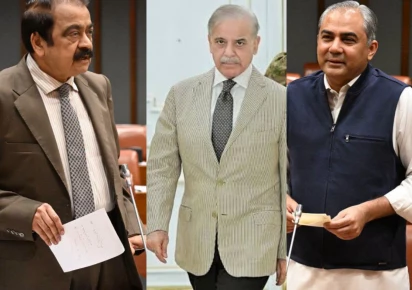
- The directive comes amid an increasingly heated exchange between Interior Minister Mohsin Naqvi and Prime Minister’s Adviser on Political Affairs Rana Sanaullah over proposals to establish new provinces and administrative units in the country.
- Sanaullah described Naqvi’s approach as a failure, arguing that the creation of new provinces required parliamentary debate and political consensus.
- The debate over new provinces has also exposed differences among political parties.
Prime Minister Shehbaz Sharif has directed federal ministers to stop exchanging public statements against one another, warning that such disputes create a negative impression of the government and distract attention from its development agenda.
According to an official statement issued by the Prime Minister’s Office on Tuesday, Shehbaz urged members of the federal cabinet to settle their differences through mutual understanding, dialogue and consensus rather than taking their disagreements into the public domain.
The prime minister stressed that public criticism among cabinet members must come to an end, saying the government’s priority should remain public welfare and national development.
He said Pakistan was moving beyond economic stabilisation towards sustainable growth and highlighted the government’s diplomatic and international achievements. He added that the federal administration remained committed to promoting development-oriented politics and improving public services.
The directive comes amid an increasingly heated exchange between Interior Minister Mohsin Naqvi and Prime Minister’s Adviser on Political Affairs Rana Sanaullah over proposals to establish new provinces and administrative units in the country.
The disagreement intensified after Naqvi called for administrative restructuring, arguing that the existing governance system was no longer delivering effectively. He raised the issue at the Pakistan Economic Summit in Islamabad in July, prompting criticism from Sanaullah, who questioned why such an important constitutional and political debate had been initiated outside parliament.
Tensions escalated further over the weekend when Naqvi warned, without directly naming Sanaullah, that a cabinet colleague who had repeatedly criticised him would struggle to face him if he responded to the allegations. He also defended business figures who attended the economic summit, questioning the political parties’ acceptance of their financial contributions.
Sanaullah responded on Monday, confirming that Naqvi’s remarks were directed at him. He said he had no objection to the interior minister responding but criticised the way the issue had been handled.
Sanaullah described Naqvi’s approach as a failure, arguing that the creation of new provinces required parliamentary debate and political consensus. He also maintained that Naqvi had failed to secure the Pakistan Peoples Party’s support despite having several months to consult its leadership.
The debate over new provinces has also exposed differences among political parties. The PPP has strongly opposed any proposal to divide Sindh, while the Muttahida Qaumi Movement-Pakistan has continued to demand additional provinces, particularly in the province.
The Sindh Assembly passed a resolution on September 4 rejecting any attempt to divide the province or change its geographical boundaries.
Defence Minister Khawaja Asif, meanwhile, has supported the establishment of up to 12 provinces, arguing that smaller administrative units could improve governance and public service delivery.
Demands for new provinces have remained part of Pakistan’s political debate for years, particularly in South Punjab, Bahawalpur and Hazara. Supporters argue that smaller administrative units would improve representation, address regional inequalities and make government services more accessible.
The Punjab Assembly had also passed resolutions in 2012 supporting the creation of South Punjab and restoration of Bahawalpur province. However, the proposals have yet to result in constitutional changes.
We welcome your contributions! Submit your blogs, opinion pieces, press releases, news story pitches, and news features to opinion@minutemirror.com.pk and minutemirrormail@gmail.com