Summary
- This makes Bulleh Shah indispensable to our inquiry into poetry, power and humanity.
- بُلھا شاہ پیارے باجھوں رہے اُرار نہ پار رَبّا ہُن کیہ کریے Bulla Shah piyare bajhon Rahe uraar na paar Rabba hun ki kariye Without the Beloved, says Bulleh Shah, I remain stranded midstream, reaching neither shore.
- Bulleh Shah makes the journey more unsettling.
“The ‘I’ of Bulleh Shah represents man in his very essential capacity as a unit of creation”.
—Najm Hosain Syed, Recurrent Patterns in Punjabi Poetry
Najm Hosain Syed’s reading of Bulleh Shah rescues one of Punjab’s most familiar poems from the ease of popular applause. Bullah ki jaana main kaun is commonly heard as a graceful confession that ultimate truth cannot be known. Najm sees something more demanding. Bulleh’s “I” is the elemental human being confronting the question “who?” Every answer offered by history—religion, institution, inherited status, nationality, relationship or dogma—tempts the seeker with a final identity. The poet accepts none as sufficient. His negatives are not an escape from commitment; they refuse to let any socially manufactured label exhaust the meaning of being human.
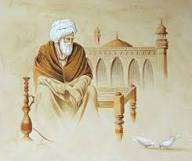
This makes Bulleh Shah indispensable to our inquiry into poetry, power and humanity. Shah Hussain crossed the narrow passage between possession and freedom [Poetry, Power & Humanity—III: Shah Hussain: Crossing the Narrow Passage of Love & Rebellion, Minute Mirror, July 21, 2026]. Bulleh Shah interrogated the walls on either side. Who constructed them? Who benefits when human beings are separated into pure and impure, believer and unbeliever, ruler and subject, high-born and low-born? His poetry exposes how identity, initially a source of belonging, can be converted into an instrument of hierarchy.
| اُٹھ گئے گوانڈھوں یار رَبّا ہُن کیہ کریے | Uth gaye gawandhon yaar Rabba hun ki kariye | The Beloved has left the neighbourhood; Lord, what am I to do now? |
| اُٹھ چلّے ہُن رہندے ناہیں ہویا ساتھ تیار رَبّا ہُن کیہ کریے | Uth chale hun rehnde nahin Hoya saath tayyar Rabba hun ki kariye | He has risen and departed; the caravan stands ready, and he will remain no more. Lord, what am I to do now? |
| ڈاڈھ کلیجے بل بل اُٹھے بھڑکے بِرہوں نار رَبّا ہُن کیہ کریے | Daadh kaleje bal bal uthe Bharke birhon naar Rabba hun ki kariye | The depths of my heart are aflame, kindled by the fire of separation. Lord, what am I to do now? |
| بُلھا شاہ پیارے باجھوں رہے اُرار نہ پار رَبّا ہُن کیہ کریے | Bulla Shah piyare bajhon Rahe uraar na paar Rabba hun ki kariye | Without the Beloved, says Bulleh Shah, I remain stranded midstream, reaching neither shore. Lord, what am I to do now? |
The kafi begins with departure, though it does not end in private sorrow. The familiar neighbourhood has lost its centre; the traveller is left between shores. This is the existential moment preceding Bulleh’s interrogation of identity. Once the familiar world departs, inherited answers can no longer shelter us. “What am I to do now?” becomes the cry of every human being whose social certainties have collapsed.
Bulleh Shah lived in a Punjab experiencing political dislocation, declining Mughal authority and sharpening religious and social conflict. His spiritual choice itself challenged inherited hierarchy. Born into a Syed family, he accepted Shah Inayat, traditionally identified with the Arain community, as his murshid. Knowledge and spiritual worth were thus placed above genealogy. Their relationship was not merely devotional; it denied the proposition that dignity could be inherited by one group and withheld from another.
His choice of Punjabi carried similar democratic force. Persian was associated with administration and cultivated elites; Arabic commanded religious authority. Punjabi was the living speech of cultivators, artisans, women, faqirs and labouring communities.
Through the kafi, philosophy ceased to be the exclusive property of courts and seminaries. It could be remembered, sung and transmitted without permission from those controlling formal knowledge. The kafi was central to Bulleh Shah’s poetic expression and to the wider Sufi traditions of Punjab and Sindh.
Bulleh’s resistance becomes sharper in the following kafi, where he compares the ostentatiously pious with dogs.
| راتیں جاگیں کریں عبادت راتیں جاگن کُتے تیتھوں اُتے | Raatin jaagein karein ibaadat Raatin jaagan kutte Taithon utte | You remain awake at night in worship; dogs keep vigil too— and surpass you. |
| بھونکنوں بند مول نہ ہندے جا روڑیں تے سُتے تیتھوں اُتے | Bhonkanon band mool na honde Ja roorin te sutte Taithon utte | They never cease their watchful barking, then sleep upon a refuse heap— and surpass you. |
| خَسم اپنے دا در نہ چھڈدے بھاویں وجن جُتے تیتھوں اُتے | Khasam apne da dar na chhadde Bhaven vajjan jutte Taithon utte | They never abandon their Master’s door, though struck repeatedly— and surpass you. |
| بلھے شاہ کوئی رَخت وِہاج لے نہیں تے بازی لے گئے کُتے تیتھوں اُتے | Bulleh Shah koi rakht vihaaj lai Nahin te baazi lai gaye kutte Taithon utte | Bulleh Shah, acquire provisions for the journey, or the dogs will carry away the prize— and surpass you. |
The poem reverses an established hierarchy with deliberate audacity. The dog, conventionally treated as impure, becomes the moral teacher; the visibly devout human being becomes the object of satire. Bulleh does not ridicule worship. He asks what worship is worth when it produces neither loyalty nor humility. The dog remains at its master’s threshold despite hunger, rejection and blows. The worshipper may remain awake, although ritual performed for reputation can coexist with pride, cruelty and the pursuit of power.
This distinction is critical. Bulleh Shah’s target is not religion but its conversion into social capital. Piety becomes another possession—something to display, trade and employ against others. In Erich Fromm’s terms, the mode of “having” invades faith: one “has” learning, sanctity, lineage and followers. Bulleh insists upon the mode of “being”, where truth appears through conduct rather than claim. The dog’s fidelity defeats the worshipper’s performance.
The same assault on borrowed identity culminates in three immortal lines:
| بلھیا! کی جاناں میں کون | Bulleya, ki jaana main kaun? | Bulleh, how can I know who I am? |
| نہ میں مومن وچ مسیتاں نہ میں وچ کفر دیاں ریتاں | Na main momin vich maseetan Na main vich kufar diyan reetan | I am not confined to the believer in the mosque, nor to the rituals called unbelief. |
| نہ میں موسیٰ، نہ فرعون | Na main Moosa, na Firaun | I am neither Moses nor Pharaoh. |
Bulleh removes the available answers one after another. He is not contained by mosque or unbelief, purity or impurity, Moses or Pharaoh, Arab or Lahori. Najm Hosain Syed interprets this as contemplative self-questioning constructed like a riddle: mature experience proposes answers, while a childlike curiosity dissolves them. History presents its accumulated identities, but the refrain refuses to recognise any one of them as the final truth of a person.
Modern states and markets constantly manufacture such final answers. Citizens are reduced to sect, ethnicity, nationality, occupation, income, consumption and political affiliation. Digital culture adds measurable identities: followers, visibility and approval. Power thrives when these categories become more real than the human beings placed inside them. Economic systems perform a similar reduction by translating human worth into ownership, productivity and purchasing capacity.
Bulleh Shah offers no programme of public policy, though he attacks the psychological foundation upon which exclusion rests. A person who knows himself only through superiority must continually manufacture an inferior other. Caste requires the low-born; sectarian certainty requires the heretic; nationalism without humanity requires the suspect outsider. Bulleh’s repeated “not this, not that” breaks these dependencies. It creates a moral space in which another person can be encountered without first being classified.
His poetry survived because Punjab carried it in its collective voice. Singers, shrine communities and ordinary people preserved what institutions might have domesticated or discarded. Popularity can soften rebellion into entertainment, as Najm cautions, although the kafis resist complete domestication. Their questions return whenever power converts religion into spectacle, lineage into entitlement, wealth into virtue or identity into a weapon.
Shah Hussain showed the cost of attachment and the possibility of crossing beyond it. Bulleh Shah makes the journey more unsettling. The walls are not merely outside us. They have entered our language, institutions and image of ourselves. Freedom begins when we question the labels through which power teaches us to recognise ourselves and others.
Bulleh’s answer is not that identity is meaningless. It is that no inherited identity is large enough to contain a human being. Love, humility and fidelity reveal more than lineage, ritual and public acclaim. The essential “I” remains creative, searching and unfinished. That is why his question continues to disturb us: Who are we when power can no longer name us?
[To be continued]
________________________________________________________________
Dr. Ikramul Haq, Advocate Supreme Court, writer, literary critic, Adjunct Faculty at Lahore University of Management Sciences (LUMS), member Advisory Board and Visiting Senior Fellow of Pakistan Institute of Development Economics (PIDE), holds an LLD in tax laws. He was full-time journalist from 1979 to 1984 with Viewpoint and Dawn. He also served Civil Services of Pakistan from 1984 to 1996.
We welcome your contributions! Submit your blogs, opinion pieces, press releases, news story pitches, and news features to opinion@minutemirror.com.pk and minutemirrormail@gmail.com