Summary
- The refusal mattered as much as the poem: patronage could not purchase the poet’s tongue.4 On the Indian side, Sant Ram Udasi brought the same test of freedom into the courtyard of the landless worker.
- Colonial Punjab classified communities, regulated land and hardened social divisions; independence did not dissolve them.
- Survival itself becomes an art that refuses the social order’s verdict of worthlessness.9 Daman, Udasi and Dil did not write identical politics.
Shiv Kumar Batalvi made the wound of post-Partition Punjab audible. His river carried uprooted childhood, impossible return and the loneliness that public celebrations could not absorb. The poets who followed this emotional crossing did not abandon sorrow; they asked who had produced it, who profited from it and why independence had left so many people outside freedom.
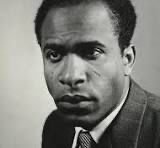
The question had already been anticipated by Frantz Fanon. Political sovereignty, he warned, could become a transfer of privilege to a national middle class that preserved the economy and institutions of colonialism. Hamza Alavi later described how Pakistan inherited a bureaucratic-military apparatus developed to command society rather than serve it.1
The flag was national; the habits of power remained imperial. Across the border, constitutional democracy did not automatically abolish caste, landlessness or the authority of propertied classes.
Punjab’s resistant poets understood this continuity through ordinary life. They did not begin with the vocabulary of the seminar. They began with the police station, the field, the factory, the unequal village street and the worker’s kitchen. Their poetry tested independence by asking whether the poor could speak without fear, eat without submission and live without inherited humiliation.
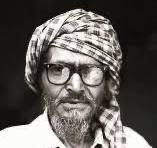
Ustad Daman stood at the point where the anti-colonial poet became a critic of the postcolonial state. Born Chiragh Deen, trained as a tailor and formed in Lahore’s public gatherings, he had recited against British rule before 1947. Partition destroyed his shop and made him destitute, but he remained in Lahore. Independence offered him neither comfort nor silence. He opposed military dictators and civilian rulers whenever power turned against the people.2
Pakistan dian maujan hi maujan,
chaare passe faujan hi faujan.
Pakistan is all enjoyment, they say;
on every side, only armies upon armies.
The couplet is remembered because its simplicity conceals a complete political diagnosis. The word maujan—pleasures or abundance—is emptied by the next line. A country cannot call itself prosperous merely because authority is visible everywhere. Daman’s irony asks what kind of freedom needs a permanent parade of coercion.3
His resistance was not retrospective heroism. During Zulfikar Ali Bhutto’s government, Daman was arrested in a fabricated case alleging that weapons and explosives had been recovered from his small room. He answered in verse that no display of power could force him to kneel.
Under General Ziaul Haq, he again mocked martial law. When offered official money during illness, he returned it. The refusal mattered as much as the poem: patronage could not purchase the poet’s tongue.4
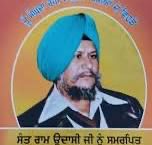
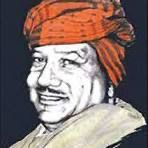
On the Indian side, Sant Ram Udasi brought the same test of freedom into the courtyard of the landless worker. Born into a Mazhabi Sikh labouring family, he became a major voice of the revolutionary Punjabi poetry associated with the political upheavals of the late 1960s and 1970s. His work emerged where class aspiration met the daily reality of caste. Recent scholarship rightly cautions against fixing him inside a single label—progressive, revolutionary, Dalit or Sikh—because the power of his poetry lies in the friction among these identities.5
Tu maghda rahin ve surja,
kammian de vehre.
Keep blazing, O sun,
in the workers’ courtyards.
The image reverses the geography of privilege. Light must not remain above palaces, assemblies or prosperous farms. It must enter the vehra of those whose labour sustains society while their homes remain outside its promises. Udasi’s sun is neither decoration nor consolation. It is warmth, visibility and awakening. The worker who has been treated as background becomes the centre of the landscape.6
This is where a purely class-based account becomes insufficient. Colonial Punjab classified communities, regulated land and hardened social divisions; independence did not dissolve them. Land and caste remained joined in the experience of rural labour. The person without land was often also the person denied dignity, social access and an equal place in village life.7 Udasi’s poetry made revolution answerable to that humiliation. A change of government could not be called liberation if the old social distance survived in the field and at the doorway.
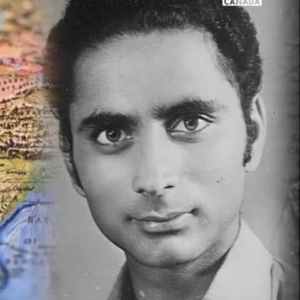
Lal Singh Dil carried this challenge further. He joined the revolutionary current of his time, suffered arrest and torture, and wrote from the life of Dalits, landless labourers, daily-wage workers and wandering communities. His importance lies not only in representing the excluded. He wrote as one who had inhabited exclusion and discovered that even movements promising equality could reproduce caste within their own ranks.8
In his brief poem Caste, affection encounters the boundary that political slogans often evade. Two people may speak of love, but their dead are not even cremated in the same place. The poem does not shout; its restraint makes the accusation harder to escape. In Dance a labouring woman roasts her heart on the griddle while a poor family makes music from utensils. Dil then insists that these songs do not die. Survival itself becomes an art that refuses the social order’s verdict of worthlessness.9
Daman, Udasi and Dil did not write identical politics. Daman’s weapon was public satire against the state and its rulers. Udasi transformed the workers’ courtyard into the moral centre of Punjab. Dil exposed the caste wound that could remain hidden inside the language of class solidarity. Read together, they prevent resistance from becoming another orthodoxy. Each asks the other a necessary question: Can national freedom survive authoritarian rule? Can class revolution ignore caste? Can a movement speak for the oppressed while failing to hear how oppression is actually lived?
Their Punjab was divided by an international border, but the structures they confronted were recognisably related. On one side stood the bureaucratic-military state, landed power and the suppression of the Punjabi language. On the other stood caste hierarchy, agrarian inequality and a political order willing to use police violence against radical dissent.
The local brown sahib did not always wear the same uniform. Sometimes he occupied a secretariat, sometimes a landlord’s mansion, sometimes the leadership of a movement. His privilege depended upon keeping labour useful and the labourer voiceless.
These poets therefore deepen the meaning of decolonisation. It is not completed when a foreign officer departs or a national anthem begins. It advances when inherited power loses its right to humiliate; when language no longer has to seek permission from the state; when the worker receives the value of labour; and when caste can no longer decide where a person may live, love or be buried.
The next voice in this journey will make danger itself a political category. Pash would ask what happens when obedience becomes ordinary and dreams lose their capacity to disturb us. Daman had laughed at the ruler, Udasi had placed the sun in the workers’ courtyard, and Dil had named the exclusion within rebellion. Pash would warn that the most dangerous defeat begins when people cease to imagine another world.
[To be continued]
Endnotes
- Frantz Fanon, “The Pitfalls of National Consciousness,” in The Wretched of the Earth; Hamza Alavi, “The State in Post-Colonial Societies: Pakistan and Bangladesh,” New Left Review, no. 74 (1972).
- Majid Sheikh, “Punjab Notes: Ustad Daman: men in power had reason to fear him,” Dawn, December 7, 2020.
- Amandeep Sandhu, “Pakistani poet who decried Partition,” Hindustan Times, August 14, 2017. Hindustan Times.
- Majid Sheikh, “Punjab Notes”; see also Khawar Nawazish and Jaffar Nazim, “Resistance in Urdu and Punjabi Poem: Analysis and Comparison,” Urdu Research 6, no. 1 (2025).
- Yadwinder Singh, “Sant Ram Udasi: From Progressivism to Revolution,” in Voices of Change (Springer Nature, 2026), pp. 393–405.
- Sant Ram Udasi, “Maghda Rahin Ve Surja Kammian De Vehre”; biographical and bibliographical note in Punjabi Kavita. Punjabi Kavita.
- Mark Juergensmeyer, “Limits of Conversion: Caste, Labor, and the Question of Emancipation in Colonial Panjab,” The Journal of Asian Studies 77, no. 3 (2018), pp. 723–744.
- Manpreet Kaur, Theme of Revolt in the Selected Poems of Pash and Lal Singh Dil, MPhil thesis, Central University of Punjab, 2012..
- Lal Singh Dil, “Dance” and “Caste,” translated from Punjabi by Nirupama Dutt, Pratilipi, Freedom Special, issue 13 (2010).
_____________________________________________________
Dr. Ikramul Haq, Advocate Supreme Court, Adjunct Faculty at Lahore University of Management Sciences (LUMS), member Advisory Board and Visiting Senior Fellow of Pakistan Institute of Development Economics (PIDE), holds an LLD in tax laws. He was full-time journalist from 1979 to 1984 with Viewpoint and Dawn. He also served Civil Services of Pakistan from 1984 to 1996.
We welcome your contributions! Submit your blogs, opinion pieces, press releases, news story pitches, and news features to opinion@minutemirror.com.pk and minutemirrormail@gmail.com